
Search News
Industry Portal
Hot Articles
Protective Gear for Cut Hazards: Kevlar Glove Ratings Explained
Time
Click Count
Cut hazards are easy to underestimate until a blade, sheet-metal edge, or glass shard reaches the hand. For operators who rely on protective gear every shift, understanding Kevlar glove ratings is not just a compliance detail—it is a practical way to match the glove to the real risk. This guide explains how cut-resistance levels work, what the ratings actually mean in daily use, and how to choose gloves that protect without sacrificing grip, dexterity, or comfort.
What do Kevlar glove ratings mean in protective gear?
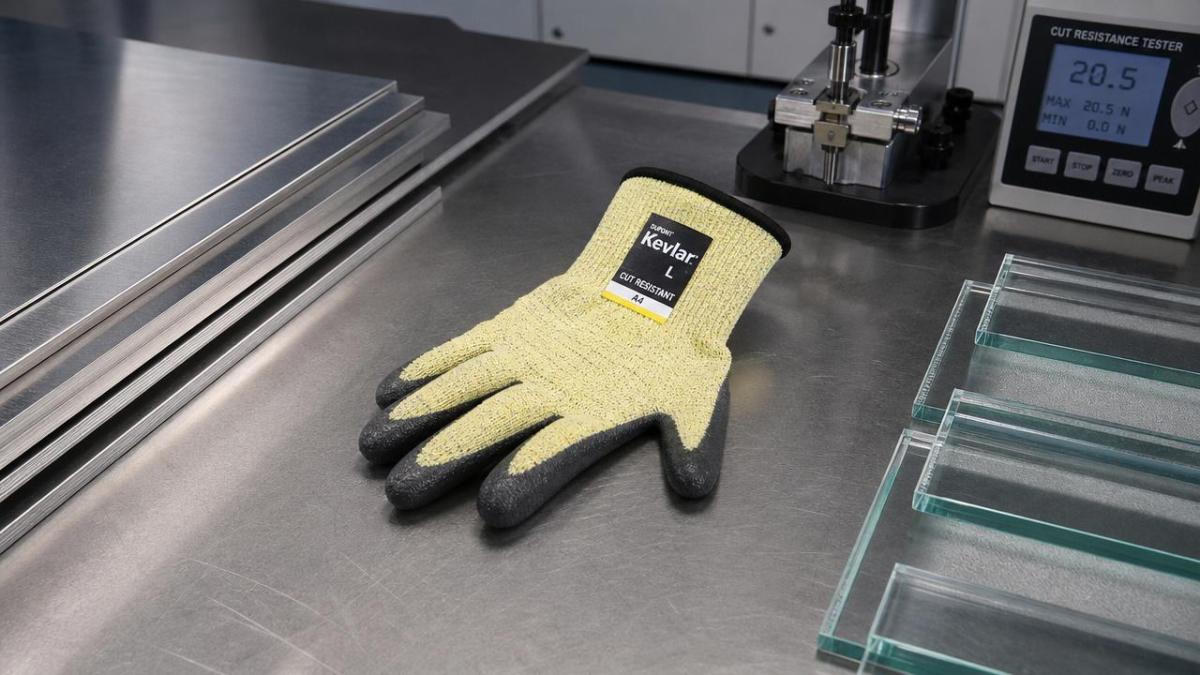
Kevlar glove ratings describe how much cutting force a glove material can resist before a blade penetrates the fabric.
In practical protective gear selection, the rating helps compare gloves used around blades, glass, metal edges, and sharp components.
Kevlar is an aramid fiber known for high tensile strength, heat resistance, and low weight. It is not automatically cut-proof.
A glove rating depends on yarn structure, coating, liner thickness, knitting density, and added fibers such as steel or fiberglass.
The most common reference standards are ANSI/ISEA 105 in North America and EN 388 in many global markets.
ANSI/ISEA 105 uses levels A1 to A9. Higher numbers mean higher measured resistance against a controlled straight-edge blade test.
EN 388 includes abrasion, blade cut, tear, puncture, and sometimes impact markings. Its cut values require careful interpretation.
For modern protective gear, the EN ISO 13997 cut result is usually more useful than the older coupe test.
Ratings do not describe every hazard. They do not fully measure needle sticks, powered blades, rotating tools, or chemical exposure.
A rating is a starting point. Real safety comes from matching protective gear to task, motion, material, and exposure duration.
How do ANSI cut levels translate into real work risks?
ANSI cut levels are based on grams of force needed to cut through the glove sample in laboratory conditions.
A higher level offers stronger cut resistance, but it may also change glove thickness, tactile feedback, and hand fatigue.
Protective gear should never be chosen by the highest number alone. Overprotection can reduce grip and increase handling errors.
A2 may be sufficient for cardboard and light plastic trimming. It is not suitable for jagged stainless steel scrap.
A4 is common in general industrial protective gear because it supports movement while addressing moderate laceration risks.
A6 becomes more appropriate when hands contact sharp sheet metal, unfinished machined parts, or broken glass.
A8 or A9 may be justified for severe scrap handling, but only after testing comfort during real shift conditions.
The best protective gear decision combines cut level, coating, cuff design, finger sensitivity, and actual hazard observation.
Where are Kevlar cut-resistant gloves most useful?
Kevlar gloves are used wherever sharp objects meet repetitive hand movement, heat exposure, or flexible grip requirements.
In metal fabrication, workers face burrs, slivers, stamped edges, and oily surfaces. Protective gear must resist cuts and maintain grip.
In glass handling, high cut ratings matter, but palm coating and puncture behavior are equally important.
In automotive assembly, thin Kevlar liners help protect hands while allowing operators to feel clips, harnesses, and fasteners.
In construction, protective gear may need cut resistance, abrasion resistance, impact protection, and weather tolerance at the same time.
In food processing, cut-resistant gloves support knife handling, but hygiene rules and wash cycles influence material choice.
In recycling and waste sorting, hazards are unpredictable. Broken glass, blades, and metal fragments demand conservative glove selection.
Kevlar is also useful near intermittent heat, because aramid fibers perform better than many standard synthetic glove fibers.
However, heat resistance does not replace proper thermal protective gear. Contact temperature and exposure time still require verification.
- Choose coated palms for oily metal, glass, or slippery plastic.
- Choose seamless liners when comfort and long wear time are priorities.
- Choose longer cuffs when forearm cuts are realistic.
- Choose food-safe materials only where food contact rules apply.
How should Kevlar protective gear be compared with HPPE or steel-core gloves?
Kevlar is not the only cut-resistant material. HPPE, steel-core yarns, fiberglass blends, and engineered composites are common.
Kevlar offers good strength-to-weight performance and heat tolerance. It is often comfortable in dry, moderately hot environments.
HPPE can feel cool, flexible, and lightweight. It often performs well where dexterity and washability are important.
Steel-core gloves can reach very high cut levels, but may feel stiffer or less comfortable during fine handling.
Fiberglass blends can increase cut performance, yet broken fibers or comfort concerns should be reviewed during trials.
The best protective gear material depends on the hazard mix, not brand preference or a single published number.
If heat and sharp metal appear together, Kevlar may be more attractive than standard HPPE.
If cool comfort and precision assembly dominate, HPPE-based protective gear may improve compliance and productivity.
If scrap handling is severe, steel or composite yarns may provide a safer margin.
What mistakes cause cut-resistant protective gear to fail?
The first mistake is treating cut-resistant gloves as cut-proof gloves. No fabric can guarantee protection from every blade condition.
Powered rotating blades are especially dangerous. Gloves may snag, pull, or trap the hand, depending on the machine design.
The second mistake is ignoring puncture hazards. Cut resistance does not equal needle, wire, or shard puncture resistance.
The third mistake is using worn protective gear after fibers are damaged, contaminated, melted, or heavily abraded.
The fourth mistake is choosing poor grip. A dropped part can create a bigger laceration risk than a lower cut rating.
The fifth mistake is overlooking laundering. Heat, bleach, solvents, and aggressive washing can affect glove structure and performance.
- Inspect gloves before every shift for holes, thinning, and broken coating.
- Replace gloves after significant cuts, burns, or chemical contamination.
- Keep sizing consistent to prevent loose fingertips and poor control.
- Train users on the difference between cut, puncture, and impact ratings.
- Review protective gear after process changes or new material introduction.
A simple glove trial can reveal issues that rating charts cannot show, including sweat, stiffness, and reduced fingertip control.
Documentation also matters. Keep records of selected levels, trial feedback, incident trends, and replacement intervals.
How can the right Kevlar glove rating be selected?
Start with task mapping. Identify what is sharp, how often contact occurs, and how much force is involved.
Next, separate occasional contact from constant handling. Repeated exposure usually requires a higher protective gear margin.
Then review the surface condition. Dry cardboard, oily steel, hot parts, and broken glass require different glove features.
Finally, test movement. A glove that prevents safe gripping, fastening, scanning, or tool control is not a good solution.
For light assembly, begin with A2 or A3 and verify dexterity. For sheet metal, compare A4 to A6.
For heavy scrap, recycling, or severe edge handling, evaluate A7 to A9 with stronger palm coatings.
For mixed hazards, select protective gear through a short pilot trial rather than an office-only specification.
A useful trial includes at least normal shift duration, representative materials, cleaning cycles, and feedback on grip fatigue.
The final choice should also consider supply consistency, size range, labeling clarity, and compatibility with sleeves or arm guards.
Conclusion: make glove ratings part of a complete safety decision
Kevlar glove ratings are valuable because they turn an invisible hazard into a measurable selection factor.
Yet the number on the label is only one part of protective gear performance in real industrial work.
Reliable selection connects standards, actual cut hazards, material behavior, grip demands, comfort, inspection, and replacement planning.
Before standardizing any glove, compare the hazard with ANSI or EN ratings and run a controlled field trial.
The next practical step is simple: list your sharp-edge tasks, rank their severity, and test protective gear against real conditions.
When chosen this way, Kevlar gloves become more than compliance items. They become dependable last-line defense for skilled hands.
Recommended News