
Search News
Industry Portal
Hot Articles
DALI Protocol vs 0-10V for Flicker-Free Commercial LED Control
Time
Click Count
For commercial LED upgrades, the choice between the DALI protocol and 0-10V control affects flicker, commissioning, energy savings, and maintenance.
0-10V remains familiar and cost-effective, yet smart buildings increasingly need precise dimming, diagnostics, scene control, and scalable automation.
This comparison explains both methods from engineering, procurement, and lifecycle perspectives, with a clear focus on flicker-free commercial LED control.
DALI Protocol and 0-10V Control in Commercial Lighting
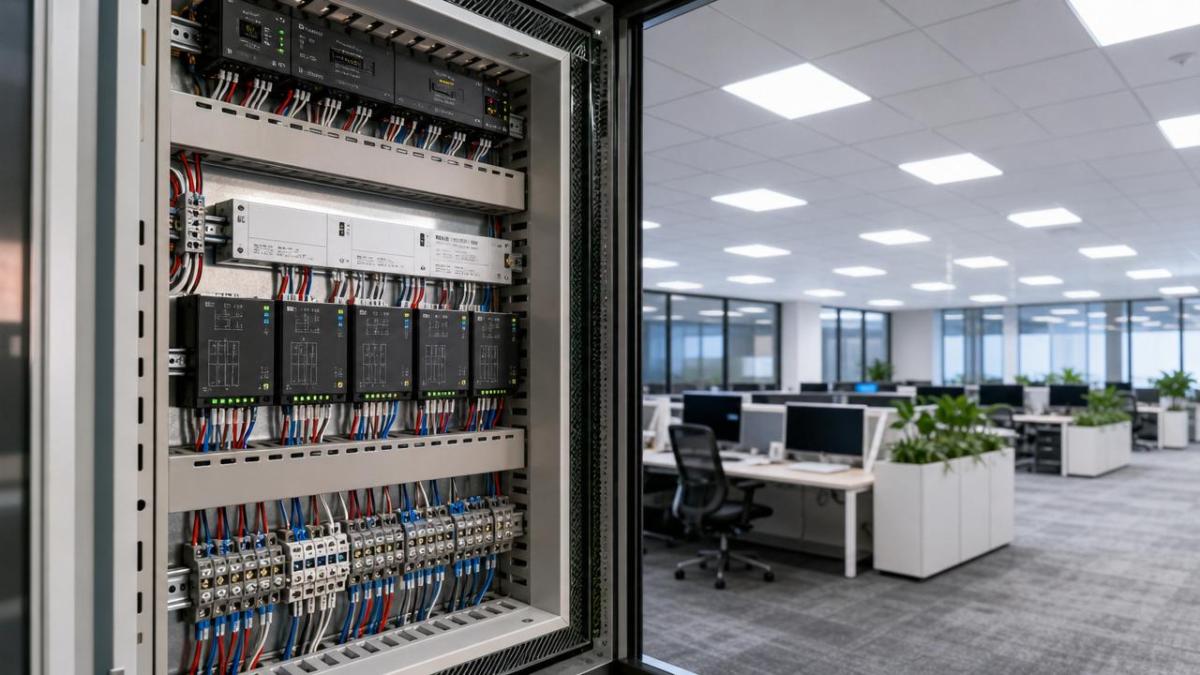
The DALI protocol, short for Digital Addressable Lighting Interface, is a digital lighting control standard for addressable LED drivers and control devices.
It allows each luminaire, driver, sensor, and control module to communicate on a shared two-wire bus.
Unlike simple dimming circuits, the DALI protocol supports bidirectional communication, device addressing, grouping, scenes, and operating status feedback.
0-10V is an analog control method. A low-voltage signal tells compatible LED drivers how bright they should be.
At 10V, the fixture usually operates at full output. Near 0V, the output drops to minimum or off, depending on driver design.
The practical difference is simple. 0-10V sends a level. The DALI protocol sends instructions and receives information.
This distinction becomes critical when buildings require stable dimming, occupancy response, daylight harvesting, fault reporting, and flexible zoning.
Current Industry Focus Around Flicker-Free LED Control
Commercial lighting is no longer judged only by wattage reduction. Visual comfort, wellness, uptime, and integration now shape specification decisions.
Flicker is a visible or invisible fluctuation in light output. It can cause discomfort, eye fatigue, headaches, or camera interference.
Flicker-free performance depends on driver quality, dimming curve stability, control signal integrity, and the lowest usable dimming level.
The DALI protocol does not automatically eliminate flicker. However, it improves consistency when paired with certified drivers and proper commissioning.
0-10V can also deliver low-flicker performance, but it is more sensitive to wiring noise, voltage drop, driver mismatch, and control calibration.
Technical Comparison for Dimming, Communication, and Reliability
The DALI protocol uses digital commands, so luminaires can be individually addressed without separate analog control home runs.
A DALI line commonly supports up to 64 addresses, with groups and scenes managed through software-based configuration.
0-10V typically requires separate control wiring by zone. Reconfiguring zones can require physical rewiring or additional control hardware.
For simple rooms, that limitation may be acceptable. For changing commercial layouts, digital flexibility becomes valuable.
Dimming resolution also differs. The DALI protocol provides defined digital steps and standardized behavior across compatible equipment.
0-10V depends heavily on driver interpretation. Two drivers may respond differently to the same voltage level.
This matters in open offices, corridors, retail zones, and conference rooms where uneven dimming can be clearly noticed.
Application Value in Smart Commercial Buildings
The business value of the DALI protocol appears most clearly during operation, not only during installation.
In a smart building, lighting systems must respond to occupancy, daylight, cleaning schedules, emergency needs, and tenant changes.
With the DALI protocol, each fixture can be monitored and adjusted as part of a controlled digital ecosystem.
This supports better energy performance because light output can be matched more accurately to actual demand.
Fault detection is another major advantage. A failing driver or lamp can be identified before complaints accumulate.
For large facilities, that visibility reduces manual inspection and shortens maintenance response time.
0-10V can still be suitable where budgets are tight, areas are simple, and advanced monitoring is unnecessary.
However, the hidden cost of analog simplicity appears when room functions change or troubleshooting becomes frequent.
Typical Scenarios and Suitable Control Strategies
The right control strategy depends on scale, operational goals, renovation constraints, and expected service life.
The DALI protocol is usually stronger when lighting is part of a broader intelligent building plan.
0-10V remains practical when requirements are stable, zoning is simple, and integration expectations are limited.
Flicker-Free Performance and Driver Selection
Flicker-free lighting starts with the LED driver. Control protocol alone cannot compensate for poor electrical design.
For both systems, review flicker percentage, modulation frequency, dimming range, and compatibility with selected luminaires.
The DALI protocol improves verification because compatible devices can report status and support repeatable commissioning values.
That consistency reduces random brightness differences between fixtures on the same floor or in adjacent rooms.
With 0-10V, verify the full dimming range onsite. Some drivers flicker at low levels or shut off unpredictably.
Analog control wiring should be separated from interference sources when possible. Noise can create unstable output.
For video studios, classrooms, healthcare spaces, and precision workplaces, low-flicker drivers should be treated as mandatory.
Commissioning, Maintenance, and Lifecycle Cost
Initial cost comparisons can be misleading. 0-10V equipment may cost less, but installation and future changes also matter.
The DALI protocol may require trained commissioning, addressing tools, and structured documentation during project delivery.
Once commissioned correctly, it can reduce long-term labor through remote adjustments and faster fault location.
Digital records also help maintain consistent scenes after tenant improvement work or fixture replacement.
0-10V commissioning is often simpler at first. Yet analog troubleshooting can become difficult when symptoms are intermittent.
A flicker complaint may originate from driver mismatch, voltage loss, wiring polarity, interference, or incompatible controls.
When evaluating lifecycle cost, include commissioning labor, documentation quality, energy savings, replacement planning, and service downtime.
Practical Specification Notes for Reliable Projects
A reliable specification should define performance outcomes, not only the control label.
For the DALI protocol, confirm device compatibility, bus power design, address planning, emergency lighting requirements, and integration gateways.
For 0-10V, confirm control current, sink or source behavior, minimum dimming level, polarity, and driver response curve.
- Request low-flicker driver data across the full dimming range.
- Test representative luminaires before large-scale purchasing.
- Separate control wiring from high-noise electrical routes where practical.
- Document zones, addresses, scenes, sensors, and override logic.
- Plan maintenance access for drivers, gateways, and control panels.
A mock-up is especially valuable. It reveals dimming smoothness, cutoff behavior, sensor timing, and visible flicker risks.
The DALI protocol benefits from this process because scene logic can be refined before final handover.
Decision Framework for DALI Protocol vs 0-10V
Choose the DALI protocol when the project requires individual addressing, flexible grouping, diagnostics, scene recall, and future system integration.
It is also preferable when lighting quality must remain consistent across complex spaces and multiple operational schedules.
Choose 0-10V when the area is small, zoning is fixed, budgets are limited, and advanced feedback is not required.
Avoid treating either method as automatically flicker-free. The driver, wiring, controls, and commissioning process decide the result.
In modern commercial buildings, the DALI protocol usually provides stronger long-term value for scalable LED control.
Its digital structure aligns with smart lighting, energy management, maintenance analytics, and occupant-centered environments.
Next Steps for Implementation
Start with a lighting control brief that defines flicker limits, dimming range, zoning, sensor behavior, and integration requirements.
Compare the DALI protocol and 0-10V against those requirements, rather than against first-cost alone.
Then validate selected drivers, controls, and luminaires through a sample installation before full deployment.
For future-ready commercial LED control, the DALI protocol offers a stronger foundation for flicker reduction, diagnostics, and intelligent operation.
Recommended News