
Search News
Industry Portal
Hot Articles
HSM Market to Reach $4.097B by 2031: Embedded Security in Structural Fasteners Gains Traction
Time
Click Count
The hardware security module (HSM) market is undergoing structural expansion driven by regulatory and technical compliance demands — though the exact event date was not specified. This development significantly impacts infrastructure component exporters, particularly manufacturers of high-strength bolts and curtain wall anchors, as new procurement requirements emerge in construction IoT applications across key export markets.
Confirmed Market and Compliance Trends
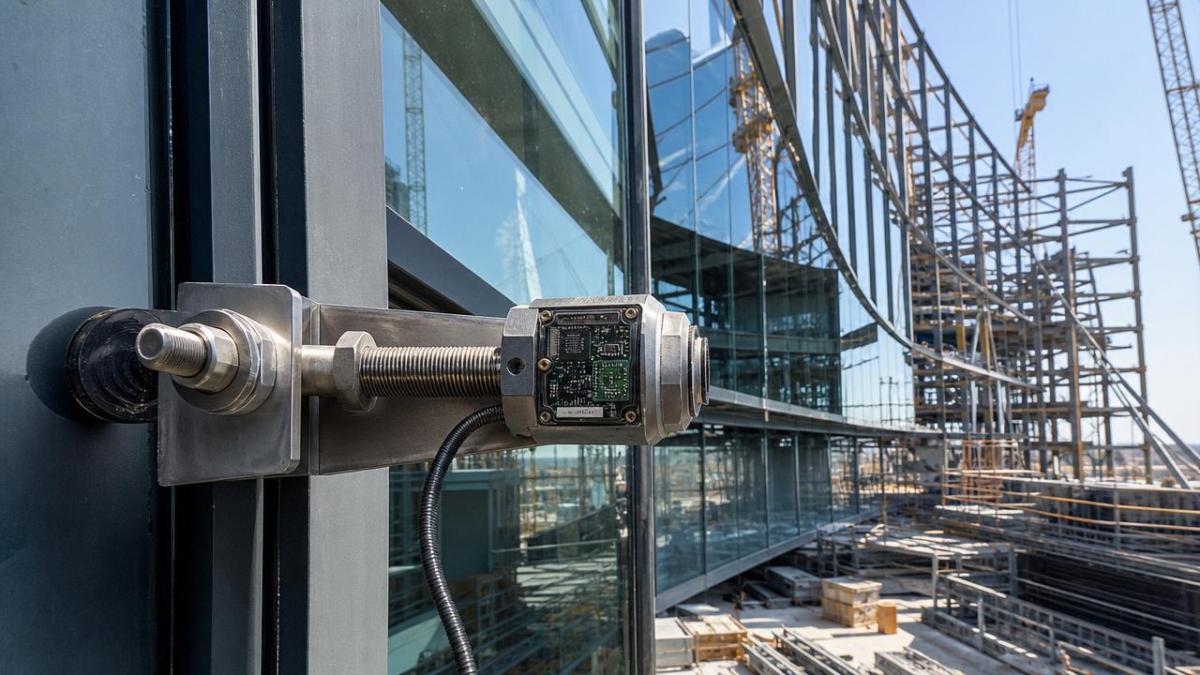
According to the latest QYResearch report, the global hardware security module (HSM) market is projected to grow at a compound annual growth rate (CAGR) of 13.08%, reaching USD 4.097 billion by 2031. Key growth drivers include mandatory compliance with ISO/SAE 21434 (for automotive cybersecurity) and PCI DSS (for secure digital transactions), especially in intelligent connected vehicles, digital payment systems, and building Internet-of-Things (IoT) deployments. Notably, manufacturers of high-strength bolts and curtain wall anchors — critical infrastructure components — are integrating HSMs into installation monitoring terminals to enable encrypted, blockchain-verified recording of fastener status (e.g., torque, preload, vibration). This practice has been explicitly mandated in tender documents for EPC projects in the Middle East and Southeast Asia.
Impact Across Supply Chain Roles
Export-oriented trading enterprises
These firms face revised bidding requirements: HSM-enabled monitoring capability is now a stated precondition in regional EPC tenders. Non-compliant product packages may be disqualified during technical evaluation — affecting quotation strategy, lead time planning, and documentation preparation.
Raw material procurement enterprises
Procurement teams must now assess supplier readiness for cryptographic-grade components (e.g., tamper-resistant HSM chips, secure boot firmware). Material sourcing decisions increasingly hinge on traceability, certification validity (e.g., FIPS 140-2 Level 3), and interoperability with edge monitoring platforms.
Manufacturing enterprises
Production lines require adaptation to embed HSMs into sensor-integrated mounting hardware — involving firmware signing, secure key provisioning, and lifecycle management protocols. Quality assurance processes must now cover cryptographic integrity verification and secure over-the-air (OTA) update validation.
Supply chain service providers
Logistics and certification support providers need updated capabilities in secure device provisioning, PKI-based attestation, and compliance documentation bundling (e.g., HSM conformance reports aligned with ISO/SAE 21434 evidence packages).
Key Focus Areas and Operational Responses
Align technical bids with embedded security specifications
Tender submissions for bolt and anchor systems must now include verified HSM integration architecture — covering secure boot, key storage, encryption of sensor data, and blockchain transaction signing. Bid reviewers increasingly cross-check against ISO/SAE 21434 clause 8.4 (security verification) and PCI DSS requirement 4.1 (encryption of transmitted cardholder data).
Verify HSM certification scope and supply chain provenance
Suppliers must confirm that selected HSMs hold valid certifications relevant to target markets (e.g., Common Criteria EAL4+, FIPS 140-2 Level 3) and provide full bill-of-materials traceability — especially for cryptographic ICs subject to dual-use export controls.
Prepare for extended validation timelines
Integrating HSMs into structural monitoring terminals adds steps in functional safety and cybersecurity validation — including penetration testing, secure firmware update testing, and cryptographic key lifecycle audits. Procurement and delivery schedules should accommodate an estimated 6–10 week extension for compliance verification.
Update post-sale support frameworks
Warranty and maintenance agreements must now address cryptographic key rotation, secure remote diagnostics, and blockchain ledger audit trails — requiring new service-level agreements (SLAs) and technician upskilling in PKI and secure edge device management.
Industry Observation: Beyond Compliance, Toward Embedded Trust Infrastructure
Analysis shows this shift reflects more than incremental certification pressure — it signals the emergence of embedded trust infrastructure within physical construction assets. From an industry perspective, the inclusion of HSMs in fasteners is not merely about meeting tender checkboxes; it represents a foundational step toward digitally verifiable asset integrity. What deserves closer attention is how this trend accelerates the convergence of mechanical engineering, cybersecurity, and distributed ledger governance — raising baseline expectations for cyber-physical system assurance across civil infrastructure sectors. Observably, manufacturers who treat HSM integration as a modular add-on risk falling behind those embedding cryptographic identity and attestation natively into product design.
Strategic Implications for Infrastructure Component Exporters
This evolution marks a transition from performance-based to trust-based qualification in international infrastructure procurement. Rather than representing a temporary compliance hurdle, HSM embedding establishes a new threshold for technical credibility — particularly where project owners demand end-to-end assurance of structural integrity via immutable digital records. A rational conclusion is that competitive differentiation will increasingly depend on demonstrable, auditable security-by-design — not just mechanical compliance with ASTM or EN standards.
Source Attribution and Monitoring Guidance
This article synthesizes the provided title, event timing note (‘not specified’), and summary text. Specific official source links were not provided in the input and should be verified continuously. Stakeholders are advised to monitor evolving tender language in Middle Eastern and Southeast Asian EPC frameworks, updates to ISO/SAE 21434 implementation guidance, national interpretations of PCI DSS applicability to industrial IoT, and emerging certification pathways for embedded HSMs in non-IT hardware. Continuous verification of regulatory enforcement posture remains essential.
Recommended News