
Search News
Industry Portal
Hot Articles
How to Evaluate Digital Smart City Infrastructure ROI in 2026
Time
Click Count
Why does digital smart city infrastructure ROI matter more in 2026?
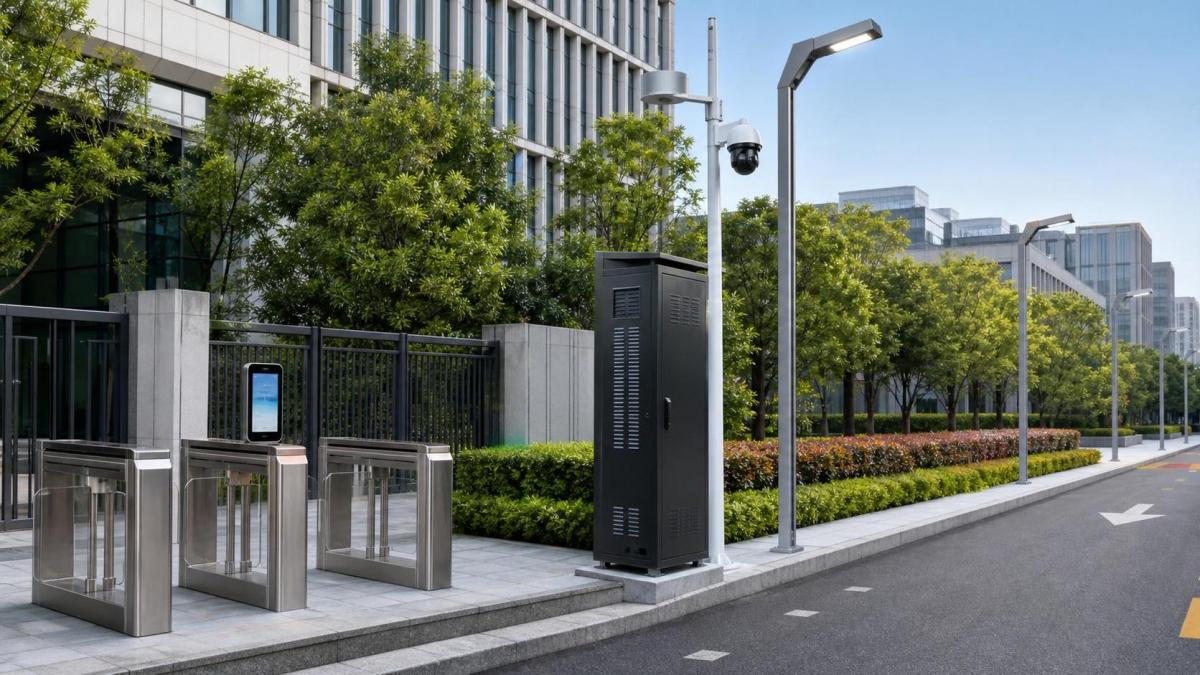
Digital smart city infrastructure is no longer judged by vision alone. In 2026, boards want proof of cost recovery, operational stability, and risk reduction.
That shift is easy to understand. Cities are now funding connected lighting, biometric access, edge devices, maintenance tools, and safety systems at the same time.
When those investments overlap, traditional ROI math becomes too narrow. Energy savings matter, but uptime, compliance, and resilience often decide the real payback.
A practical evaluation starts by asking a better question. What measurable urban problems does the infrastructure solve within a defined time window?
For example, smart lighting can cut electricity use. It can also reduce truck rolls through remote diagnostics and improve public safety through better visibility.
The same logic applies to biometric access control. Faster authentication may look like a convenience metric, yet the stronger value may come from preventing breach events.
SHSS often frames this as a balance between physical reliability and digital intelligence. In smart cities, both sides shape digital smart city infrastructure ROI.
So the right model should connect hardware lifespan, software performance, safety outcomes, and compliance exposure, not treat them as separate purchasing lines.
What should be included when calculating digital smart city infrastructure ROI?
Many teams still focus on upfront price versus annual savings. That is useful, but it misses major cost drivers that appear after deployment.
A stronger calculation usually combines five layers of value:
- Capital efficiency: equipment price, integration cost, installation labor, and network upgrades.
- Operational savings: energy reduction, lower maintenance frequency, and fewer manual inspections.
- Risk avoidance: fewer security incidents, reduced accident rates, and less asset failure.
- Compliance value: cleaner audit trails, stronger biometric governance, and lower regulatory exposure.
- Resilience value: faster recovery after outages, better spare-part planning, and longer useful life.
In actual projects, the hidden variables often sit inside maintenance. A 50,000-hour smart streetlight can outperform a cheaper fixture simply by avoiding repeat replacement cycles.
The same applies to high-strength fasteners and connected hardware mounts. If failure risk drops, inspection schedules and liability exposure may also decline.
Brushless tools matter here as well. Faster, more precise installation can shorten deployment time and reduce rework across poles, cabinets, gates, and edge enclosures.
A useful rule is simple. If a component touches uptime, access control, worker safety, or public exposure, it belongs in the ROI model.
A quick decision table for baseline evaluation
Before comparing vendors, it helps to sort each value stream into measurable indicators. That keeps digital smart city infrastructure ROI grounded in evidence.
Which smart city projects usually show ROI fastest?
Not every project pays back at the same speed. The fastest wins usually combine visible savings with low operational disruption.
Smart lighting often leads the list. Energy bills are measurable, maintenance events are frequent, and control systems can improve output almost immediately.
Access control upgrades can also move quickly, especially in transport hubs, municipal buildings, and data-rich public facilities. Here, digital smart city infrastructure ROI comes from avoided loss.
Projects involving structural hardware or fasteners may look slower on paper. In practice, they can protect the value of every connected device mounted outdoors.
That matters because weak brackets, poor corrosion resistance, or low-grade anchors can erase savings through failure, vandalism, or repeated service calls.
More mature evaluations group projects into three payback bands:
- Fast payback: lighting controls, remote monitoring, workforce productivity tools.
- Medium payback: biometric security, integrated maintenance platforms, edge analytics.
- Strategic payback: structural hardware upgrades, PPE modernization, resilience-focused retrofits.
The mistake is assuming slower means weaker. Strategic payback projects often protect the gains produced by faster digital smart city infrastructure investments.
Where do ROI models usually go wrong?
Most errors come from incomplete scope, not bad arithmetic. Teams count direct savings but leave out risk, downtime, and lifecycle dependencies.
One common mistake is valuing smart systems as software-only upgrades. Urban infrastructure still depends on mounting strength, power quality, weather resistance, and serviceability.
Another issue is treating biometric systems as simple convenience tools. In 2026, privacy compliance and data storage design can materially change total project economics.
SHSS has long emphasized this physical-plus-digital connection. A security gateway is only as reliable as its sensor logic, enclosure strength, and field installation quality.
There is also a maintenance illusion. A low bid can look attractive until proprietary parts, frequent battery replacement, or inconsistent firmware support inflate service costs.
Watch for these warning signs during evaluation:
- ROI excludes training, commissioning, or integration testing.
- Payback assumes perfect uptime from day one.
- No sensitivity analysis for energy prices or staffing costs.
- Compliance obligations are mentioned, but not priced.
- Hardware lifespan claims lack operating-condition detail.
If those gaps remain, digital smart city infrastructure ROI can look stronger in the proposal than in the field.
How can you compare vendors without reducing everything to unit price?
A useful comparison starts with outcome categories, not catalogs. That means asking which proposal best protects performance over the full service life.
In practical terms, compare vendors across six dimensions:
- Verified lifespan under real environmental conditions.
- Interoperability with DALI, Zigbee, access platforms, or edge management systems.
- Security and privacy architecture for biometric or sensor data.
- Field maintenance simplicity, spare parts, and firmware support.
- Mechanical integrity of fasteners, enclosures, mounts, and tool-driven installation.
- Worker safety requirements, including PPE compatibility during deployment and servicing.
This is where cross-disciplinary intelligence becomes valuable. Lighting efficiency, biometric accuracy, hardware durability, and workforce safety should not be reviewed in isolation.
More advanced buyers now request scenario-based comparisons. For example, how does one option perform during vandalism, network loss, heavy rain, or labor shortages?
That approach usually reveals the better long-term choice. It also produces a more defensible digital smart city infrastructure ROI case for finance and operations.
What is the smartest next step before approving a 2026 investment?
Start with a narrow pilot, but do not make it too narrow. The pilot should test technical performance, service workflow, and compliance assumptions together.
A useful pilot checklist includes baseline energy use, maintenance frequency, authentication speed, failure rates, installation hours, and incident response time.
Then build a three-layer business case. Layer one covers direct savings. Layer two prices avoided risk. Layer three estimates resilience and lifecycle value.
That method fits the reality of digital smart city infrastructure. These systems do more than automate. They hold together urban safety, physical assets, and service continuity.
The strongest 2026 decisions will come from clear baselines, realistic service assumptions, and honest comparison of hardware, software, and compliance costs.
If the next review cycle is approaching, map each project against energy, security, maintenance, and structural reliability first. That usually shows where returns are real, delayed, or overstated.
From there, refine the vendor shortlist, test field conditions, and update the ROI model using observed data rather than brochure promises.
Recommended News