
Search News
Industry Portal
Hot Articles
Thread Rolling Fasteners Supplier Checklist for Strength and Lead Time
Time
Click Count
Thread Rolling Fasteners Supplier Checklist for Strength and Lead Time
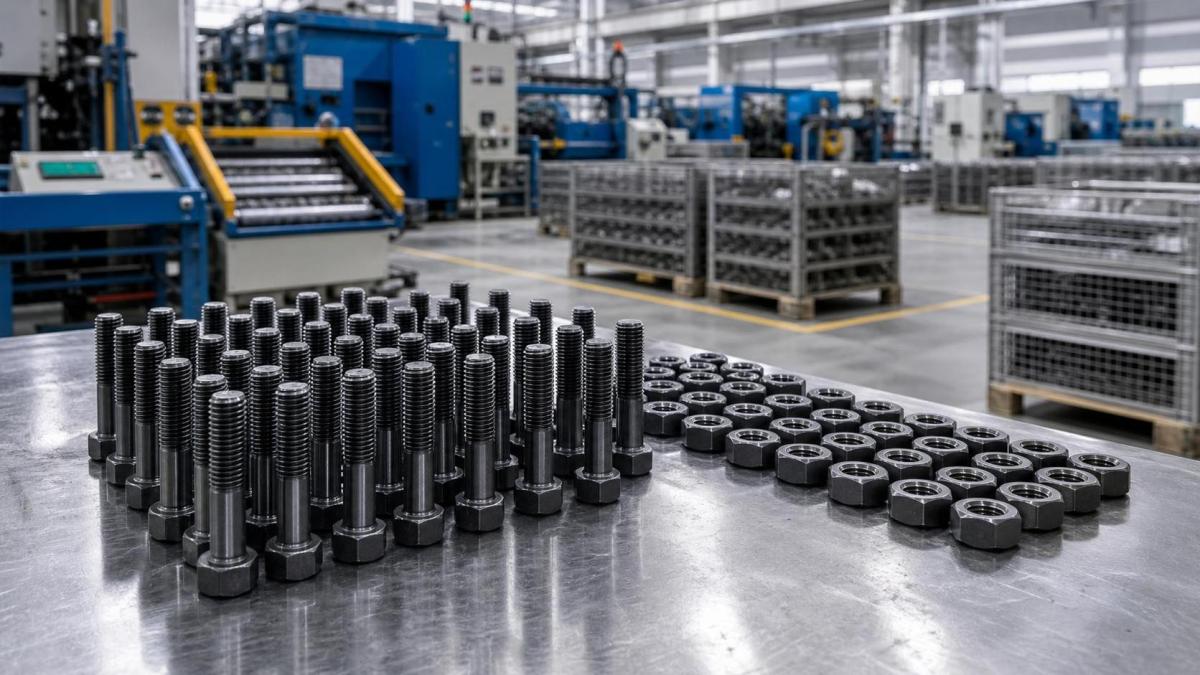
A thread rolling fasteners supplier affects more than unit price. Joint strength, dimensional consistency, and delivery reliability often start at the rolling line, not at the invoice stage.
That is why industrial sourcing usually looks beyond quotations. Material traceability, die condition, heat treatment control, and production planning all shape the real cost of a fastener program.
Within SHSS coverage of high-strength hardware, this topic matters because rolled threads are the steel sutures behind bridges, heavy tools, smart infrastructure, and safety-critical assemblies.
The practical question is simple: how do you tell whether a thread rolling fasteners supplier can protect strength targets and still ship on time? The checklist below breaks that decision into workable checkpoints.
What should a reliable thread rolling fasteners supplier prove first?
The first proof is process capability, not marketing language. A serious supplier should show how raw material, rolling, heat treatment, plating, and final inspection connect as one controlled system.
Rolled threads generally improve grain flow and fatigue performance compared with cut threads. That advantage only holds when blank diameter, die setup, lubrication, and post-process handling stay within stable limits.
In practice, ask for evidence in four areas:
- Material certificates tied to lot numbers and mechanical properties.
- Thread profile inspection records, including pitch diameter and flank quality.
- Heat treatment documentation matched to strength grade requirements.
- Packaging and storage controls that prevent mixed lots or coating damage.
A dependable thread rolling fasteners supplier should also explain where subcontracting occurs. If rolling is in-house but heat treatment or coating is external, that is not automatically a problem.
The risk appears when ownership becomes unclear. If nobody controls handoff timing, lot segregation, or inspection responsibility, strength variation and lead time drift usually follow.
How do you judge strength quality without waiting for field failures?
The strongest signal is not a single test report. It is whether the supplier can connect process settings to the performance your application actually depends on.
For structural, industrial, or vibration-prone assemblies, thread geometry alone is not enough. Surface condition, decarburization control, hardness distribution, and hydrogen embrittlement prevention can change service life dramatically.
More common evaluation points include:
If a thread rolling fasteners supplier only shares generic certificates, treat that as incomplete. Strength-related sourcing decisions need lot-specific proof and a clear explanation of how the process stays repeatable.
SHSS often tracks adjacent sectors like brushless tools and smart infrastructure. In those products, vibration resistance and compact joint integrity are critical, so fatigue-related detail matters more than headline tensile numbers.
Where do lead time problems usually begin?
Late delivery rarely starts on the promised ship date. It usually begins earlier, when tooling, raw stock, outsourced finishing, or inspection capacity were never aligned with the order profile.
A capable thread rolling fasteners supplier should explain standard lead time by part family, diameter range, material grade, and finish. Blanket promises such as “fast delivery for all sizes” are not useful.
Need to watch for these common bottlenecks:
- Special alloy wire or bar with long mill replenishment cycles.
- Custom rolling dies with limited spare inventory.
- Heat treatment queues during peak industrial demand.
- Zinc, phosphate, or specialty coating subcontract delays.
- Final sorting, counting, and export packaging constraints.
A more useful conversation is to ask what share of the lead time is internal and what share depends on outside partners. That answer reveals whether delays can be managed or only reported after the fact.
For repeat programs, ask about safety stock logic and die readiness. A thread rolling fasteners supplier with disciplined planning can shorten future orders even when the first order takes longer.
Is the lowest quote usually the lowest total cost?
Often, no. The lowest quote may hide weak inspection frequency, unstable coating quality, or inconsistent rolling dies. Those issues show up later as scrap, assembly slowdown, warranty claims, or emergency resourcing.
A better comparison uses total acquisition cost. That includes piece price, testing burden, inventory buffer, line stoppage exposure, and defect containment cost.
In actual sourcing reviews, a slightly higher-priced thread rolling fasteners supplier can still win if they reduce incoming inspection time or lower batch rejection risk.
This is especially true in sectors covered by SHSS, where failure can affect access systems, industrial equipment housings, structural supports, or safety-related hardware. Cheap inconsistency becomes expensive very quickly.
A simple cost screen helps:
- Quote price per thousand pieces.
- Expected defect rate and sorting cost.
- Lead time reliability and buffer inventory impact.
- Tooling cost, retest cost, and approval cycle length.
- Failure exposure if the fastener is safety critical.
What mistakes appear most often when comparing suppliers?
One common mistake is treating all rolled threads as equivalent. Two suppliers may meet the same drawing, yet produce very different consistency under torque, clamp load, or vibration.
Another mistake is approving samples from one production window and assuming mass production will match automatically. Sample success matters less if die wear control and lot discipline are weak.
It is also easy to overlook communication quality. A thread rolling fasteners supplier that answers technical questions clearly usually handles deviations better than one that only repeats compliance claims.
Before final selection, check these points carefully:
- Are test methods aligned with the application, not just the drawing?
- Can the supplier explain thread rolling limits for your size and material?
- Is there a written response path for nonconforming lots?
- Do packaging labels preserve full traceability through storage and use?
- Can the supplier support both pilot volumes and scale-up demand?
When these answers are vague, the risk is usually real. Good sourcing decisions come from narrowing uncertainty, not from accepting broad assurances.
So what should your next supplier checklist look like?
Start with application needs. Define strength grade, material type, finish, dimensional tolerance, and whether the joint sees shock, corrosion, or repeated vibration.
Then compare each thread rolling fasteners supplier against the same review sheet. Keep the sheet focused on process evidence, not brand familiarity.
A practical checklist should include material traceability, rolling process control, heat treatment verification, coating risk management, capacity visibility, and delivery history.
If the application supports critical infrastructure, industrial equipment, or safety systems, add sample validation under real load conditions. That step usually prevents costly assumptions later.
The best thread rolling fasteners supplier is rarely defined by one factor alone. The stronger choice is the one that can show stable quality, explain lead time honestly, and reduce total risk across the full supply cycle.
From the SHSS perspective, that balance matters because modern hardware depends on both precision and resilience. When fastening quality slips, the larger system pays for it.
Build the shortlist around evidence, request lot-level documentation early, and compare total cost beside delivery discipline. That approach makes supplier selection clearer and far more defensible.
Recommended News