
Search News
Industry Portal
Hot Articles
Grade 8.8 High-Strength Fasteners: Load Limits and Common Misuse
Time
Click Count
Grade 8.8 High-Strength Fasteners: Load Limits and Common Misuse
For technical evaluators, understanding high-strength fasteners grade 8.8 means looking beyond basic strength claims to actual load limits, preload behavior, and failure risks in real applications.
This article explains where Grade 8.8 fasteners perform reliably, where misuse begins, and how incorrect assumptions about torque, environment, and joint design can compromise safety.
What Grade 8.8 Really Means
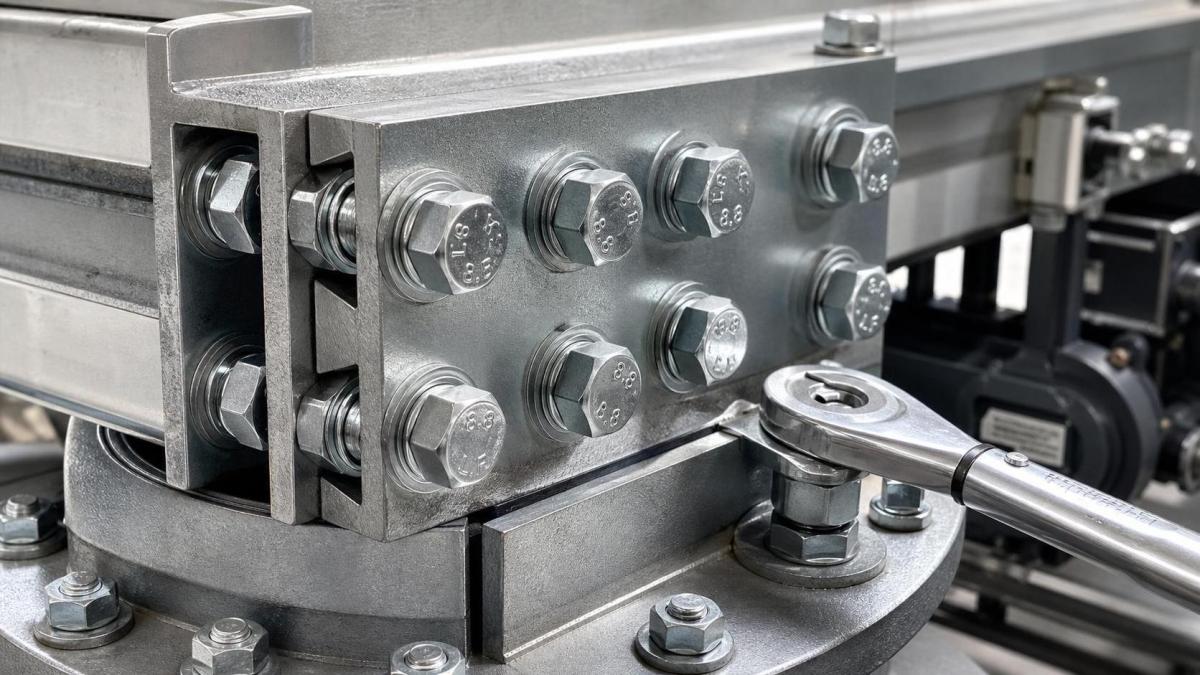
The term high-strength fasteners grade 8.8 comes from ISO metric property classes. It describes minimum tensile strength and yield ratio, not a universal approval for every joint.
In simple terms, Grade 8.8 bolts have a nominal tensile strength of 800 MPa. Their minimum yield strength is 0.8 of that value, or 640 MPa.
That sounds straightforward. In practice, it is only the starting point for evaluation.
A Grade 8.8 marking does not define clamp length, thread engagement, fatigue life, surface coating, corrosion class, or tightening method. Those factors control real performance.
This is where many purchase and design errors begin. A bolt can meet the grade and still be wrong for the joint.
Core mechanical meaning
- First number 8: minimum tensile strength is 800 MPa.
- Second number .8: yield strength ratio is 0.8.
- Minimum yield strength: 640 MPa.
- Typical use: structural machinery, equipment frames, steel assemblies, and industrial enclosures.
Even so, high-strength fasteners grade 8.8 are not the same as high fatigue bolts, corrosion-resistant bolts, or elevated temperature fasteners. Those are separate decisions.
Load Limits: Tension, Shear, and Preload
When teams discuss load capacity, they often ask one broad question: how much can this bolt hold? That question is too vague for any serious technical review.
Load limits depend on the stress area, loading mode, tightening quality, and joint behavior under service conditions. The bolt is only one part of the system.
Tensile loading
For axial tension, the working reference is the tensile stress area of the thread. Nominal diameter alone is not enough.
A practical screening rule uses proof and yield limits, then applies a service factor. Actual design values depend on code, reliability target, and consequences of failure.
Shear loading
For shear, capacity changes sharply depending on whether the shear plane passes through the shank or the threaded section. Threads in shear usually reduce strength.
Joint slip also matters. In some assemblies, the real requirement is slip resistance from clamp force, not direct bolt shear.
Preload as the hidden control variable
The most overlooked factor in high-strength fasteners grade 8.8 is preload. Correct preload stabilizes the joint, reduces separation, and improves fatigue behavior.
Too little preload allows movement, fretting, and loosening. Too much preload pushes the bolt toward yield before service loads even begin.
Where Grade 8.8 Performs Well
Used correctly, high-strength fasteners grade 8.8 offer a strong balance of cost, availability, machinability, and structural reliability for general industrial service.
They are often a sound choice for welded frames, machine housings, support brackets, steel fabrications, vehicle subassemblies, and medium-duty equipment interfaces.
They also fit many maintenance environments because supply chains, tooling, and inspection procedures are already built around them.
Typical fit-for-purpose conditions
- Moderate dynamic loading with controlled preload.
- Dry indoor or protected outdoor service.
- Standard temperatures without severe thermal cycling.
- Joint designs that keep threads out of the shear plane when possible.
- Installations using verified torque or torque-angle procedures.
From a procurement perspective, this explains why Grade 8.8 remains a common baseline. It is strong enough for many assemblies, but still forgiving when installation is controlled.
Common Misuse That Triggers Failure
Most failures linked to high-strength fasteners grade 8.8 are not caused by the property class itself. They come from wrong assumptions around the joint.
That distinction matters. A stronger bolt does not automatically rescue a poor connection design.
1. Using torque values copied from another finish
Torque is only an indirect way to create preload. Friction under the head and on the threads can consume most of the applied torque.
A zinc-flake coated bolt, oiled bolt, and plain phosphate bolt can produce very different preload at the same torque. This is a frequent field mistake.
2. Treating static strength as fatigue strength
A joint can pass a static calculation and still fail early under vibration. Repeated load cycles attack threads, first engaged turns, and local stress concentrations.
This becomes more serious when preload is low, joint stiffness is poor, or contact surfaces settle after installation.
3. Ignoring environmental exposure
Grade 8.8 does not mean corrosion-proof. Moisture, chlorides, industrial chemicals, and galvanic mismatch can reduce effective cross-section over time.
More importantly, corrosion changes friction. That shifts preload retention and removal torque, sometimes in opposite directions.
4. Allowing insufficient thread engagement
Fastener grade alone cannot compensate for weak mating threads. In tapped holes, stripped internal threads may fail before the bolt reaches expected load.
This is especially relevant in aluminum bodies, thin sections, and repair conditions where thread quality is inconsistent.
5. Upgrading bolt strength without redesigning the joint
A common shortcut is replacing a lower class with high-strength fasteners grade 8.8 and assuming the assembly is now safer. That is often incomplete engineering.
Higher clamp force can crush softer joint materials, distort flanges, or shift failure into the connected parts. The weak link simply moves.
How to Evaluate Grade 8.8 Fasteners Correctly
A reliable review process keeps the fastener, the joint, and the service environment in the same frame. Looking at one variable in isolation leads to blind spots.
A practical evaluation checklist
- Confirm the governing standard, thread type, and property class marking.
- Calculate tensile stress area, not just nominal diameter.
- Separate static, fatigue, and slip-resistance requirements.
- Check thread engagement and mating material strength.
- Review coating, lubrication, and friction assumptions behind torque values.
- Assess corrosion, temperature, vibration, and maintenance intervals.
- Validate installation method with test tightening when risk is meaningful.
In actual procurement and validation work, this checklist is more useful than broad statements about “strong bolts” or “heavy-duty hardware.” It turns the review into measurable questions.
Final Decision Logic for Safer Selection
High-strength fasteners grade 8.8 are dependable when the joint is designed around preload, material compatibility, and service exposure. They are not a universal shortcut.
The better decision path is simple. Define the real load path, verify preload control, and challenge any borrowed torque or substitution rule.
When a Grade 8.8 fastener fails, the lesson is often not that the class was weak. The lesson is that the joint was evaluated too narrowly.
For selection, approval, or supplier comparison, keep the focus on actual load limits, friction conditions, fatigue demand, and environment. That is where reliable performance is decided.
Recommended News