
Search News
Industry Portal
Hot Articles
Vietnam Halts Smart Lighting IoT Import Permits
Time
Click Count
On June 29, 2026, Vietnam’s Ministry of Industry and Trade (MOIT) signaled an immediate compliance shift for Smart Street Lighting IoT products by suspending the acceptance of import permit applications until devices complete localized interoperability testing under the new SASO-SG-LED-2026 standard. For importers, project suppliers, procurement teams, certification-related service providers, and delivery planners serving the Vietnam market, this is not just a procedural notice; it directly affects market access, compliance sequencing, and expected Q3 delivery timing.
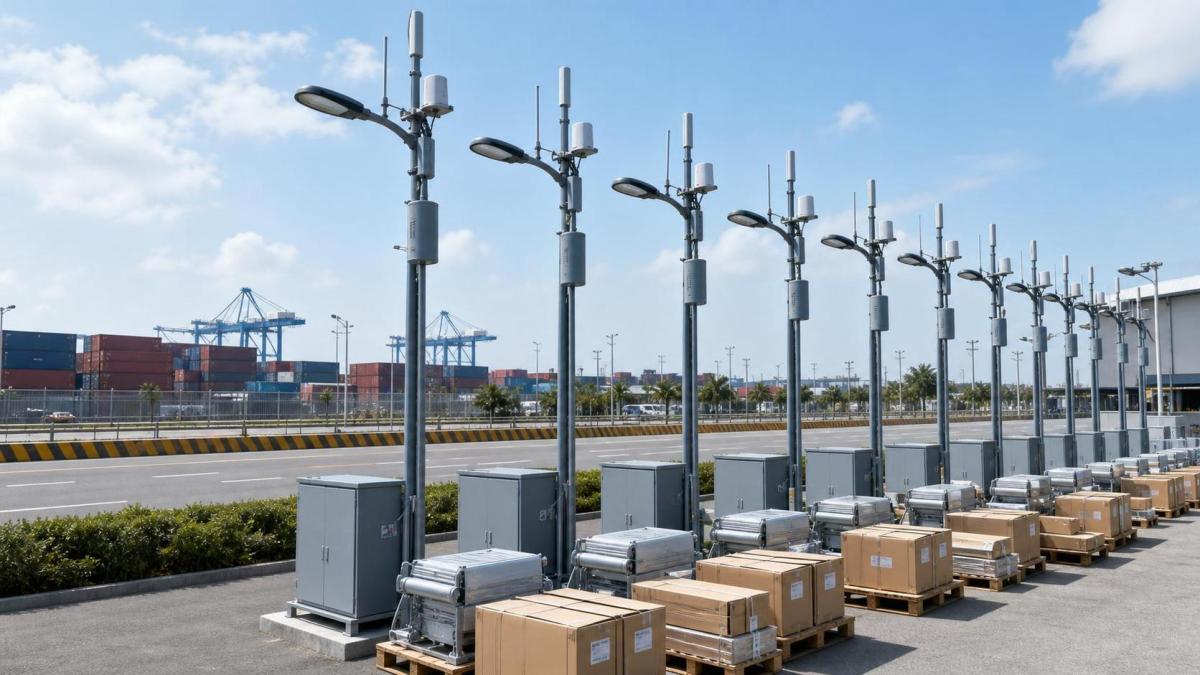
What the Notice Changes in Practice
According to Notice No. 127/TB-BCT issued by MOIT on June 29, 2026, Vietnam has suspended the acceptance of import license applications for all Smart Street Lighting IoT devices with immediate effect.
The suspension remains in place until the relevant products pass localized protocol compatibility testing conducted by STAMEQ under the newly issued SASO-SG-LED-2026 standard.
The testing scope stated in the event summary includes bidirectional command response with LoRaWAN v1.1.1 and the Viettel IoT platform.
The event summary also indicates that this measure is expected to delay Q3 project deliveries in the Vietnam market by more than 45 days in general.
Where the Immediate Pressure Will Be Felt
Import and market-entry workflows face a new gate
From an industry perspective, import-focused businesses are likely to feel the earliest impact because the notice concerns the acceptance of import permit applications itself. That means the regulatory change affects the front end of market entry rather than only downstream inspection or post-arrival compliance. What deserves closer attention is whether internal shipment planning, customs preparation, and permit filing schedules were built on the previous assumption that application intake would remain open.
Project suppliers and procurement teams may need to reset delivery assumptions
For suppliers serving municipal lighting or infrastructure-related procurement, the practical issue is timing. Analysis shows that a suspension tied to interoperability certification can disrupt bid execution, delivery commitments, and installation sequencing, especially where Q3 timelines were already fixed. Buyers and procurement teams should therefore pay closer attention to whether tender documents, technical specifications, and delivery terms now need to reflect the new certification prerequisite.
Testing and certification support functions move closer to the critical path
The notice makes localized compatibility testing under SASO-SG-LED-2026 a condition that must be cleared before import permit processing resumes for affected products. Observably, this places testing readiness, technical document accuracy, and protocol response validation much closer to the critical path for market access. Companies involved in compliance preparation should focus on whether product documentation, command-response demonstrations, and interoperability evidence are aligned with the stated LoRaWAN v1.1.1 and Viettel IoT platform requirements.
After-sales and delivery coordination may also come under strain
Where supply contracts are already in motion, delayed project delivery can have knock-on effects on installation scheduling, maintenance planning, and customer communication. This does not establish any confirmed downstream dispute pattern, but it does indicate that firms with ongoing Vietnam-bound orders should review how delivery delays may affect handover timing, service obligations, and internal coordination across sales, logistics, and technical support.
What Companies Should Track Now
Recheck whether certification has become a true precondition in operating plans
Analysis shows that companies should not treat the new testing requirement as a secondary compliance item. Based on the notice summary, passing localized interoperability testing is directly linked to the reopening of import permit processing for affected devices. Businesses should therefore review whether product launch, shipment release, and customer delivery plans still assume permit access without that step.
Review technical files against the stated interoperability scope
The event summary specifically mentions bidirectional command response involving LoRaWAN v1.1.1 and the Viettel IoT platform. What deserves closer attention is whether existing technical documentation, test materials, and product response logic are prepared for that stated scope. Where bid or supply documents reference compatibility claims, those statements may also need a fresh compliance review.
Watch for execution language and document expectations from authorities
The input does not provide detailed implementation rules beyond the suspension and testing condition. It is more appropriate to understand this as an already active market-access restriction, while still recognizing that the detailed execution approach may require further observation. Companies should therefore monitor how official wording, certification handling, and document expectations are clarified in practice.
Adjust procurement and delivery communication early
Given the indication of Q3 delivery delays of more than 45 days, firms exposed to the Vietnam market should review procurement timing, supplier coordination, and customer-facing schedules. This should be handled as a risk management step rather than a confirmed uniform outcome for every shipment or project, but the notice clearly raises the need for earlier communication on lead times and compliance dependencies.
How This Signal Should Be Read
Observably, this development is more than a technical standards update. It reads as an execution signal that interoperability verification is being tied more directly to import access for Smart Street Lighting IoT devices in Vietnam. At the same time, it should not yet be overstated as a fully transparent rule set, because the provided information does not include detailed procedural guidance, document templates, or implementation timelines beyond the immediate suspension.
From an industry perspective, the key issue is not only the existence of a new standard, but the fact that market entry is now explicitly conditioned on localized testing linked to specific protocol interaction requirements. That makes this a compliance and delivery issue at the same time, which is why procurement teams, importers, and project suppliers are likely to keep watching both regulatory wording and tender-level adjustments.
Why the Market Will Keep Watching This Notice
The immediate significance of this event lies in the shift from general product supply assumptions to certification-first market access for the affected category. Analysis shows that the notice is best understood as an already landed operational change for companies with Vietnam-bound Smart Street Lighting IoT products, while many of the detailed execution consequences still require observation.
A cautious reading is therefore appropriate: the rule change is real and current, the delivery impact signal is already visible, but the full compliance pathway, market practice, and contract-level response will depend on how testing, permit processing, and procurement documents are applied in the next stage.
Basis of This Article
This article is generated from the user-provided news title, event date, and event summary. The specific official source link was not provided in the input, so it still requires ongoing verification against primary-source materials.
For events of this type, commonly relevant source categories may include official government notices, regulator releases, trade or import administration updates, standards body documents, industry association communications, and reporting by authoritative media. Further observation is still needed on implementation details, certification interpretation, tender document changes, industry feedback, and how affected companies carry out compliance in practice.
Recommended News