
Search News
Industry Portal
Hot Articles
How Dimmable Smart Street Lights Cut Energy Costs in Urban Projects
Time
Click Count
How Dimmable Smart Street Lights Cut Energy Costs in Urban Projects
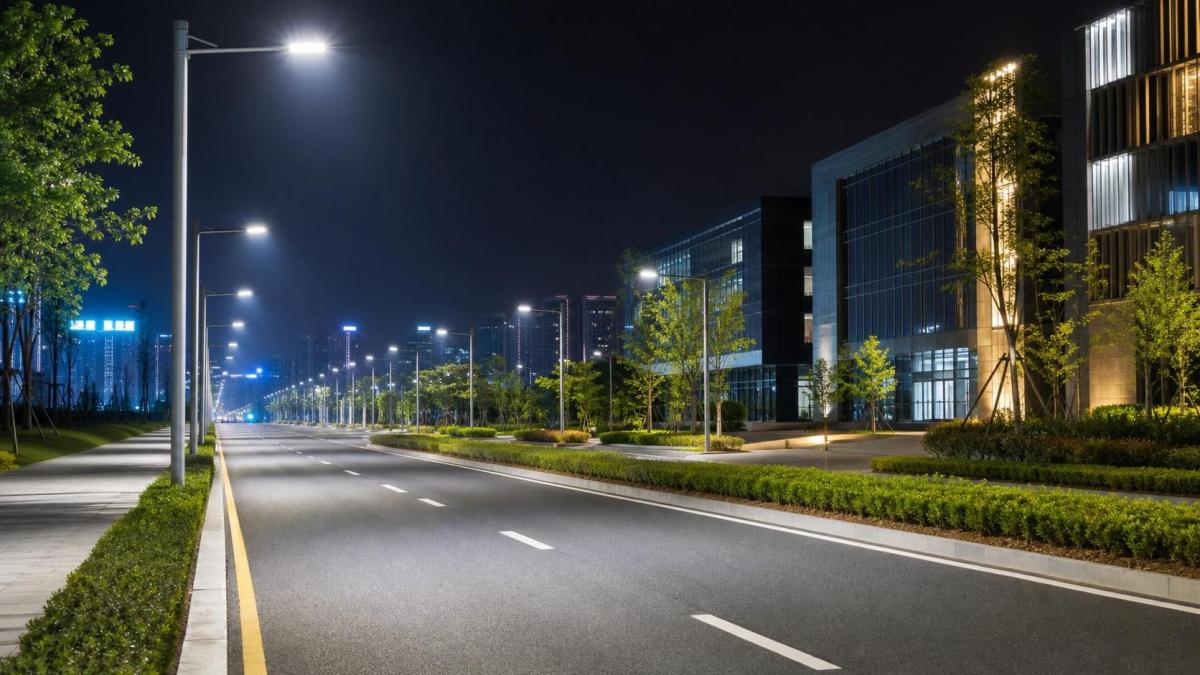
For city planners, EPC contractors, and infrastructure investors, dimmable smart street lights have moved beyond simple lighting upgrades.
They now sit at the center of cost control, operational resilience, and smart city planning.
The reason is practical.
Traditional street lighting runs at fixed output, regardless of traffic, weather, or pedestrian activity.
That creates predictable waste across roads, parks, campuses, ports, and mixed-use districts.
Dimmable smart street lights solve that waste with adaptive controls, remote monitoring, and long-life LED performance.
In real projects, the result is lower electricity spend, fewer maintenance visits, and more precise lighting management.
That also changes procurement thinking.
Instead of comparing fixtures by unit price alone, buyers increasingly evaluate total lifecycle value and controllable savings.
From a procurement and cost perspective, that is where dimmable smart street lights start to outperform conventional systems.
Why Fixed-Output Lighting Still Drains Urban Budgets
Many public lighting networks were designed for reliability first, not efficiency.
They switch on at dusk, stay at full brightness, and turn off at dawn.
This model ignores how streets behave through the night.
Traffic peaks early, drops late, and varies sharply by district and season.
Yet many systems deliver the same power draw for every hour.
The cost impact adds up fast in large urban projects.
Electricity consumption remains high, especially across thousands of poles and multi-year service contracts.
Lamp failures are also discovered late because inspection depends on manual reporting or patrols.
In cost terms, fixed-output systems waste energy and delay maintenance response at the same time.
How Dimmable Smart Street Lights Reduce Energy Consumption
The strongest advantage of dimmable smart street lights is controlled output.
Instead of running at 100% all night, each light can follow a defined dimming profile.
Common schedules reduce brightness during low-traffic hours, then restore output when activity rises.
This simple shift often drives the first layer of savings.
The second layer comes from sensor-based response.
With motion, occupancy, or ambient light sensors, dimmable smart street lights can react to real conditions.
A quiet road can dim to a lower baseline, then increase output as vehicles or pedestrians approach.
That means energy is used where visibility matters, not wasted where it does not.
The third layer comes from network intelligence.
Connected platforms using DALI, Zigbee, or similar controls allow centralized adjustment across entire districts.
Teams can fine-tune dimming strategies by zone, event schedule, weather pattern, or operating target.
That level of control is why dimmable smart street lights are increasingly tied to measurable energy reduction programs.
Where Savings Usually Come From
- Lower wattage demand during off-peak hours
- Reduced over-lighting in low-use zones
- Better use of adaptive schedules by district
- Longer LED life due to lower thermal stress
- Fewer emergency maintenance dispatches
- More accurate fault detection through remote monitoring
The Procurement Case: Looking Beyond Fixture Price
For procurement teams, the unit cost of a luminaire is only one part of the decision.
A lower purchase price can still produce a weaker financial outcome over time.
That becomes clear when evaluating dimmable smart street lights against total cost of ownership.
The main cost drivers usually include energy, maintenance labor, replacement cycles, software integration, and system uptime.
Well-designed dimmable smart street lights reduce several of these at once.
That is why ROI discussions now focus on payback period, not just capex approval.
In actual tenders, the smarter question is not “Which fixture costs less today?”
It is “Which lighting system gives the strongest controllable savings over five to ten years?”
A Practical Cost Review Framework
What Buyers Should Verify Before Selecting Dimmable Smart Street Lights
Not every connected lighting product delivers the same field performance.
Some systems offer basic dimming but weak controls.
Others provide software features but lack durable hardware for harsh outdoor use.
A sound purchasing decision should check both.
This is especially important in ports, highways, industrial parks, and coastal cities.
In those environments, operating stress is rarely forgiving.
Core Checks During Vendor Evaluation
- Confirm real dimming range and response stability, not just brochure claims.
- Review protocol support for DALI, Zigbee, or your preferred control environment.
- Check surge protection, thermal management, and enclosure durability.
- Ask for projected energy savings based on your operating schedule.
- Verify software usability for fault alerts, reports, and remote adjustments.
- Examine warranty terms for drivers, controllers, and communications modules.
- Request similar project references with measurable post-installation results.
In practice, reliable dimmable smart street lights combine lighting efficiency with manageable system complexity.
How Smart Lighting Supports Broader Urban Performance
Energy savings usually start the conversation, but they are rarely the only benefit.
Dimmable smart street lights also support better public service delivery.
Remote visibility helps maintenance teams locate faults faster and allocate crews with less guesswork.
Adaptive brightness can improve perceived safety in active corridors while reducing unnecessary glare elsewhere.
The infrastructure can also serve as a foundation for future smart city functions.
That may include environmental sensing, traffic data collection, or integrated emergency response signaling.
From a budget standpoint, this makes dimmable smart street lights more than an isolated energy project.
They become a scalable urban asset with long-term operational value.
A Smarter Way to Build the Business Case
The strongest business case usually starts with a pilot zone.
Choose an area with clear traffic variation and measurable electricity use.
Then compare baseline consumption against controlled dimming results over several months.
This approach gives procurement teams real local data instead of generic savings claims.
It also sharpens vendor negotiations.
When performance targets are tied to measured outcomes, decisions become more defensible.
For organizations planning large upgrades, that discipline matters.
Dimmable smart street lights deliver the best results when procurement, controls strategy, and maintenance planning are aligned from the start.
That is the point where lower energy bills become repeatable financial performance.
For urban projects under pressure to reduce costs without weakening service quality, dimmable smart street lights are increasingly the practical choice.
Recommended News