
Search News
Industry Portal
Hot Articles
Smart City Lighting Solutions IoT: Key Costs, Sensors, and ROI
Time
Click Count
Why are smart city lighting solutions IoT now treated as infrastructure, not just lighting?
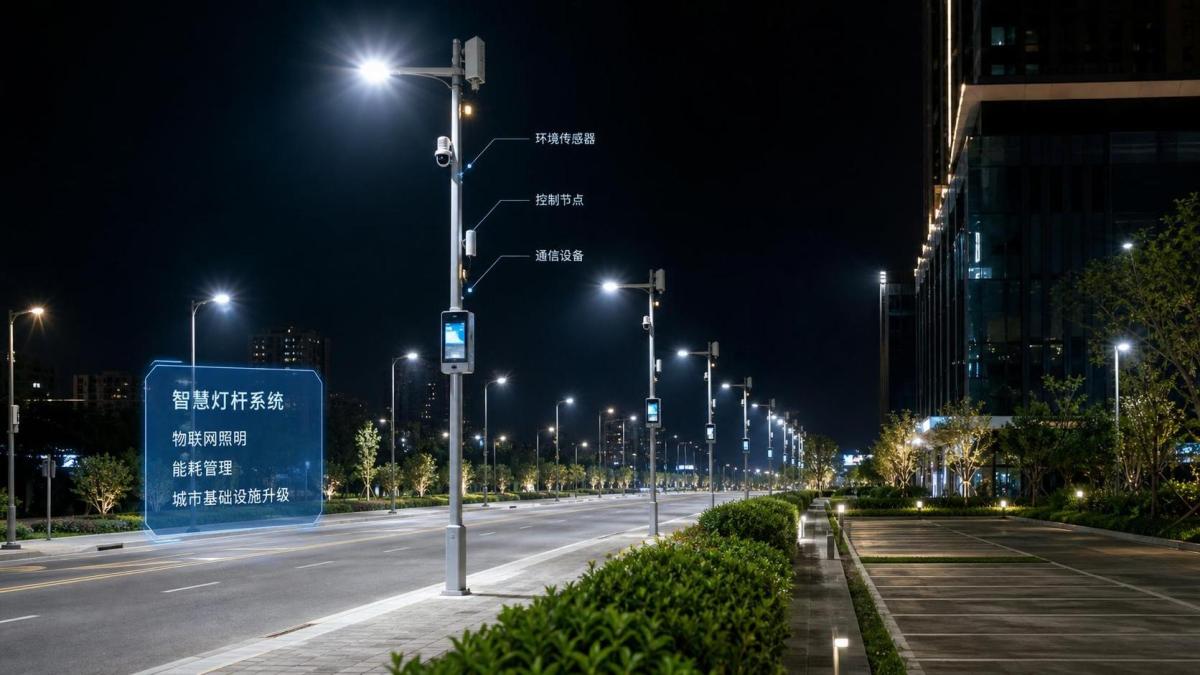
Smart city lighting solutions IoT have moved far beyond lamp replacement. They now sit at the intersection of energy control, public safety, maintenance planning, and urban data collection.
That shift matters because street lighting is one of the most widely distributed city assets. Every pole can become a powered node for sensing, communication, and operational visibility.
In practical terms, a smart luminaire is no longer only judged by lumen output. Buyers also examine connectivity, dimming precision, sensor compatibility, cybersecurity, and lifecycle serviceability.
This is why smart city lighting solutions IoT often appear in the same planning discussion as access control, roadside monitoring, municipal fasteners, and field safety systems.
SHSS follows that broader logic closely. Its research lens connects smart lighting with other hard infrastructure layers that keep cities resilient, efficient, and physically secure.
A useful starting question is simple: are you buying electricity savings alone, or are you building a networked urban platform? The answer changes the entire specification.
Which sensors actually matter, and which ones add cost without enough value?
Not every project needs the same sensor stack. The right package depends on traffic patterns, crime concerns, weather variability, and the wider city system already in place.
The most common mistake is overbuying features before defining operating outcomes. A city may install advanced sensors, then discover no workflow exists to use the data well.
For many deployments, the core set is surprisingly focused:
- Ambient light sensors for adaptive dimming and daylight response.
- Motion or presence sensors for lower-traffic roads, paths, and parking zones.
- Power monitoring for fault detection, energy audits, and billing transparency.
- Tilt or vibration sensing where poles face collision, wind, or tampering risk.
- Environmental sensors only when air quality, noise, or weather data supports a defined civic use case.
Camera integration is more sensitive. It may improve incident response, but it also raises governance, privacy, and data retention questions that must be resolved early.
In mixed-use districts, DALI and Zigbee-based controls remain common because they support granular lighting behavior without forcing every pole into an overly complex architecture.
A better buying approach is to rank sensors by measurable use. If no department owns the workflow, that sensor may be premature.
A quick way to judge sensor value
What does the real cost structure look like before deployment starts?
The visible fixture price is only one layer. Total cost is shaped by controls, communications, installation labor, software licensing, commissioning, and long-term maintenance.
A realistic smart city lighting solutions IoT budget usually includes five buckets.
- LED luminaires, drivers, controllers, and optional sensor modules.
- Network infrastructure such as gateways, SIM plans, RF nodes, or backend integration.
- Field works including pole inspection, wiring checks, mounting hardware, and commissioning.
- Software platform fees for dashboards, analytics, alerting, and API connectivity.
- Lifecycle support, replacement parts, cybersecurity patching, and warranty response.
In older districts, structural condition can quietly reshape the budget. Corroded brackets, outdated enclosures, or poor fastening integrity may force upgrades before any smart controls are installed.
That is one reason SHSS often frames lighting procurement as part of a wider hardware reliability discussion. Smart controls cannot compensate for weak physical infrastructure.
Another cost variable is architecture choice. A node-level control model gives richer data, but cabinet-level control may deliver a faster payback in simpler corridors.
When proposals look unusually cheap, check what has been excluded. Commissioning depth, firmware updates, field replacement times, and integration support are often where low bids hide future cost.
How should ROI be calculated without inflating the business case?
The strongest ROI model combines direct savings with operational effects that can be audited. Energy reduction is the easiest line item, but it should not be the only one.
A disciplined ROI review usually tests these drivers:
- Reduced electricity use from high-efficiency LEDs and adaptive dimming.
- Lower truck rolls due to remote diagnostics and fault location visibility.
- Longer service intervals from 50,000-hour or higher rated systems.
- Fewer outage-related complaints and faster repair response.
- Optional value from data-sharing with traffic, parking, or safety platforms.
More cautious financial teams separate hard ROI from strategic upside. That is a good discipline. Savings from electricity and maintenance can be modeled tightly.
By contrast, broader public value needs stronger assumptions. Better lighting may improve perceived safety, but that effect should not be overstated in procurement math.
SHSS frequently highlights this distinction. Reliable capital planning depends on evidence, not optimistic stacking of soft benefits.
In many streetlight projects, payback lands between three and seven years. The exact result depends on tariff structure, baseline wattage, labor costs, and dimming schedules.
What tends to move payback faster?
A fast payback usually comes from high burn hours, expensive electricity, and a large gap between old fixture performance and the new system.
A slower payback is more common when the city already uses efficient LEDs, or when the network layer is oversized for the actual operating need.
Where do projects usually run into trouble after the contract is signed?
Most post-award problems are not caused by lighting quality alone. They come from integration gaps, unclear ownership, and weak field readiness.
One recurring issue is assuming interoperability without proof. A specification may mention open standards, yet actual device behavior can still be vendor-dependent.
Another risk is underestimating cybersecurity. Smart city lighting solutions IoT are connected assets. Weak credentials, unmanaged firmware, or insecure APIs can create citywide exposure.
There is also the field reality. Pole spacing, tree cover, road works, and cabinet conditions can disrupt communication performance more than a desktop design suggests.
Then comes maintenance responsibility. If no one owns alerts, escalation paths, spare parts, and software updates, a smart system gradually behaves like a blind system.
The better approach is to ask for a pilot with measurable acceptance criteria. Include dimming response, packet reliability, outage detection speed, and integration handoff testing.
A short pre-award checklist
- Confirm whether control is node-level, segment-level, or cabinet-level.
- Ask which sensors are standard, optional, and software-licensed.
- Verify communication resilience in dense urban and low-signal areas.
- Request cybersecurity documentation, patch policy, and credential management procedures.
- Inspect mechanical components, pole condition, and mounting hardware suitability.
- Define who owns data, dashboards, and cross-system API support.
So how do you choose a system that will still make sense in five years?
Start with operating priorities, not product catalogs. If the main goal is energy reduction, keep the architecture lean and measurable.
If the goal includes safety response, occupancy insight, and cross-department data use, then a richer smart city lighting solutions IoT platform may justify itself.
The system should scale in layers. Good platforms allow a city to begin with lighting control, then add sensors, traffic links, or security workflows later.
That phased logic fits the broader SHSS view of urban hardware. Durable physical components, secure digital controls, and clear financial modeling need to evolve together.
A sound next step is to map your asset base, baseline energy use, communication constraints, and maintenance process before comparing suppliers.
Then build a comparison sheet around sensor necessity, network design, lifecycle cost, cybersecurity, and verified ROI assumptions. That is usually where the strongest decisions become obvious.
Recommended News