
Search News
Industry Portal
Hot Articles
EN 149:2024 Respirator Standard Takes Effect in EU
Time
Click Count
On July 16, 2026, the Official Journal of the European Union formally published and made mandatory EN 149:2024, the new specification for filtering half masks used in respiratory protective equipment. The standard replaces EN 149:2001+A1:2009 and is immediately relevant to respirator and gas mask exporters, EU importers, and compliance teams, because it tightens testing expectations, adds batch traceability requirements, and makes market access contingent on valid notified body type certification.
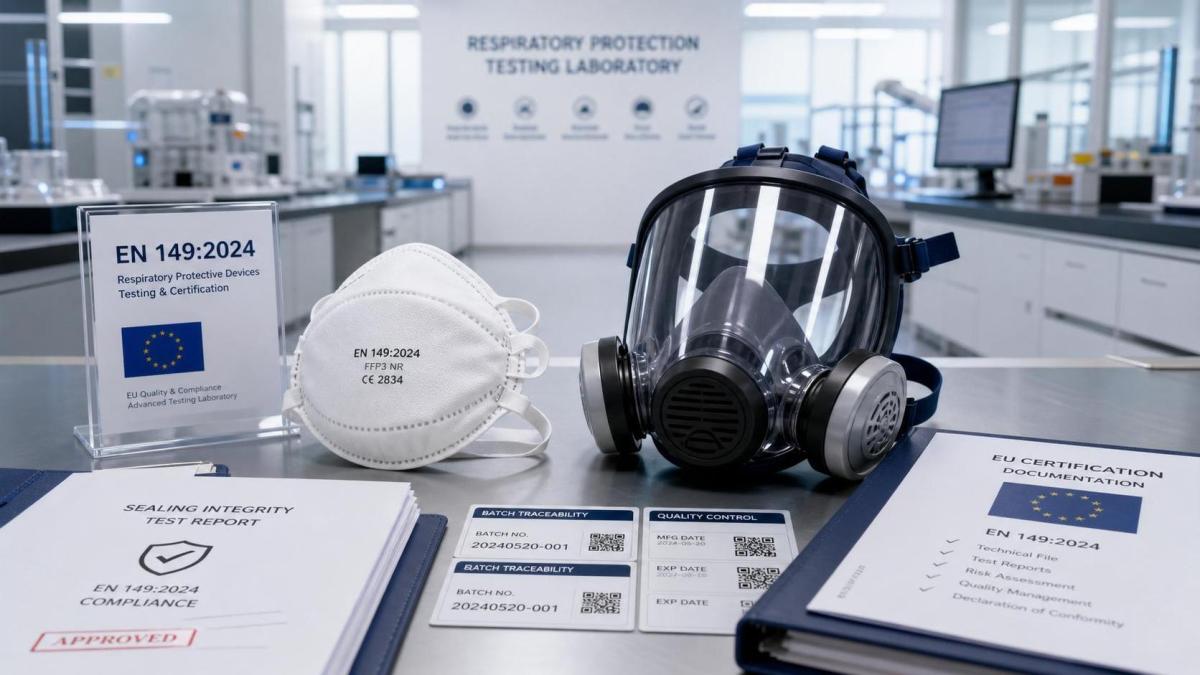
What the New EU Standard Formally Changes
The confirmed change is that EN 149:2024 has been officially published in the OJEU and became mandatory on July 16, 2026. It replaces the previous EN 149:2001+A1:2009 standard for filtering half masks in respiratory protective equipment.
According to the provided event summary, the new version significantly tightens filtration efficiency testing conditions. The updated requirements add assessment under high-humidity conditions and include testing against oily aerosols. The standard also introduces batch traceability requirements.
The same summary further states that respirators without type certification from a notified body are explicitly barred from entering the EU market. It also directly affects the compliance path for companies exporting respirators and gas masks, while importers are required to verify the validity of supplier CE certificates and the scope covered by test reports.
Where the Impact Will Be Felt First
Export-facing manufacturers face a narrower compliance route
From an industry perspective, manufacturers supplying the EU market are likely to feel the most immediate pressure because the standard now links product access more tightly to certification status and test coverage. The practical impact is likely to appear in product qualification, technical documentation, and shipment readiness for filtering half masks and related respirator products.
What deserves closer attention is whether existing product files, CE certificates, and supporting test reports fully align with the new testing conditions described in EN 149:2024. Where coverage is incomplete, the commercial risk may shift from product design to marketability.
Importers must review supplier evidence, not just product claims
EU importers are directly affected because the event summary specifically highlights the need to verify supplier CE certificate validity and the coverage range of test reports. The main exposure sits in supplier onboarding, document review, order confirmation, and customs or market-entry preparation.
Analysis shows that importers can no longer rely on broad compliance declarations alone where the applicable certification basis may have changed. The issue is not only whether a product was previously accepted, but whether the supporting certification and testing remain adequate under the mandatory standard now in force.
Supply chain and trading intermediaries may see documentation risk rise
Trading firms and supply chain service providers may also be affected because they often sit between manufacturers and EU buyers. Their risk is concentrated in document transmission, model matching, batch handling, and delivery timing.
Observably, the introduction of batch traceability raises the importance of consistency between physical goods and paperwork. For intermediaries, this means greater attention to batch-level records, shipment identification, and the alignment between supplier documents and customer compliance expectations.
What Companies Should Check Now
Confirm the certification basis for EU-bound products
Companies dealing in respirators and gas masks should first identify which EU-bound models depend on compliance with the replaced standard and whether those models now require updated confirmation under EN 149:2024. The immediate focus should be on notified body type certification status, because the summary states that uncertified respirators are prohibited from entering the EU market.
Review whether test reports cover the new conditions
A second priority is to examine whether existing test reports actually cover the tighter filtration efficiency conditions cited in the event summary, especially high humidity and oily aerosol assessment. This is a technical document issue with direct commercial consequences, since incomplete coverage may affect shipment acceptance and buyer confidence.
Strengthen batch-level document control
The addition of batch traceability means companies should pay closer attention to how production batches are identified and linked to certificates, reports, and shipment records. Analysis shows that this is not only a factory matter; it also affects procurement, logistics coordination, and after-sales document retrieval.
Separate legal effect from commercial transition questions
What deserves closer attention is the distinction between the rule now being mandatory and the operational pace at which each supply chain partner updates internal processes. Companies should therefore align customer communication, supplier checks, and delivery planning with the new legal requirement, while continuing to monitor any further official wording or implementation clarification that may affect day-to-day execution.
How This Should Be Read by the Market
Analysis shows that this is more than a routine standards update. The combination of tougher testing conditions, traceability requirements, and explicit exclusion of respirators lacking notified body type certification points to a stricter compliance threshold for EU market access.
At the same time, it is more appropriate to understand this as both an immediate compliance change and a longer-term regulatory signal. The immediate element is clear: the standard is mandatory as of July 16, 2026. The longer-term signal is that documentation depth, test scope, and traceability are becoming harder to treat as secondary administrative matters in the respirator trade.
Observably, the market still needs continued attention because the event summary defines the core obligations but does not provide every operational detail that companies may need for execution. That makes follow-up verification and document review a current business priority rather than a background compliance exercise.
Why the Update Matters Beyond a Single Standard Swap
This development is best understood as a direct compliance event with immediate implications for EU-bound respirator trade. It does not merely replace one standard number with another; it changes the conditions under which testing, traceability, and certification need to support market access.
From an industry perspective, the most rational reading today is that EN 149:2024 creates a more demanding proof framework for filtering half masks entering the EU. The consequences for each company will depend on its product portfolio, certification status, and document readiness, but the need for immediate review is already clear from the information provided.
Basis of This Article and What Still Needs Verification
This article is based on the user-provided news title, event date, and event summary concerning the mandatory entry into force of EN 149:2024 on July 16, 2026. The analysis above is limited to that provided information and does not add unverified market data, company cases, or regulatory details.
For this type of development, commonly relevant source categories would include official notices, company announcements, industry association updates, authoritative media reporting, and standardization documents. A specific official source link was not provided in the input, so the exact official document reference still requires ongoing verification. Continued attention should focus on any further official wording, certification-related clarifications, and practical interpretation affecting CE documentation and test-report scope.
Recommended News