
Search News
Industry Portal
Hot Articles
Smart Streetlights: Cost, Connectivity, and ROI Factors
Time
Click Count
Smart Streetlights: Cost, Connectivity, and ROI Factors
For project managers balancing budget pressure, deployment complexity, and long-term performance, smart streetlights are no longer just an upgrade in illumination.
They are connected urban assets that influence energy savings, maintenance efficiency, data integration, and public safety.
Understanding the real cost structure, connectivity options, and ROI factors is essential for investment decisions that support operational resilience and measurable project value.
Why Smart Streetlights Are Now a Strategic Asset
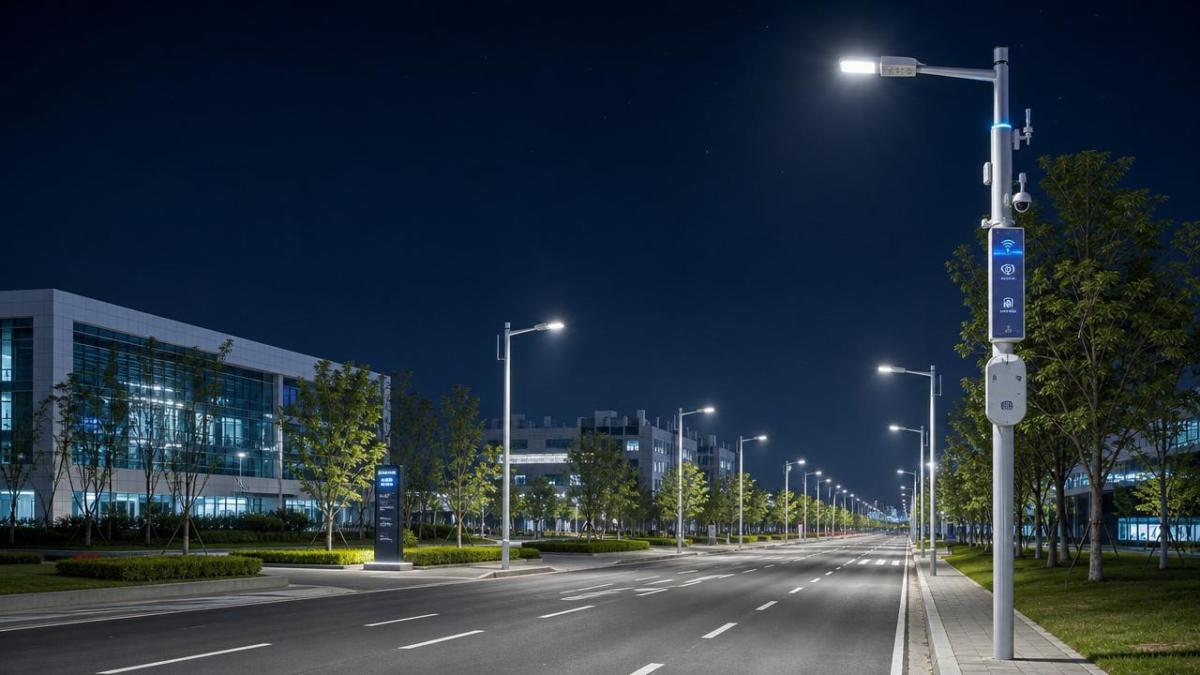
The role of smart streetlights has changed quickly.
They still provide illumination, but they now support energy control, fault reporting, adaptive dimming, and broader smart city connectivity.
From a procurement view, this changes the discussion.
Buyers are no longer comparing only wattage, fixture lifespan, and unit price.
They are comparing platform compatibility, network stability, maintenance visibility, and long-term return.
This is especially important in roads, campuses, industrial parks, ports, and municipal corridors.
In these environments, smart streetlights affect operating budgets for years after installation.
A poor decision can lock a project into high service costs and fragmented control systems.
A good decision creates lower power use, faster maintenance response, and stronger data visibility.
What Makes Up the True Cost of Smart Streetlights
The purchase price of smart streetlights is only one part of the budget.
Real project cost usually comes from five layers that should be reviewed together.
1. Hardware and fixture design
This includes the LED luminaire, driver, controller, sensors, pole compatibility, and surge protection.
Low-cost fixtures may look attractive, but thermal management and driver quality often determine actual service life.
2. Connectivity and network infrastructure
Smart streetlights need reliable communication to deliver value.
That may require gateways, SIM plans, mesh nodes, control cabinets, or cloud subscriptions.
3. Installation and commissioning
Installation costs vary with site conditions.
Retrofit projects may save on civil work, but rewiring, controller setup, and testing can still be significant.
4. Software and management platform
The control platform handles scheduling, alerts, asset mapping, energy reporting, and user permissions.
This software layer is where many smart streetlights either become scalable or become frustrating.
5. Maintenance and lifecycle service
A smart streetlight project should include expected replacement cycles, warranty terms, and remote diagnostics capability.
Service access matters as much as component price.
In practice, the lowest bid often misses hidden operating costs.
That is why total cost of ownership matters more than initial quotation.
Connectivity Choices That Shape Performance
Connectivity is one of the biggest decision points in smart streetlights procurement.
The right option depends on project scale, urban density, existing infrastructure, and data needs.
Common connectivity options
- Cellular connectivity works well for distributed sites and fast deployment, but recurring data fees must be included.
- RF mesh supports local networking between fixtures and can reduce dependence on carrier services.
- LoRaWAN can suit low-bandwidth control tasks across wide areas with lower energy demand.
- DALI-based systems are useful inside broader lighting control architecture, especially when integration is planned carefully.
- Zigbee is often considered for flexible control scenarios, though performance depends on network design quality.
No option is universally best.
What matters is matching the network to the use case instead of chasing fashionable specifications.
Questions worth asking suppliers
- Can the smart streetlights continue safe operation during temporary network loss?
- How are firmware updates handled across large deployments?
- Does the platform support open APIs for future integration?
- What level of cybersecurity protection is built into controllers and gateways?
- How easily can failed nodes be replaced without major reconfiguration?
These details directly affect downtime risk, maintenance workflow, and future expansion cost.
How to Calculate ROI for Smart Streetlights
ROI for smart streetlights should be based on measurable operating outcomes, not generic vendor claims.
A clear model usually combines direct savings and strategic project benefits.
Direct ROI factors
- Reduced energy use through LED efficiency and scheduled dimming.
- Lower maintenance cost through remote fault alerts and predictive service planning.
- Fewer night inspections because asset status is visible remotely.
- Longer replacement cycles compared with legacy lighting systems.
Indirect ROI factors
- Better public safety through consistent lighting performance.
- Improved reporting for ESG and urban efficiency targets.
- Stronger readiness for sensors, cameras, or future smart city services.
- More accurate budgeting because operating data becomes visible.
A practical ROI review should compare at least three scenarios.
These are basic LED replacement, partially connected smart streetlights, and fully networked smart streetlights.
This prevents overbuying features that the project will not use.
In many cases, the payback period for smart streetlights improves once maintenance savings are included properly.
Procurement Risks That Can Erode Value
Even strong products can disappoint if procurement assumptions are weak.
Several recurring risks appear in smart streetlights projects.
- Selecting based on fixture cost alone, while ignoring network and software fees.
- Overlooking pole conditions, power quality, and local environmental exposure.
- Accepting closed platforms that limit future upgrades or multi-vendor compatibility.
- Using unrealistic dimming assumptions in ROI projections.
- Failing to define service responsibility after commissioning.
A more reliable approach is to score suppliers across technical, commercial, and operational dimensions.
That scorecard should include warranty response, interoperability, cybersecurity posture, and data ownership terms.
A Practical Buying Framework for Smarter Decisions
A smart streetlights procurement plan works best when it follows a simple sequence.
- Define the project goal first, such as energy reduction, maintenance control, or smart city expansion.
- Audit existing poles, wiring, control points, and maintenance records.
- Choose connectivity based on site reality, not only on vendor preference.
- Model lifecycle cost across five to ten years.
- Run a pilot to verify dimming logic, fault reporting, and dashboard usability.
- Negotiate support terms, data access, and upgrade paths before final rollout.
This process keeps smart streetlights aligned with budget control and future operational needs.
It also makes supplier comparisons more grounded and less sales-driven.
Final Takeaway
Smart streetlights deliver the strongest value when cost, connectivity, and ROI are assessed as one connected system.
The most successful projects usually avoid the cheapest path and focus on lifecycle performance instead.
If the procurement team can validate network fit, service model, and measurable savings early, smart streetlights become a practical long-term asset rather than a risky upgrade.
That is the point where lighting investment starts supporting stronger operations, clearer reporting, and more resilient infrastructure.
Recommended News