
Search News
Industry Portal
Hot Articles
Smart Lock vs Biometric Lock: What Matters Most
Time
Click Count
Smart Lock vs Biometric Lock: What Really Changes Daily Use
Choosing between a smart lock and a biometric lock sounds simple at first. In reality, the better option depends on how you live, who enters your home, and how much friction you want removed from daily access.
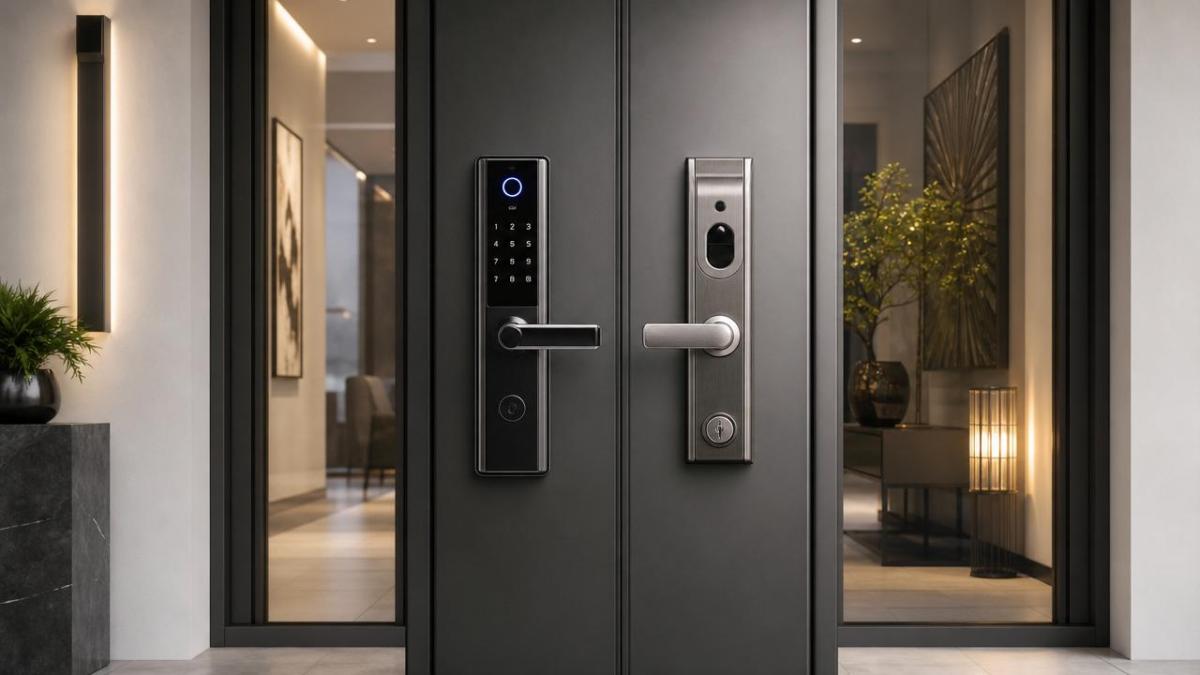
A smart lock is the broader category. It usually connects through Bluetooth, Wi-Fi, Zigbee, or a keypad system. A biometric lock is a type of smart lock that verifies identity through fingerprints, facial recognition, or other body-based data.
That difference matters. If convenience is your top goal, many smart lock models already do enough. If fast, personal, keyless entry matters most, a biometric lock may feel more natural every single day.
The decision should not focus only on features listed on a box. It should focus on real-world use, backup access, security risks, maintenance, and how each lock behaves under pressure.
This guide breaks down where a smart lock wins, where a biometric lock stands out, and what matters most before buying one for everyday use.
Smart Lock vs Biometric Lock: The Core Difference
The simplest way to compare them is by asking one question: how does the door know it is you?
A standard smart lock may use a phone app, PIN code, key fob, voice command, or remote unlock. It gives flexibility and often works well for homes with guests, service providers, or family members with different habits.
A biometric lock usually identifies you directly. The most common method is a fingerprint scan. Some advanced models add face recognition or palm scanning, though those are less common in homes.
So, every biometric lock is generally a smart lock, but not every smart lock is biometric. That is why the comparison is really about access style, not just technology labels.
- Choose a smart lock for flexible access methods and easier sharing.
- Choose a biometric lock for quick personal entry with less typing or phone use.
- Choose a hybrid model if you want both fingerprint access and app control.
Security: Which Option Protects Better?
Security is usually the biggest reason to upgrade from a traditional deadbolt. But better security does not come from one feature alone. It comes from layers.
A well-made smart lock can be very secure if it includes encrypted communication, two-factor app access, tamper alerts, and reliable firmware updates. In many homes, these features already raise the security standard.
A biometric lock adds another layer by tying access to a physical trait. That reduces the chance of a shared code being leaked or guessed. It also helps avoid common problems like forgotten PINs or copied keys.
Still, biometric security is not automatically stronger in every situation. Low-quality fingerprint readers can struggle with wet fingers, worn skin, dirt, or poor sensor calibration. Cheap models may also store data less safely.
What matters most is build quality, secure data handling, and backup options. A weak biometric lock is not safer than a strong smart lock from a trusted brand.
Convenience and Speed in Real Life
From recent buying patterns, convenience is no longer a bonus. It is often the main reason people choose a smart lock in the first place.
A standard smart lock works well if you like app control, remote unlocking, visitor passcodes, and activity logs. It fits homes where multiple people need flexible access at different times.
A biometric lock feels faster at the door. There is no need to find your phone or remember a code. A quick fingerprint tap can open the door in seconds, especially when your hands are full.
That said, speed depends on consistency. If the sensor reads well every time, a biometric lock is hard to beat. If it struggles in cold weather or after outdoor work, the experience becomes less smooth.
For many households, the sweet spot is a smart lock with biometric access plus keypad and app backup. That setup removes friction without creating a single point of failure.
What to Check Before You Buy a Smart Lock
The more useful signal is not whether a lock sounds advanced. It is whether it fits your door, routine, and risk level. Before choosing any smart lock, review these points carefully.
1. Access Methods
Look for more than one way in. A smart lock should ideally support at least two or three methods, such as fingerprint, PIN, app, key card, or physical key override.
2. Battery Backup
Every smart lock runs on power. Check battery life, low-power alerts, and emergency charging options. A dead lock with no backup is an avoidable problem.
3. Data Protection
If you choose a biometric lock, ask how fingerprint data is stored. Local encrypted storage is often better for privacy than vague cloud-based claims.
4. Door Compatibility
Not every smart lock fits every door thickness, frame, or deadbolt style. Measure first. A great lock that needs major door modification may not be the best choice.
5. Weather Resistance
For outdoor installation, a smart lock should handle rain, dust, heat, and winter temperature swings. Biometric sensors especially need stable outdoor performance.
6. App Reputation
The hardware may be solid, but poor software ruins the experience. Read user reviews about setup, connectivity, update quality, and account recovery.
Best Fit by Lifestyle and Home Scenario
The best smart lock is rarely the one with the longest feature list. It is the one that removes the most friction in your actual routine.
- Apartment living: a compact smart lock with app control and temporary guest codes often works best.
- Family homes: a hybrid smart lock with fingerprint access, keypad entry, and auto-locking gives the most flexibility.
- Older users: a biometric lock can reduce the need to remember codes, but only if the sensor is reliable and simple.
- Rental or short-stay use: a smart lock with remote code management is usually more practical than fingerprint enrollment.
- Busy entry points: a biometric lock speeds up repeated access when people return home carrying bags, groceries, or tools.
This also means that a biometric lock is not always the premium answer. In homes with frequent visitors, cleaners, dog walkers, or deliveries, remote code management may matter more than fingerprint speed.
Common Buying Mistakes to Avoid
Many lock problems begin before installation. They start with buying the wrong type of smart lock for the job.
- Buying on feature count alone and ignoring build quality.
- Choosing a biometric lock without checking sensor reviews.
- Ignoring backup entry methods and emergency power options.
- Overlooking privacy terms for biometric data storage.
- Assuming every smart lock integrates smoothly with existing platforms.
- Skipping weather and door compatibility checks.
Avoiding these mistakes usually matters more than chasing the newest release. In practice, a dependable smart lock with fewer features often performs better over time.
Final Decision: What Matters Most?
If flexibility, remote control, and visitor management matter most, a standard smart lock is often the better pick. It covers the widest range of daily situations with less setup friction.
If instant personal access matters most, a biometric lock stands out. It feels faster, more direct, and more natural once properly installed and calibrated.
For many homes, the smartest answer is a smart lock that includes biometric unlocking without depending on it alone. That balance gives speed, resilience, and better day-to-day usability.
Before buying, make a short checklist: entry methods, backup options, sensor quality, battery support, privacy policy, and door fit. That simple review will do more for long-term satisfaction than any marketing claim.
In the end, the right smart lock is the one that feels secure when you leave, easy when you return, and dependable when life gets busy.
Recommended News