
Search News
Industry Portal
Hot Articles
Biometric Security Risks and Compliance Trends in 2026
Time
Click Count
Biometric security is moving from convenience feature to infrastructure risk
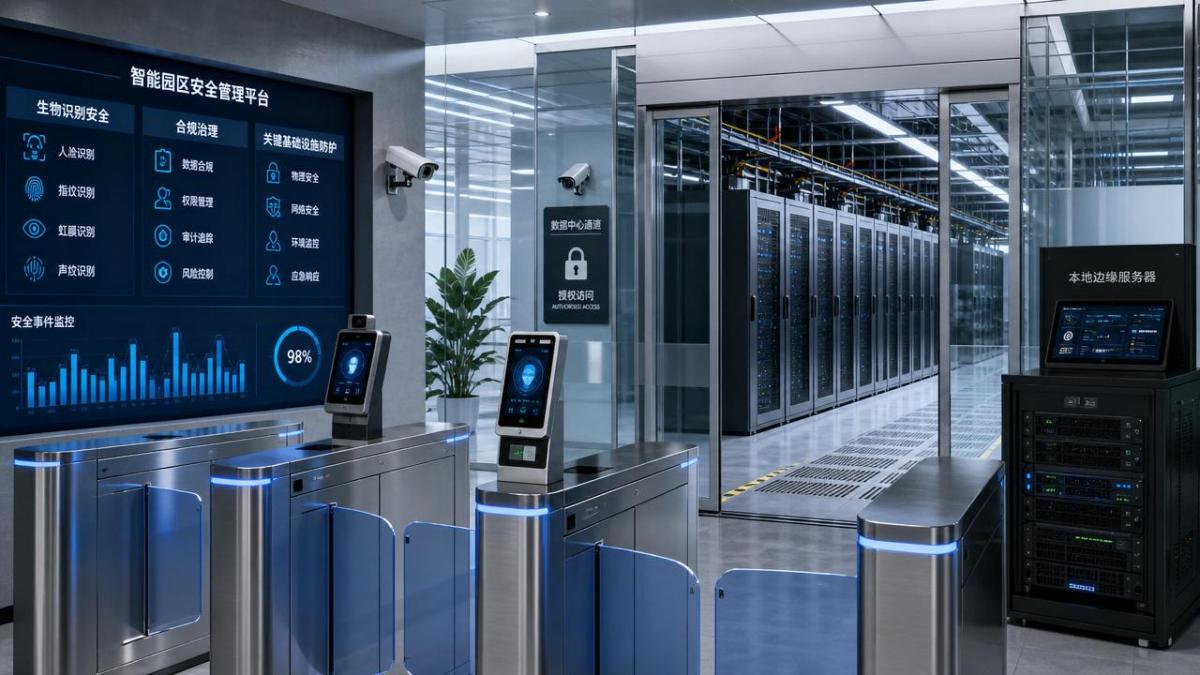
In 2026, biometric security sits closer to critical infrastructure than to simple access control.
That shift matters because identity systems now guard data centers, logistics hubs, smart buildings, factories, and public service sites.
What changed is not only adoption speed.
The real change is that biometric security now carries operational, legal, and reputational consequences at the same time.
Across the broader smart hardware landscape observed by SHSS, physical safety and digital trust are no longer separate decisions.
The same organizations upgrading industrial tools, smart lighting, fasteners, and protective systems are also rethinking biometric entry points.
A weak bolt can fail a structure.
A weak identity system can fail an entire operating environment.
From recent deployments, the pressure is coming from both sides.
Fraud tactics are becoming more synthetic, while regulators are becoming more specific about how biometric data is captured, stored, and justified.
This is why biometric security investment in 2026 is less about adding a scanner and more about building a defensible identity architecture.
The warning signals are becoming harder to ignore
Several signals now appear together, and that combination is what makes this year different.
Face spoofing has become more scalable through generative media, while attack kits are moving beyond elite threat groups.
At the same time, multi-site operators want frictionless entry, remote enrollment, and faster visitor processing.
Those goals are reasonable, but they increase exposure if governance stays shallow.
More noticeably, compliance scrutiny no longer focuses only on consumer apps.
Industrial campuses, commercial towers, transport nodes, and municipal systems are now within the same discussion.
Biometric security is therefore being evaluated as a cross-functional control.
It touches cybersecurity, facilities management, legal review, procurement logic, and workforce trust at once.
What is driving this faster risk cycle
The important point is that these forces reinforce each other.
That is why biometric security discussions have moved beyond hardware specifications alone.
Compliance is no longer a finishing step after deployment
A major trend in 2026 is that compliance enters much earlier in the buying and design cycle.
Under GDPR and similar frameworks, biometric data remains highly sensitive because it can identify a person uniquely and permanently.
That creates a very different standard from ordinary badge logs or PIN codes.
In practical terms, organizations are being asked harder questions.
Is biometric security necessary for this site, or merely convenient?
Can templates stay on-device instead of moving into centralized cloud storage?
What happens when a worker, contractor, or visitor challenges the basis of collection?
More regulators also expect data minimization to be visible in system design, not just in policy language.
That favors biometric security platforms that support localized matching, retention limits, audit trails, and role-based access control.
For SHSS-tracked sectors, this matters because industrial and urban systems usually operate across multiple jurisdictions.
A deployment that looks acceptable in one region can create exposure in another if storage, transfer, or notice practices differ.
The compliance shift is changing evaluation criteria
- Accuracy alone is no longer enough; explainability and audit readiness now affect approval.
- Cloud dependence is being questioned where local processing can reduce legal and security exposure.
- Vendors face more requests for breach response terms, retention logic, and deletion workflows.
- Bias testing and performance across lighting, angle, and protective gear are receiving closer attention.
The impact reaches far beyond the security department
Biometric security decisions now affect how sites operate physically, digitally, and contractually.
In commercial buildings, faster authentication can improve flow, but false rejects create tenant friction and front-desk overload.
In industrial zones, gloves, dust, glare, vibration, and protective visors can interfere with real-world performance.
In logistics and data center environments, a single enrollment weakness can become a repeated access weakness.
More interestingly, the strongest biometric security programs now behave like engineered systems.
They account for device durability, edge computing, environmental conditions, and fallback procedures in the same plan.
This mirrors the broader SHSS view of modern protection.
A smart gate does not stand alone any more than lighting, fasteners, or PPE stand alone on a critical site.
Each control must hold under stress, and each must work with the surrounding system.
Where the pressure appears first
- Enrollment quality, especially for contractors, temporary staff, and cross-site users.
- Liveness detection under poor lighting, mask variation, and fast throughput conditions.
- Template storage decisions between edge devices, local servers, and cloud environments.
- Fallback identity methods when outages, injuries, or device failures interrupt matching.
What stronger biometric security governance looks like now
The market is moving toward disciplined governance rather than larger biometric databases.
That is a healthy correction.
In many environments, risk falls when systems collect less, segment better, and prove every access event more clearly.
The most resilient biometric security programs usually share several traits.
- They define why biometric verification is needed at each location, not only where it is possible.
- They align device choice with environment, including darkness, dust, moisture, and protective equipment.
- They separate identity proofing from everyday authentication to reduce repeated exposure.
- They keep retention periods narrow and deletion routines testable.
- They rehearse exception handling instead of assuming perfect system availability.
This also changes procurement logic.
Short-term convenience metrics are giving way to lifecycle questions about updates, incident handling, interoperability, and evidence quality.
That broader lens is especially relevant in smart city and industrial modernization projects, where biometric security integrates with wider AIoT infrastructure.
The next signal to watch is design discipline, not headline innovation
A common mistake is to assume the next phase will be defined by whatever scanner seems most advanced.
In reality, the better signal is design discipline.
Biometric security will keep expanding, but the winners are likely to be systems that combine speed with provable restraint.
That means stronger edge processing, narrower data flows, better anti-spoofing, and clearer accountability across partners.
It also means viewing identity controls the same way advanced industries view structural hardware.
Performance under stress matters more than impressive laboratory claims.
For the next planning cycle, a practical path is to map where biometric security already supports critical movement, then review those points against legal basis, spoof resistance, environmental fit, and fallback readiness.
After that, compare systems by governance depth as much as by recognition speed.
That is where long-term trust, regulatory resilience, and operational continuity are now being decided.
Recommended News