
Search News
Industry Portal
Hot Articles
2026 World Smart Industry Expo Highlights Humanoid Robots & Smart Tools for Global B2B Procurement
Time
Click Count
The 2026 World Smart Industry Expo opened in Tianjin on May 28, 2026, spotlighting embodied intelligence and industrial AI endpoints. The event is driving renewed attention from international B2B buyers—particularly in procurement strategies for smart industrial tools and human-centric robotics—amid evolving technical interoperability and regional IoT protocol requirements.
Confirmed Event Highlights and Immediate Market Response
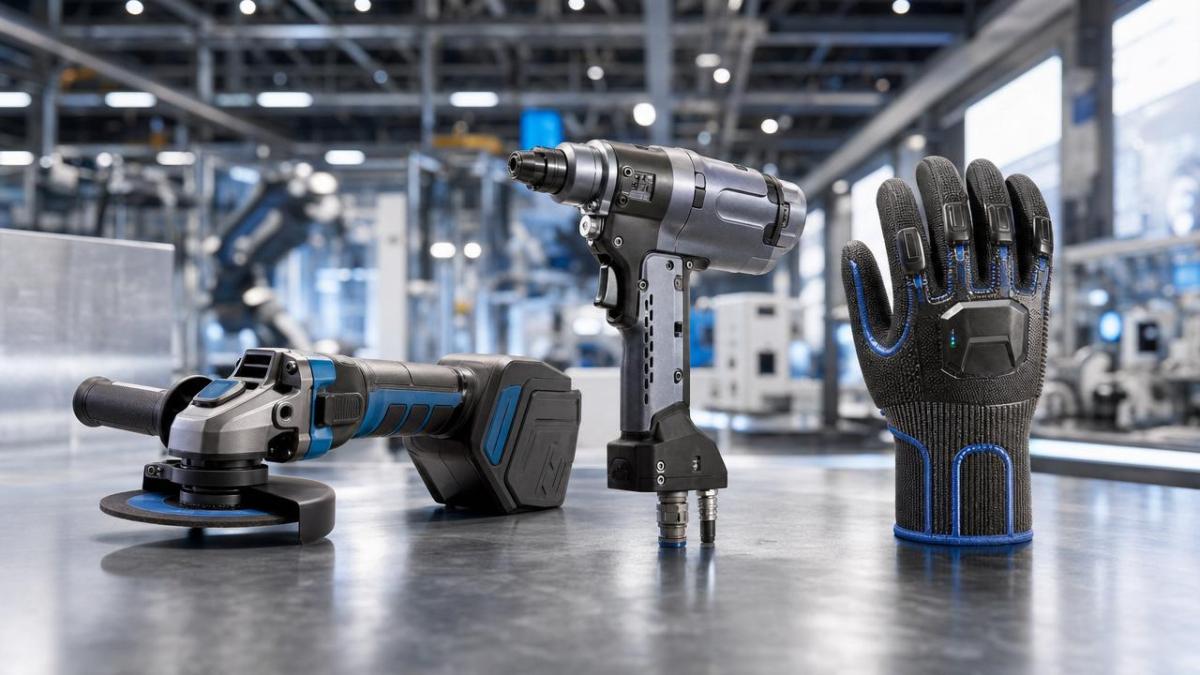
On May 28, 2026, the World Smart Industry Expo commenced in Tianjin, with a thematic focus on embodied intelligence and industrial AI terminals. During the first day of the exhibition, products including lithium-ion angle grinders equipped with BLDC brushless motors, upgraded pneumatic riveting guns with embedded intelligence, and Kevlar cut-resistant gloves integrated with sensor modules attracted bulk inquiry volumes from European and North American distributors. Multiple exhibitors reported accelerated adoption timelines from Middle Eastern infrastructure contractors and Southeast Asian MRO (Maintenance, Repair, and Operations) channels for industrial PPE and power tool kits compatible with localized IoT communication protocols.
Impact Across Key Supply Chain Roles
Direct Trading Enterprises
These firms face intensified demand for technical documentation alignment—including protocol compatibility statements, firmware version logs, and regional IoT certification evidence—especially for shipments targeting Middle Eastern and Southeast Asian procurement cycles. Pre-shipment compliance verification now extends beyond CE or UL marks to include demonstrable support for local network stacks (e.g., Thread, Matter, or region-specific LPWAN profiles).
Raw Material and Component Suppliers
Suppliers of BLDC motor components, lithium battery cells, and sensor subsystems are experiencing upstream specification shifts. Buyers increasingly request traceable component-level certifications (e.g., IEC 62443-4-2 for embedded firmware security) and environmental resilience data aligned with industrial operating conditions (e.g., IP67 rating under sustained vibration).
Manufacturing Enterprises
Factories must adapt production lines to accommodate modular hardware integration—such as sensor mounting interfaces and standardized firmware update pathways—while maintaining ISO 9001 and ISO 13485–aligned quality control for safety-critical PPE upgrades. Firmware localization and over-the-air (OTA) update validation have become non-negotiable for export-bound smart tool variants.
Supply Chain Service Providers
Logistics and compliance service providers are updating their offering portfolios to include IoT protocol conformance testing coordination, regional certification liaison support (e.g., for Saudi SABER or Thailand TISI), and technical dossier preparation aligned with EU Machinery Regulation Annexes and ASEAN Common Technical Dossier templates.
Strategic Priorities for Export-Oriented Manufacturers
Validate IoT Protocol Interoperability Early
Before market entry, manufacturers must verify functional compatibility with regional IoT frameworks—not just physical connectivity. This includes successful device commissioning, secure onboarding, and telemetry transmission using target-country-certified gateways and cloud platforms.
Prepare Modular Certification Documentation
Regulatory submissions should separate core product certification (e.g., EN 62841 for power tools) from software/firmware add-ons and sensor integration modules. This enables faster re-certification when regional protocol updates occur without full product revalidation.
Align Technical Specifications with MRO Procurement Criteria
South and Southeast Asian MRO buyers emphasize lifecycle durability, field-serviceability, and multilingual diagnostic interfaces. Product datasheets and tender responses must explicitly address mean time between failures (MTBF), replaceable module availability, and local-language firmware UI support—not just nominal performance metrics.
Industry Observation: Beyond Hardware—The Rise of Embedded Compliance
Analysis shows that this expo signals a structural shift: compliance is no longer limited to static safety standards but now encompasses dynamic, software-defined interoperability. From an industry perspective, what deserves closer attention is the growing expectation for “certifiable intelligence”—where firmware behavior, data handling logic, and protocol stack implementation must be auditable, version-controlled, and documented to regulatory-grade rigor. Observably, manufacturers investing in certified development lifecycles (e.g., ISO/IEC 15504 SPICE Level 2+ for embedded software) gain competitive advantage during technical bid alignment with global infrastructure contractors.
Conclusion: A New Benchmark for Industrial Tool Intelligence
This event underscores that smart industrial tools are transitioning from standalone enhancements to interoperable system components within broader digital infrastructure projects. It is more appropriate to understand this as a convergence point—not merely of robotics and tools, but of certification regimes, procurement governance, and embedded software accountability. Rational readiness requires coordinated action across engineering, compliance, and supply chain functions—not incremental hardware upgrades alone.
Source Attribution and Ongoing Monitoring Guidance
This article was generated exclusively from the provided title, event date (May 28, 2026), and summary. Specific official source links were not provided in the input and should be verified continuously. Stakeholders are advised to monitor forthcoming technical annexes to the EU Machinery Regulation, updates from the International Electrotechnical Commission (IEC) on IoT-enabled industrial equipment (e.g., IEC 63243 series), national IoT framework implementations in GCC and ASEAN member states, and evolving tender specifications from major infrastructure consortia.
Recommended News