
Search News
Industry Portal
Hot Articles
Indonesia Embassy in China Promotes AI-Green Energy Ties, Opens New Export Path for High-Strength Bolts and Curtain Wall Anchors
Time
Click Count
On May 26, 2026, the Embassy of Indonesia in Beijing hosted the event ‘China-Indonesia Cooperation on AI and Climate Change’, announcing accelerated implementation of new energy infrastructure projects under Indonesia’s Vision 2045. The initiative specifically identifies high-strength bolts for wind turbine towers, photovoltaic mounting system connectors, and smart curtain wall anchors as priority products for inclusion in the China-Indonesia Green Supply Chain White List—with streamlined import inspection procedures. In parallel, China launched the ‘Belt and Road Green Building Materials Export Fast-Track Inspection Channel’. This development is particularly relevant to manufacturers and exporters of structural fasteners, solar support components, and architectural metal embeds.
Event Overview
On May 26, 2026, the Embassy of Indonesia in Beijing held the ‘China-Indonesia Cooperation on AI and Climate Change’ event. It confirmed that, under Indonesia’s Vision 2045 framework, wind turbine tower high-strength bolts, photovoltaic bracket connectors, and intelligent curtain wall anchors will be prioritized for inclusion in the bilateral Green Supply Chain White List. Import inspection procedures for these items will be simplified. Concurrently, China introduced the ‘Belt and Road Green Building Materials Export Fast-Track Inspection Channel’.
Industries Affected
Direct Exporters of Structural Fasteners and Metal Embeds
These enterprises supply high-strength bolts (e.g., ASTM A325/A490 or ISO 898-1 Grade 10.9/12.9), PV mounting connectors (e.g., clamps, splice plates, ground-mount anchors), and curtain wall anchoring systems (e.g., adjustable brackets, seismic-rated inserts). They are directly affected because the White List designation may reduce customs clearance time and documentation burden—provided their products meet Indonesia’s technical and sustainability criteria.
Manufacturers of Precision-Forged or Hot-Dip Galvanized Components
Producers specializing in corrosion-resistant, load-certified forged or galvanized parts—especially those already compliant with IEC 61400 (wind), IEC 61215 (PV), or EN 13830 (curtain walls)—may see increased tender eligibility for Indonesian green infrastructure tenders. However, inclusion in the White List does not guarantee automatic market access; conformity with local standards remains mandatory.
Supply Chain Service Providers (Certification, Logistics, Customs Brokerage)
Third-party service providers supporting export compliance—including SNI certification facilitation, pre-shipment inspection coordination, and documentation for Indonesia’s National Standardization Agency (BSN)—may experience higher demand. The fast-track channel implies tighter alignment between Chinese inspection bodies (e.g., CNAS-accredited labs) and Indonesian regulatory requirements.
What Enterprises and Practitioners Should Monitor and Do Now
Track official updates on White List criteria and rollout timeline
The announcement confirms intent but does not yet publish the formal White List, eligibility thresholds, or application process. Stakeholders should monitor communications from both the Indonesian Embassy in Beijing and China’s Ministry of Commerce (MOFCOM) and General Administration of Customs (GACC), especially any pilot-phase notices or sector-specific guidance documents.
Verify product alignment with Indonesian technical and environmental requirements
Current simplification applies only to listed items meeting specified performance, material traceability, and carbon footprint reporting conditions. Exporters should cross-check existing certifications (e.g., ISO 14067, EPD declarations) against BSN’s draft guidelines for green construction materials—particularly for hot-dip galvanizing thickness, bolt tensile strength verification methods, and fire-resistance testing of embedded assemblies.
Distinguish policy signal from operational readiness
This initiative functions primarily as a high-level policy signal—not an immediate operational mechanism. The ‘fast-track inspection channel’ has not yet published procedural details (e.g., required documentation, lab accreditation scope, or turnaround benchmarks). Companies should avoid assuming reduced lead times until official SOPs are issued.
Prepare documentation and internal alignment ahead of formal launch
Exporters can proactively consolidate technical files (test reports, material mill certificates, weld procedure specifications), update labeling to include bilingual (Chinese–Indonesian) compliance statements, and initiate dialogue with Indonesian importers regarding SNI registration pathways—even before the White List goes live.
Editorial Perspective / Industry Observation
Observably, this initiative reflects a broader trend: bilateral infrastructure partnerships increasingly embedding dual priorities—digital enablement (AI for grid optimization, predictive maintenance) and decarbonization (renewable generation, low-carbon construction). From an industry perspective, the focus on high-strength bolts and curtain wall anchors signals recognition of these components as critical enablers—not just commodities—in green infrastructure resilience. Analysis shows the move is currently a framework-level signal rather than a fully implemented trade mechanism. Its significance lies less in immediate volume impact and more in its role as a precedent: it establishes a template for how ASEAN-China green supply chains may prioritize specific engineered components through coordinated regulatory alignment. Continued attention is warranted—not because the channel is active today, but because its design may inform similar arrangements with Vietnam, Thailand, or the Philippines.
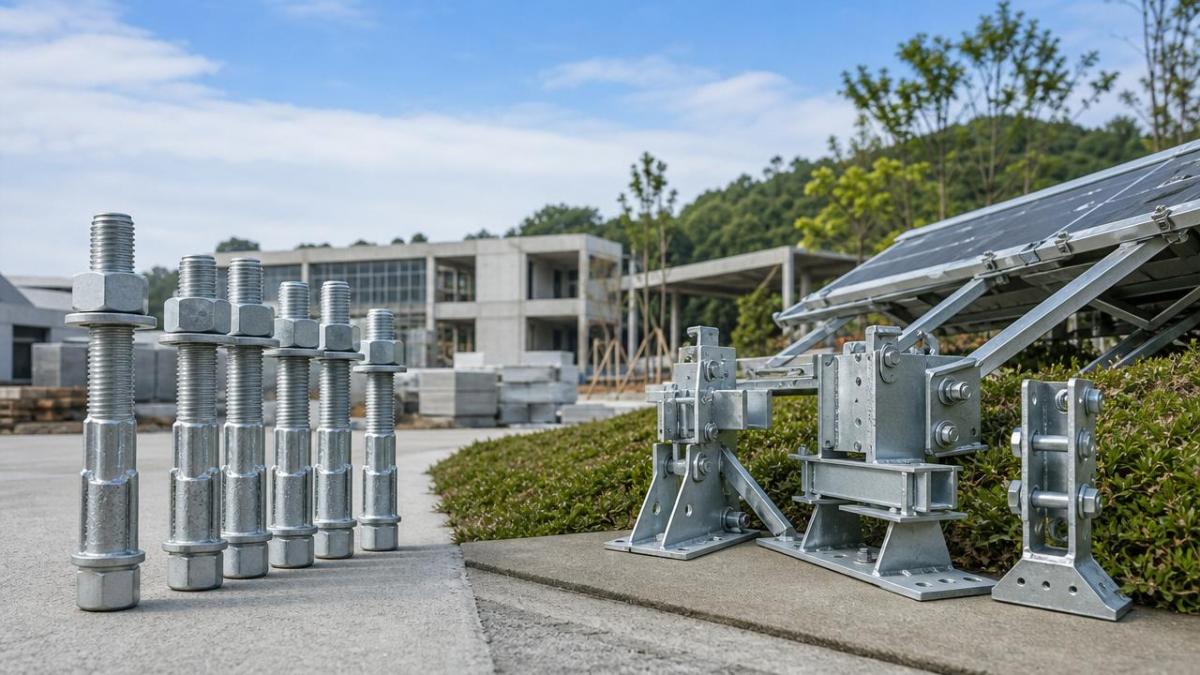
In summary, the Indonesia Embassy’s announcement marks a targeted, early-stage effort to align green infrastructure procurement with supply chain efficiency goals. It does not constitute a new tariff regime or guaranteed market access—but it does introduce a structured pathway for qualifying exporters to reduce non-tariff friction. Currently, it is best understood as a policy catalyst: one that invites preparation, not presumption.
Source: Official announcement by the Embassy of the Republic of Indonesia in Beijing, dated May 26, 2026. Note: The formal White List, detailed inspection protocols for the ‘Fast-Track Channel’, and BSN’s technical annexes remain pending publication and are subject to ongoing observation.
Recommended News