
Search News
Industry Portal
Hot Articles
20V Brushless Drill Buying Guide: Torque, Runtime, and Battery Fit
Time
Click Count
A 20V brushless drill sits at the center of many daily tool decisions, yet the right choice is rarely about sticker price alone.
Torque delivery, runtime stability, and battery fit shape drilling speed, fastening consistency, maintenance frequency, and fleet efficiency over time.
That matters across construction, facility upkeep, industrial assembly, and smart infrastructure work, where downtime often costs more than the tool itself.
Within the broader SHSS view of industrial hardware, the 20V brushless drill is a practical example of how power density, reliability, and system compatibility affect operational safety and productivity.
Why 20V brushless platforms draw attention
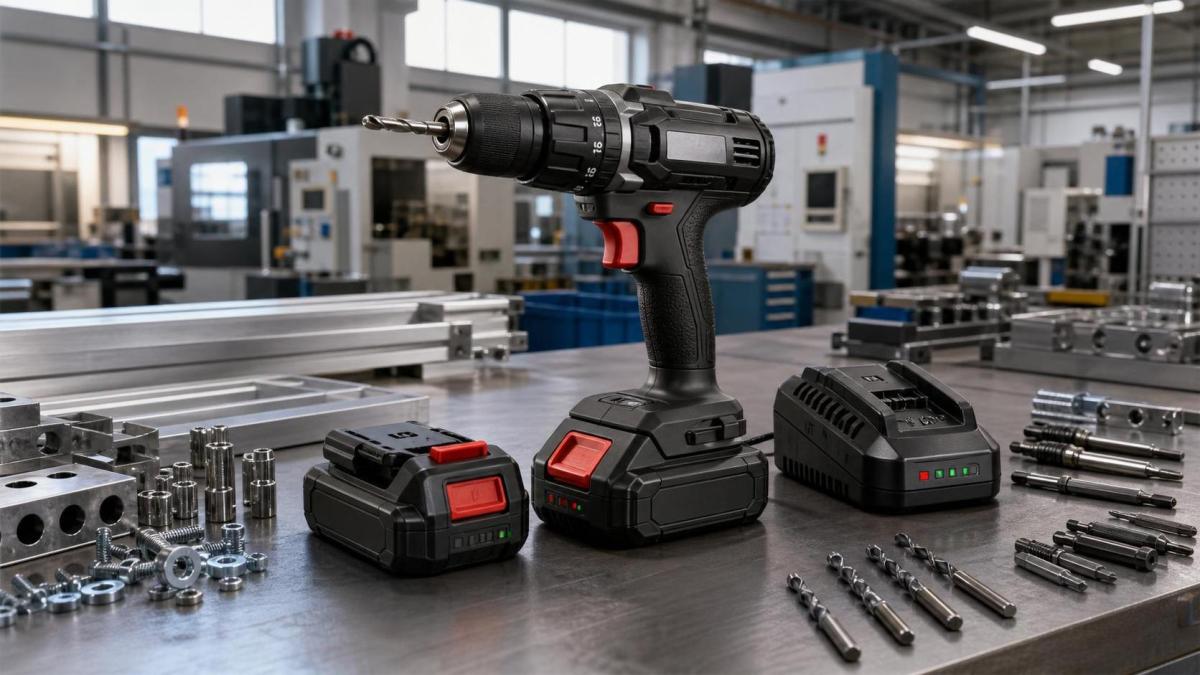
A modern 20V brushless drill combines a BLDC motor, electronic control, and lithium-ion battery architecture in a compact tool body.
Compared with brushed models, brushless systems usually run cooler, waste less energy, and hold output more consistently under changing load.
In practical use, that translates into steadier screw driving, cleaner hole drilling, and less energy loss during repetitive tasks.
The 20V class also hits a useful middle ground.
It offers enough strength for wood, sheet metal, anchors, framing accessories, and maintenance work, without the weight penalty of heavier-duty platforms.
For organizations standardizing cordless tools, this balance often supports better adoption across mixed jobsite and workshop tasks.
Torque is more than a headline number
When comparing a 20V brushless drill, torque figures are usually the first visible specification.
But published maximum torque does not always reflect usable torque in daily applications.
Soft torque and hard torque behave differently.
Soft torque matters in longer fastening cycles, such as driving structural screws into timber or composite materials.
Hard torque appears in short, resistant bursts, often seen when a fastener suddenly bottoms out.
A drill that advertises impressive peak torque may still feel weak if electronic control cannot sustain output under load.
What to check behind the torque claim
- Gearbox design and whether low gear delivers controlled force without stalling.
- Clutch performance during repetitive fastening, especially with mixed material densities.
- Chuck retention quality, because torque is wasted if bits slip during heavy drilling.
- Motor response under load, not just free-spin speed.
In short, the best 20V brushless drill is not necessarily the one with the highest printed torque.
It is the one that converts stored battery energy into stable, controllable output across the tasks actually being performed.
Runtime depends on system efficiency, not battery size alone
Runtime discussions often stop at amp-hour ratings, but that is only part of the picture.
A 5.0Ah pack does not automatically guarantee better field performance than a well-managed 4.0Ah system.
Electronic control, heat management, cell quality, and motor efficiency all influence how long a 20V brushless drill stays productive.
Runtime also changes by workload.
Pilot-hole drilling in softwood, self-drilling screws in steel studs, and masonry work with accessory attachments place very different demands on the platform.
This is where procurement mistakes often begin.
Tools are compared on generic lab numbers, then deployed into duty cycles they were never optimized to support.
Useful runtime questions
Viewed this way, runtime becomes an operational planning issue rather than a simple spec-sheet comparison.
Battery fit affects cost control and standardization
Battery fit sounds basic, but it often decides the long-term economics of a cordless platform.
A 20V brushless drill may perform well on its own while creating unnecessary complexity across chargers, spare packs, storage, and replacement cycles.
The issue is not only whether a battery physically locks into the tool.
It is also about electrical communication, current delivery, thermal protection, and compatibility across other tools in the same lineup.
For mixed fleets, platform fragmentation increases hidden cost fast.
Extra chargers, duplicate batteries, and inconsistent service parts reduce the value of every new purchase.
In sectors covered by SHSS, interoperability is a recurring theme, whether the asset is a drill, a biometric reader, or a smart lighting node.
The same discipline applies here: buy into a system, not an isolated item.
Battery fit points worth verifying
- Compatibility with impact drivers, grinders, lights, and other 20V tools already in use.
- Availability of multiple pack sizes for lightweight and heavy-duty work.
- Service network support for batteries, chargers, and warranty handling.
- Protection circuitry for overcurrent, overheat, and deep discharge conditions.
Where the tool creates business value
A 20V brushless drill earns its place when it reduces interruptions and keeps output predictable across varied assignments.
On construction sites, it supports framing accessories, panel installation, electrical rough-in, and finishing tasks with one cordless base platform.
In facilities maintenance, the same tool handles fixtures, cabinets, access control hardware, and service repairs without frequent cord management.
In industrial settings, dependable clutch control helps protect fasteners, threads, and installed components from overdriving.
That matters more than it first appears.
Poor fastening quality can compromise mounts, housings, brackets, and enclosures connected to wider safety systems.
A drill is a small asset, but it often touches the reliability of larger assemblies.
How to compare models in a realistic way
Spec sheets are useful, but side-by-side evaluation works better when aligned with actual workload.
A practical comparison for a 20V brushless drill should include tool balance, grip fatigue, trigger modulation, chuck runout, and battery swap speed.
These factors influence productivity every hour, even when they rarely dominate marketing material.
A useful comparison framework
This kind of assessment gives a clearer picture than peak voltage language or isolated promotional claims.
Common buying mistakes to avoid
One common mistake is buying by torque alone and overlooking battery ecosystem fit.
Another is assuming all brushless drills with similar voltage perform the same under sustained work.
There is also the issue of duty mismatch.
A compact 20V brushless drill selected for light installation work may disappoint if moved into repetitive heavy fastening without reassessment.
Finally, ignoring lifecycle support can erase early savings.
Batteries age, chargers fail, chucks wear, and fleet consistency matters more after six months than on day one.
A better next step for selection
The strongest buying decision usually starts with a short map of applications, fastening materials, daily runtime expectations, and existing battery platforms.
From there, compare each 20V brushless drill against real work cycles rather than generic category claims.
Pay close attention to sustained torque behavior, battery interchangeability, and service availability.
That approach leads to a platform that supports productivity, lowers tool downtime, and keeps cordless standardization manageable as operations grow.
For any shortlist, it is worth building a simple comparison sheet around torque use, runtime per task, and battery fit before moving forward.
Recommended News