
Search News
Industry Portal
Hot Articles
How Brushless Fastening Tools Improve Assembly Line Speed and Torque Control
Time
Click Count
How Brushless Fastening Tools Improve Assembly Line Speed and Torque Control
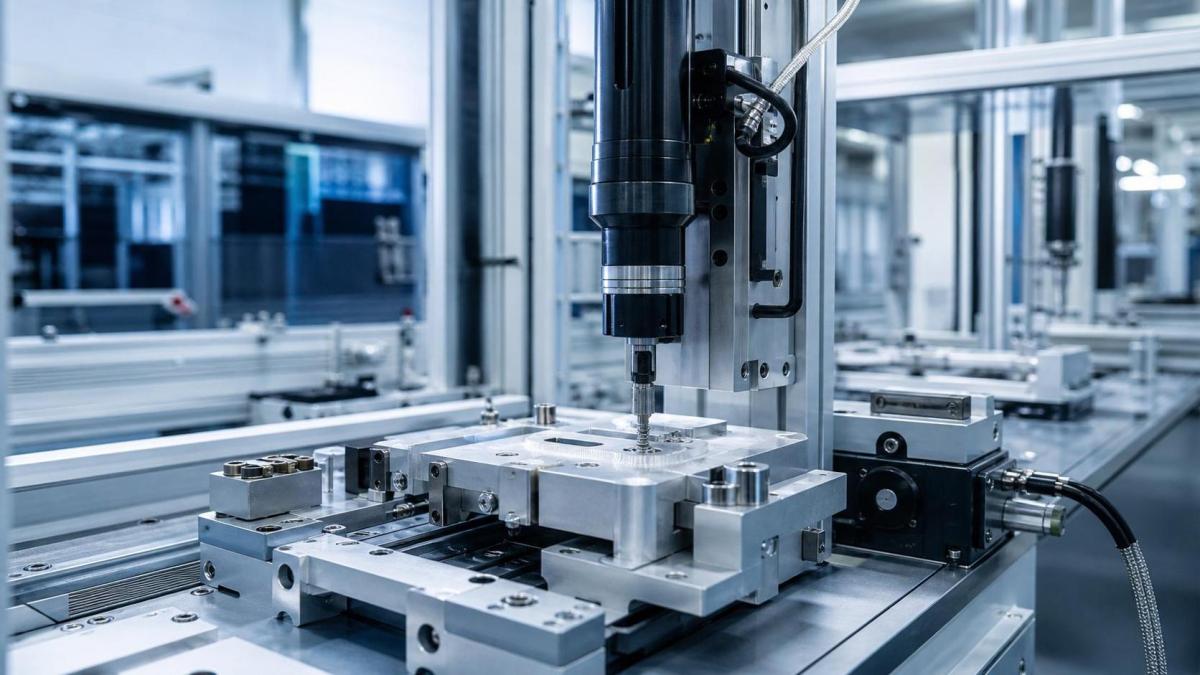
For technical evaluators, the case for brushless fastening tools for assembly starts with numbers, not slogans.
The biggest gains usually appear in cycle time, torque repeatability, uptime, and data visibility.
That matters more as lines become faster, labor gets tighter, and quality requirements become easier to audit.
In simple terms, brushless systems waste less energy, respond faster, and stay consistent for longer production runs.
This article explains how brushless fastening tools for assembly improve line speed while keeping torque control within tighter process windows.
Why brushless motor design changes assembly performance
Traditional brushed motors rely on physical contact between brushes and the commutator.
That contact creates friction, heat, wear particles, and gradual output drift.
Brushless fastening tools for assembly remove that contact point and use electronic commutation instead.
The practical result is smoother acceleration, stronger efficiency, and better control over motor speed under changing load.
On an assembly line, this matters during seating, snugging, and final torque application.
A tool that reacts quickly to load changes can hit the target faster without overshoot.
It also stays closer to programmed parameters over long shifts.
Core technical advantages
- Higher energy efficiency supports stable output during repetitive fastening.
- Lower internal heat helps preserve torque consistency.
- Reduced mechanical wear lowers service frequency.
- Faster electronic response improves torque shutoff accuracy.
- Compact motor design can improve ergonomics for manual stations.
How brushless fastening tools for assembly increase line speed
Speed improvements rarely come from peak RPM alone.
The real gain is shorter total fastening time per joint.
Brushless fastening tools for assembly shorten that time in several ways.
1. Faster rundown with controlled acceleration
Electronic motor control lets the tool ramp quickly without abrupt instability.
That reduces idle seconds between trigger start and fastener seating.
2. Less slowdown under variable load
Mixed materials, sealants, coatings, and thread friction can change load from one joint to the next.
Brushless systems hold speed more effectively through those changes.
3. Fewer unplanned stops
Brush wear is not just a maintenance item.
It is also a source of downtime, inconsistent output, and emergency replacement.
Brushless tools reduce those interruptions, which improves overall line availability.
4. Better fit for high-duty cycles
In multi-shift production, thermal stability becomes a speed issue.
If tools heat up and drift, operators slow down or rework increases.
Brushless fastening tools for assembly maintain performance more predictably across longer runs.
Why torque control improves with brushless systems
Faster tools are only useful when torque remains within specification.
That is where brushless fastening tools for assembly often justify the upgrade.
Because motor response is electronically managed, the controller can react with finer timing.
This supports more precise shutoff, better angle tracking, and improved repeatability from joint to joint.
Torque control benefits that matter in production
- Lower torque scatter across repeat cycles.
- Reduced risk of over-tightening sensitive parts.
- More stable clamp load on safety-critical joints.
- Better control in torque-plus-angle applications.
- More reliable performance in traceable quality systems.
This is especially useful in automotive, electronics, white goods, metal fabrication, and modular construction.
In these settings, one missed torque event can trigger costly inspection, rework, or field risk.
Key evaluation metrics for technical selection
From recent project reviews, the strongest evaluations compare tool claims against process data.
The question is not whether brushless technology is better in theory.
The question is whether a given tool improves your assembly window, quality target, and maintenance model.
Useful metrics to compare
- Cycle time per fastener, including start, rundown, seating, and shutoff.
- Torque repeatability at the actual joint, not only bench results.
- Cp and Cpk performance for critical fastening stations.
- Thermal drift over shift length and production volume.
- Mean time between service events.
- Controller integration with MES, PLC, or quality databases.
- Traceability depth for torque, angle, timestamp, and operator data.
Quick comparison table
Where the upgrade delivers the strongest return
Not every station benefits equally.
The best return usually appears where fastening is frequent, quality-critical, or difficult to rework.
Best-fit applications
- High-volume assembly cells with repetitive cycles.
- Stations using torque-angle or error-proofing logic.
- Lines where downtime carries a high hourly cost.
- Products with warranty exposure tied to joint integrity.
- Processes that require digital fastening records.
A clearer signal appears when current tools already meet torque spec on paper but still generate rework.
In many cases, the hidden issue is variation under real production conditions.
Brushless fastening tools for assembly often reduce that gap between lab performance and line reality.
Common risks and how to evaluate them properly
The upgrade is not automatic value.
A higher-spec motor cannot fix poor joint design, unstable fasteners, or weak calibration discipline.
Watch for these evaluation mistakes
- Comparing free-speed claims instead of measured fastening cycle time.
- Ignoring joint variability from lubrication, coatings, or material stack-up.
- Treating torque transducer data as the only proof of clamp quality.
- Skipping endurance trials at real duty cycle and ambient temperature.
- Overlooking software compatibility with plant control systems.
In actual operations, the most reliable decision comes from side-by-side trials.
Run the existing tool and the brushless candidate on the same station.
Measure cycle time, torque spread, rework rate, thermal behavior, and operator handling over several shifts.
A practical selection checklist for modern assembly lines
For a sound decision, treat brushless fastening tools for assembly as part of a process system.
The motor matters, but the controller, joint profile, data flow, and service plan matter just as much.
- Define the actual joint window, including torque, angle, cycle target, and defect cost.
- Test brushless tools on the production joint, not on a generic fixture alone.
- Review torque trace quality and controller reaction during seating and shutoff.
- Check data integration requirements for traceability and plant analytics.
- Estimate total cost through maintenance, uptime, scrap, and rework reduction.
- Confirm calibration intervals, spare parts strategy, and vendor support response.
When these checks are done well, the business case becomes easier to defend.
The value shows up in faster output, tighter torque control, and fewer surprises on the line.
For plants pursuing higher throughput with traceable quality, brushless fastening tools for assembly are no longer a niche upgrade. They are increasingly the operational standard to evaluate first.
Recommended News