
Search News
Industry Portal
Hot Articles
Industrial Cordless Tools Cost: 7 Factors That Change Total Ownership
Time
Click Count
Why does industrial cordless tools cost rarely match the invoice price?
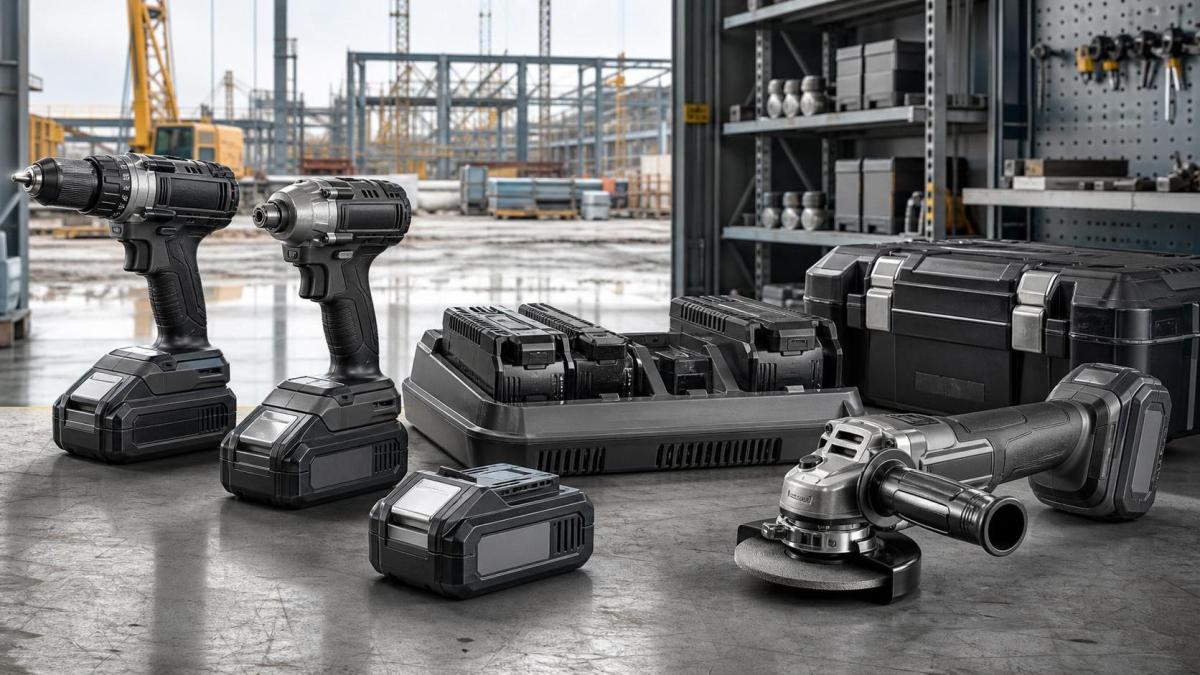
Industrial cordless tools cost is usually discussed as a unit price. That is the narrowest part of the equation.
In real operations, ownership cost includes batteries, chargers, spare tools, repair intervals, lost labor time, and replacement timing.
That matters in construction, industrial assembly, facilities maintenance, smart city infrastructure, and security installation work.
A lower bid can become the more expensive choice when runtime is short or failure rates interrupt scheduled work.
SHSS often frames this through a wider systems lens.
The same logic used to assess biometric uptime, fastener integrity, and smart lighting lifecycle also applies to cordless tools.
The practical question is simple: what will this platform cost over its working life, not just on day one?
Which seven factors change total ownership the most?
Most cost drift comes from seven variables. They are measurable, and they can be compared before approval.
- Initial platform price, including tool body, battery packs, chargers, and kit configuration.
- Battery lifespan, especially cycle count, heat performance, and replacement frequency under heavy duty use.
- Maintenance and repair exposure, including switches, chucks, electronics, bearings, and brushless motor control boards.
- Downtime risk, which often becomes the largest hidden cost in high-output environments.
- Charging infrastructure, including extra chargers, storage cabinets, power access, and battery handling rules.
- Service life of the tool platform, especially under vibration, dust, moisture, and repetitive fastening cycles.
- Compatibility across the fleet, because mixed battery ecosystems usually create avoidable inventory and scheduling waste.
When industrial cordless tools cost is reviewed through these seven factors, price gaps between suppliers start to make more sense.
A premium platform may still reduce ownership cost if it protects uptime and lowers battery turnover.
How much do batteries really change industrial cordless tools cost?
More than many teams expect. Batteries are not accessories. They are operating assets with a predictable wear curve.
High-rate Li-ion packs support the torque and output that modern BLDC tools promise. They also age under heat, charge speed, and misuse.
In practical terms, one platform can look economical until the second year, when pack replacement begins to accelerate.
The sharper the duty cycle, the more battery behavior drives industrial cordless tools cost.
This is common in steel fixing, MEP installation, façade anchoring, and security hardware deployment across large sites.
A useful review table is below.
A supplier should be able to show battery replacement assumptions, not just nominal voltage and amp-hour claims.
When does downtime outweigh the equipment budget?
Usually sooner than expected.
If a fastening crew, maintenance team, or security deployment unit pauses work, labor cost continues while output stops.
That is why industrial cordless tools cost should be tied to uptime modeling.
One failed impact wrench during repetitive anchor installation may delay inspection, shift sequencing, and linked subcontractor activity.
The hidden cost is not the repair invoice. It is the chain reaction around it.
SHSS covers this same dependency logic across connected infrastructure.
A biometric gate that fails, a smart luminaire that drops offline, or a cordless tool that cannot complete a shift all create secondary costs.
A practical approval test is to ask for three numbers:
- Mean time between failures in similar duty conditions.
- Typical turnaround time for repair or replacement.
- Recommended spare ratio for uninterrupted field use.
Without those figures, industrial cordless tools cost cannot be judged with confidence.
Are charging, storage, and fleet compatibility just minor details?
They look minor during sourcing. They become expensive during rollout.
Charging infrastructure affects floor layout, shift handover, electrical load planning, and battery availability at the point of work.
Storage also matters where dust, heat, and moisture shorten pack life or compromise charger reliability.
More common than expected is a mixed fleet built from short-term deals. That often raises industrial cordless tools cost over time.
Different voltages, chargers, adapters, and battery footprints create purchasing friction and training mistakes.
If one standardized platform can cover drilling, fastening, cutting, and site maintenance, ownership usually becomes easier to control.
The right question is not whether chargers are included. It is whether the whole battery ecosystem scales cleanly.
What buying mistakes make industrial cordless tools cost look better than it is?
The first mistake is comparing only tool-body prices. That ignores the cost of a working platform.
The second is assuming all brushless tools deliver the same lifespan. Electronics quality and thermal protection vary widely.
Another common error is overlooking application fit.
A light-duty driver can appear efficient until it is pushed into repetitive structural fastening or heavy anchor drilling.
Then failure rates rise, batteries overheat, and replacement cycles compress.
There is also the issue of fragmented support.
If service depends on distant depots or uncertain parts supply, the true industrial cordless tools cost becomes harder to forecast.
- Request a three-year ownership model, not a one-time quotation.
- Separate consumables, batteries, chargers, and service into visible line items.
- Check whether the platform is proven in dust-heavy, vibration-heavy, or high-cycle environments.
- Confirm spare tool strategy before deployment begins.
How should a final approval decision be structured?
A disciplined decision usually combines technical fit, lifecycle cost, and operational resilience.
In practice, industrial cordless tools cost should be reviewed the same way durable infrastructure assets are reviewed.
That means looking at failure exposure, replacement cycles, energy handling, and support continuity.
This is also where SHSS thinking is useful.
Across tools, security systems, fasteners, smart lighting, and PPE, the recurring principle is simple: durability and continuity protect margin better than headline discounts.
Before approval, build a short decision sheet covering these checks:
Industrial cordless tools cost becomes easier to manage when every major hidden expense is named early.
The next step is to compare suppliers with a lifecycle worksheet, validate battery assumptions, and test whether uptime claims hold in your actual workload.
Recommended News