
Search News
Industry Portal
Hot Articles
How to Compare Industrial Tools Suppliers for Long-Term Service Value
Time
Click Count
How to Compare Industrial Tools Suppliers for Long-Term Service Value
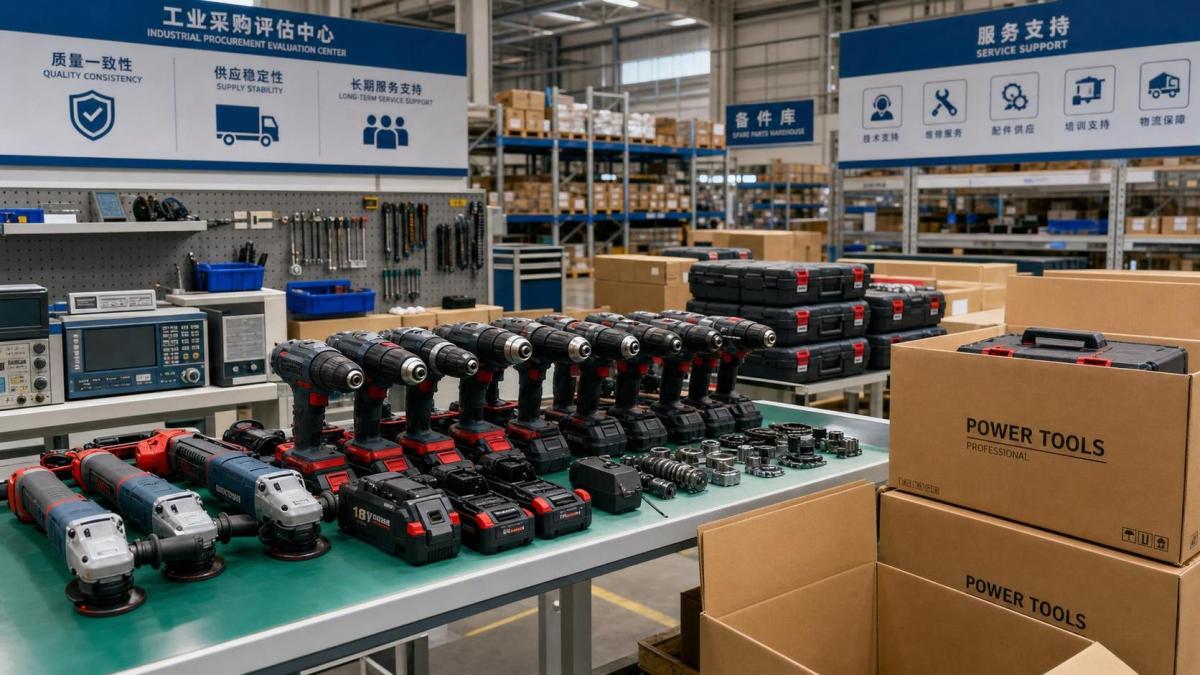
Choosing among industrial tools suppliers is rarely a price-only exercise. The first quote may look competitive, but long-term value usually appears after months of real use.
In actual procurement work, service gaps show up fast. Delayed parts, weak repairs, unstable quality, and slow responses can disrupt production and stretch project timelines.
That is why comparing industrial tools suppliers needs a broader lens. You are not just buying tools. You are buying uptime, continuity, and fewer operational surprises.
For organizations managing industrial hardware, safety systems, and field operations, the same principle applies across categories. Reliability matters more than a short-term discount.
A supplier serving construction, manufacturing, maintenance, or infrastructure projects should support performance over the full lifecycle, not only the first shipment.
Start with Total Service Value, Not Unit Cost
Many buying teams begin with unit pricing. That is normal, but it can hide larger costs that emerge after deployment.
When comparing industrial tools suppliers, look at total service value. This includes maintenance support, warranty speed, parts access, training quality, and expected tool life.
A lower-cost drill, driver, grinder, or fastening tool may become expensive if downtime increases. The real question is how the supplier performs when tools are under pressure.
This is especially relevant for brushless platforms. Higher efficiency and longer runtime are useful only when batteries, chargers, repairs, and replacements are managed well.
- Compare total cost of ownership over 12 to 36 months.
- Estimate labor loss from tool downtime.
- Add spare parts, shipping, calibration, and service turnaround costs.
- Review replacement frequency for heavy-use applications.
This approach creates a cleaner comparison. It also makes supplier discussions more factual and less driven by opening discounts.
Check Product Consistency Across Batches
One of the clearest signals in industrial tools suppliers is batch consistency. A strong sample order means little if later deliveries vary in motor quality, housing strength, or battery performance.
Ask for data from different production runs. Review torque stability, failure rates, battery cycle expectations, and inspection processes.
More importantly, check whether the supplier can explain quality control without vague language. Good suppliers usually show test methods, pass criteria, and corrective action steps.
For demanding environments, consistency matters beyond tools alone. Fasteners, lighting, biometric access devices, and PPE all depend on disciplined manufacturing and traceable quality systems.
- Request inspection records and defect trend reports.
- Ask whether critical components come from fixed or rotating sources.
- Confirm how design changes are communicated before shipment.
- Review sample retention and traceability procedures.
If a supplier cannot prove repeatability, long-term service value remains uncertain.
Measure Technical Support Before You Need It
Support quality often decides whether industrial tools suppliers become long-term partners. This becomes obvious after failures, urgent jobs, or product integration issues.
A capable supplier should answer practical questions quickly. That includes tool selection, load matching, application guidance, battery compatibility, safety use, and maintenance intervals.
Recent market shifts make this even more important. Tools now connect with digital workflows, energy management, and safety compliance expectations across larger jobsite systems.
SHSS tracks this broader convergence closely. In modern procurement, tools increasingly sit beside smart access control, lighting systems, fastening performance, and frontline protective equipment.
That means technical support should extend beyond product brochures. It should reflect real operating conditions and clear application understanding.
- Send a technical question during evaluation.
- Measure response time and answer quality.
- Check whether support comes from sales staff or trained engineers.
- Ask for usage recommendations tied to your exact environment.
The faster signal is not speed alone. It is whether the supplier understands the operational risk behind the question.
Evaluate Parts Availability and Service Turnaround
Industrial tools suppliers should be judged by what happens after a breakdown. Field teams care less about warranty language than actual repair speed.
Ask how spare parts are stocked. Find out whether batteries, switches, chucks, controllers, and gear assemblies are available locally or only from central warehouses.
A strong service model usually has clear turnaround commitments. It may also include swap units, preventive maintenance options, and repair visibility during the process.
This is where cheap sourcing often becomes risky. If one failed tool can halt a crew or delay a delivery, support latency becomes a measurable business cost.
Assess Supply Stability and Operational Resilience
The more volatile signal in recent years is supply resilience. Industrial tools suppliers now face component shortages, freight shifts, compliance changes, and regional manufacturing disruptions.
A supplier with attractive pricing but unstable delivery can create greater damage than a higher-priced but dependable partner.
This also applies across adjacent categories in industrial procurement. A delayed fastener shipment, missing smart lighting component, or unavailable safety gear can affect the same project timeline.
Ask suppliers how they manage second sources, stock buffers, and production scheduling. More reliable suppliers can explain their risk controls in practical terms.
- Review on-time delivery performance over several quarters.
- Ask about dependency on single factories or single battery cells.
- Confirm whether forecast sharing improves allocation priority.
- Check how the supplier handles rush orders during peak demand.
Reliable industrial tools suppliers usually show discipline in planning, communication, and escalation. Those habits become valuable long after onboarding.
Look for Compliance, Documentation, and Risk Transparency
Procurement decisions are increasingly shaped by documentation quality. This is not administrative detail. It is part of supplier reliability.
Strong industrial tools suppliers can provide certifications, test reports, material declarations, warranty terms, and safety instructions without confusion or delay.
This standard becomes even more relevant in environments linked to security, data handling, regulated facilities, or public infrastructure.
At SHSS, this wider perspective matters because physical hardware increasingly intersects with digital control and compliance boundaries. Tools, access systems, lighting, and PPE all sit inside broader risk frameworks.
When a supplier avoids detail, that often signals weak internal process control. Transparent documentation usually points to stronger governance.
Use a Weighted Scorecard for Final Comparison
The cleanest way to compare industrial tools suppliers is a weighted scorecard. This keeps decisions tied to business priorities rather than sales pressure.
Not every factor deserves equal weight. For critical operations, uptime and service may matter more than purchase price.
- Define key criteria such as price, quality, support, lead time, and repair speed.
- Assign weights based on project risk and operational impact.
- Score each supplier using evidence, not assumptions.
- Review the result with operations, maintenance, and technical stakeholders.
This method helps expose tradeoffs clearly. A supplier with slightly higher pricing may still deliver better lifecycle value and lower disruption risk.
Make the Decision Around Long-Term Fit
The best industrial tools suppliers are not always the cheapest or the most visible. They are the ones that keep performance stable when demand, site conditions, or timelines become difficult.
A sound comparison should test product consistency, service responsiveness, parts support, supply resilience, and documentation discipline together.
That broader view leads to better decisions. It also reduces the hidden costs that usually appear after the contract is signed.
In practical terms, long-term service value comes from repeatable execution. Industrial tools suppliers earn trust when they protect uptime, support field teams, and communicate risk early.
Use that standard in your next evaluation. It will produce a stronger supplier shortlist and a more defensible procurement decision.
Recommended News