
Search News
Industry Portal
Hot Articles
BLDC Motors vs Brushed Motors in Li-ion Power Tools
Time
Click Count
For procurement teams evaluating Li-ion power tools, the choice between BLDC motors and traditional brushed motors directly affects tool lifespan, downtime, maintenance cost, and total return on investment. As cordless tools become central to construction, manufacturing, and field service operations, motor architecture is no longer a technical detail—it is a purchasing risk factor. This guide compares performance, efficiency, durability, and cost considerations to help buyers identify when brushless technology delivers measurable value and when brushed tools may still fit specific budget or usage scenarios.
In high-volume tool fleets, a small difference in heat generation, runtime, or service interval can become a measurable operating cost within 6–18 months. Buyers need more than brochure claims; they need a framework that links motor design to productivity, battery utilization, spare parts planning, and field reliability.
How Motor Architecture Changes Procurement Risk
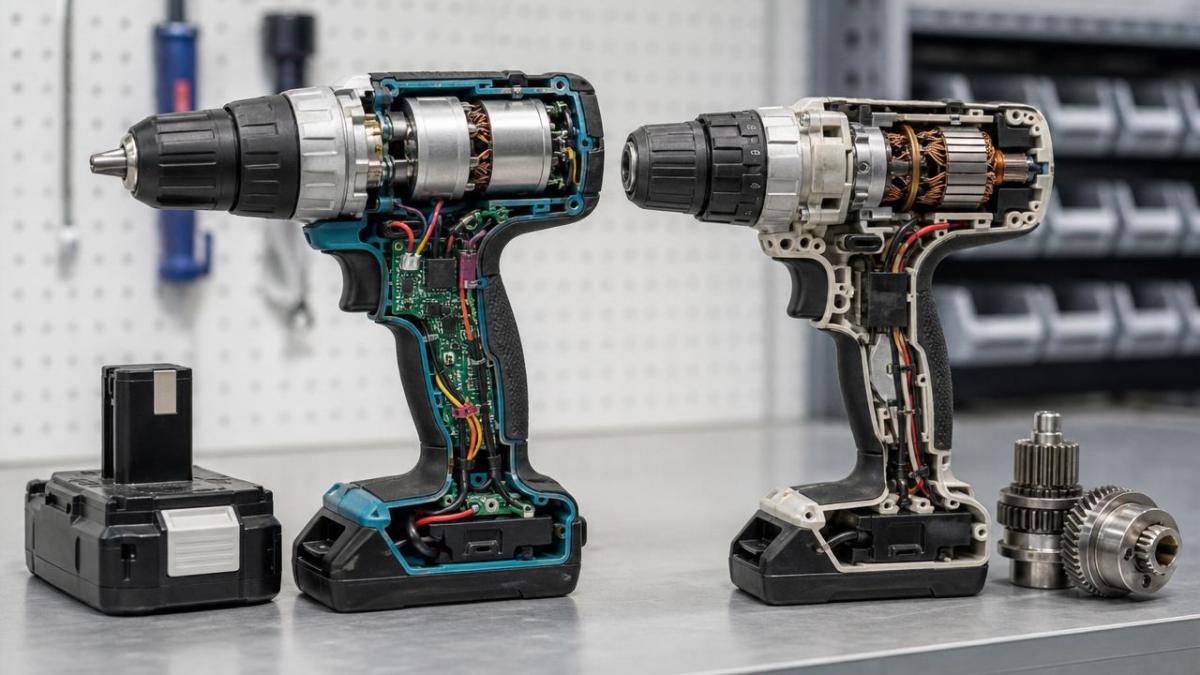
Brushed motors use carbon brushes and a mechanical commutator to transfer current to the rotating armature. BLDC motors replace that wear interface with electronic commutation, magnets, sensors, and a control board. That difference affects every purchasing variable after delivery.
For a procurement manager, the question is not simply whether brushless technology is newer. The practical question is whether the tool will reduce downtime, preserve battery capacity, and maintain torque consistency across hundreds or thousands of work cycles.
Brushed Motors: Lower Entry Cost, Higher Wear Exposure
Brushed tools remain attractive where purchase price is the dominant criterion. They can be suitable for light-duty kits, low-frequency maintenance rooms, training fleets, or emergency backup inventories used fewer than 2–3 hours per week.
However, brushes create friction, sparks, heat, and gradual electrical resistance. In dusty construction sites or metal fabrication areas, this mechanical wear can shorten service intervals and increase the need for scheduled inspection.
BLDC Motors: Electronics Replace Mechanical Commutation
BLDC motors use a controller to regulate current and speed. This allows more precise power delivery, better thermal management, and easier integration with overload protection, soft start, electronic braking, and battery communication systems.
For buyers managing cordless drills, impact wrenches, grinders, rotary hammers, or fastening tools, this architecture can reduce variability between operators. A properly specified brushless tool can hold performance under repetitive load for longer shifts.
The table below summarizes the procurement-level differences buyers should consider before comparing quotations or approving a tool fleet standard.
The core conclusion is clear: brushed tools may win on upfront price, while BLDC motors often win when downtime, service labor, and battery productivity are included in the total cost model.
Performance, Efficiency, and Battery Utilization
Li-ion power tools depend on the interaction between motor, controller, battery cells, and mechanical gearbox. BLDC motors are not valuable in isolation; their value appears when the entire drive system is specified correctly.
For procurement teams, performance should be measured by output stability, work completed per charge, heat under load, and tool recovery time. A 20 V platform may behave very differently depending on cell discharge capability and motor control logic.
Torque Consistency Under Real Workloads
In fastening, drilling, and cutting, peak torque is less useful than repeatable torque. BLDC motors can adjust current delivery in milliseconds, helping maintain speed when the bit meets dense timber, rebar, concrete aggregate, or seized fasteners.
This matters in quality-sensitive assembly. If a tool repeatedly stalls, overheats, or triggers battery protection after 30–60 minutes, operators lose time and supervisors lose process control.
Runtime and Thermal Control
Because BLDC motors remove brush friction, more battery energy can be converted into useful mechanical output. The benefit is most visible in high-load applications, where heat is the hidden enemy of both motor life and Li-ion cell health.
Buyers should ask suppliers for runtime tests using comparable batteries, identical material conditions, and repeatable duty cycles. A useful test may include 100–300 repeated fastenings, 10–20 drilling cycles, or timed cutting under controlled load.
Key Runtime Questions for Suppliers
- What battery capacity was used: 2.0 Ah, 4.0 Ah, 5.0 Ah, or higher?
- Was the test based on continuous load or intermittent professional use?
- At what temperature did thermal protection activate, if tested?
- How long does the tool need to recover after overload protection?
These questions prevent a common procurement error: comparing headline voltage instead of measured work output. BLDC motors usually perform best when paired with high-rate battery packs and adequate cooling channels.
Cost, Maintenance, and Total Return on Investment
The procurement case for BLDC motors depends on duty cycle. A tool used once a month may not justify a premium. A tool used 5 days per week across a construction crew or production line often justifies a deeper cost analysis.
Total cost of ownership should include acquisition price, battery replacement, repair labor, downtime, spare tool inventory, charger quantity, and operator productivity. For many B2B fleets, these indirect costs exceed the initial price gap.
Where the Brushless Premium Can Pay Back
Brushless tools are often a stronger investment where tools face high vibration, abrasive dust, repetitive fastening, or remote deployment. In those scenarios, a repair event can cost more than the part itself because crews are interrupted.
Procurement teams should calculate payback over 12, 24, and 36 months. Even a modest reduction in failures can matter when a fleet includes 50, 200, or 1,000 cordless tools.
The following procurement matrix helps separate purchase-price decisions from lifecycle decisions across common industrial and commercial tool scenarios.
The matrix shows why a single answer rarely fits every department. Many buyers adopt a tiered approach: BLDC motors for critical professional tools, brushed tools only where duty cycle and safety risk remain low.
Maintenance Planning for Tool Fleets
Brushless does not mean maintenance-free. Procurement specifications should still require bearing checks, trigger testing, housing inspection, battery terminal cleaning, firmware or controller diagnostics where applicable, and replacement part availability.
A practical fleet policy can schedule visual checks every 30 days, functional testing every 90 days, and deeper service review every 6–12 months, depending on dust, vibration, moisture, and impact exposure.
Selection Criteria for B2B Buyers
When comparing BLDC motors with brushed alternatives, procurement teams should avoid evaluating the motor alone. A reliable Li-ion tool is a system composed of cells, motor, controller, gearbox, housing, charger, accessories, and service support.
For industrial buyers, the strongest specification is usually based on 6 evaluation areas: application load, duty cycle, battery platform, safety controls, service terms, and supplier documentation.
Technical Checks Before Issuing a Purchase Order
- Define load class: light maintenance, medium construction, or heavy industrial duty.
- Request tested torque, speed, and runtime under stated battery capacity.
- Check controller protections: overload, over-temperature, over-discharge, and soft start.
- Review battery compatibility across at least 3–5 tool categories if standardizing a platform.
- Confirm spare parts, repair turnaround, and warranty exclusions in writing.
- Run field trials with operators for 7–14 days before bulk purchasing.
A short field trial is especially important. Operators often reveal issues that specifications hide, such as poor balance, difficult trigger modulation, uncomfortable vibration, or battery packs that interfere with tight-space access.
Battery Platform Strategy
BLDC motors often encourage buyers to standardize around a Li-ion platform. This can reduce charger inventory, simplify training, and improve battery rotation. But the platform must cover the tools actually used by crews.
A fragmented fleet may require 3–4 charger types, multiple pack voltages, and duplicated spare batteries. That increases storage complexity and can slow emergency replacement on a jobsite.
Procurement Red Flags
- Only peak torque is provided, with no continuous-load or runtime data.
- The supplier cannot explain controller protection thresholds or cooling design.
- Battery packs are proprietary but not available in multiple capacities.
- Warranty terms exclude dust, overload, or professional use without clear definitions.
These red flags do not automatically disqualify a supplier, but they justify additional clarification. For BLDC motors, the quality of the electronic control system is as important as the motor label itself.
Common Misconceptions and Practical Buying Advice
A common misconception is that every brushless tool is automatically superior. In reality, poorly designed BLDC motors with weak controllers, undersized wiring, or inadequate cooling may disappoint under industrial conditions.
Another misconception is that brushed tools are obsolete. They still have a place when usage is occasional, budgets are strict, and downtime risk is low. The right decision depends on workload, not technology fashion.
When BLDC Motors Are the Better Choice
Choose BLDC motors for tools expected to run daily, perform heavy fastening, support field service teams, or operate where repair access is limited. They are also preferable where heat, dust, and runtime directly affect project schedules.
They fit procurement strategies focused on fewer interruptions, longer battery usefulness, and more predictable tool behavior. In large fleets, consistent performance can be more valuable than a lower unit price.
When Brushed Tools May Still Make Sense
Brushed tools may still be practical for low-intensity maintenance teams, non-critical inventory, small contractors buying starter kits, or training environments where initial cost matters more than long-term utilization.
In these cases, procurement should still verify brush availability, service instructions, and battery compatibility. A low-cost tool becomes expensive if replacement parts disappear after the first procurement cycle.
A Balanced Procurement Model
Many organizations achieve the best result through segmentation. Critical tools receive brushless specifications, while lower-risk tools remain cost-controlled. This avoids overbuying while protecting the areas where failure is most expensive.
SHSS recommends building a purchasing scorecard before vendor negotiation. Assign weighted scores to runtime, service terms, safety features, battery ecosystem, tool ergonomics, and 24–36 month lifecycle cost.
For procurement teams, BLDC motors are most valuable when they reduce measurable risk: less downtime, fewer wear parts, better battery utilization, and stronger performance under repeated load. Brushed motors remain viable in limited-use scenarios, but they should be selected deliberately rather than by habit.
If your organization is comparing cordless tool platforms, planning a fleet upgrade, or building supplier evaluation criteria, SHSS can help structure the decision around real operating conditions. Contact us to discuss product details, request a tailored procurement checklist, or explore more smart hardware solutions for industrial safety and efficiency.
Recommended News