
Search News
Industry Portal
Hot Articles
Smart Door Lock Features That Improve Daily Access Control
Time
Click Count
A smart door lock is no longer a niche upgrade for premium buildings. It has become a practical access tool for daily routines, helping reduce lost keys, delayed entry, and unclear visitor records across homes, offices, rental units, and shared facilities.
What makes this topic worth attention is not only convenience. In a wider smart hardware environment, access control now sits beside biometric security, connected lighting, and AIoT infrastructure as part of a broader safety system.
That is why the right features matter. A well-chosen smart door lock can improve speed, visibility, and accountability, while a poorly matched one may create friction, maintenance issues, or unnecessary security gaps.
Why daily access control has changed
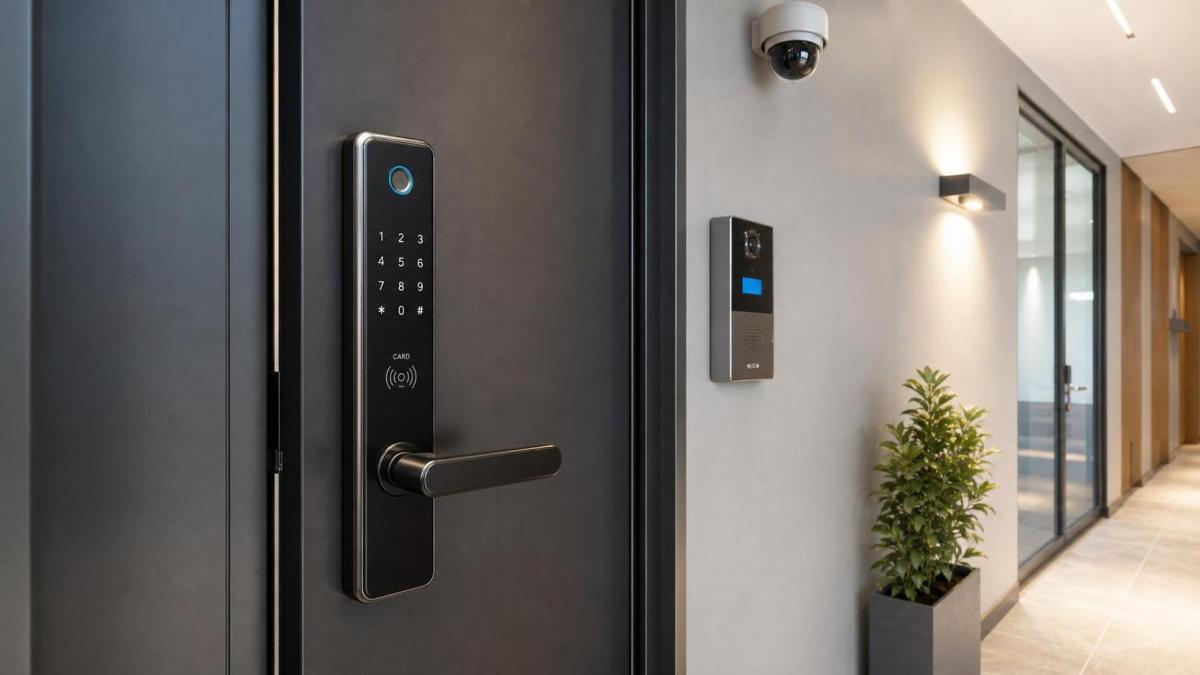
Access control used to mean a physical key, a mechanical cylinder, and a simple lock status. That model still works in basic settings, but it struggles when entry needs change often.
Temporary workers, cleaners, delivery teams, guests, and rotating staff all create moving permission needs. In these situations, physical keys are hard to track and even harder to revoke quickly.
A smart door lock answers that problem by turning the door into a managed point of entry. Instead of asking only whether the door is locked, operators can ask who entered, when, how, and with what level of authorization.
This shift is closely aligned with the SHSS view of modern security. Physical hardware still matters, but it becomes more valuable when reinforced by precise digital control and fast identity verification.
Core features that improve everyday use
Not every feature delivers equal value. The most useful smart door lock functions are the ones that simplify routine access while reducing operational blind spots.
Multiple authentication methods
Fast entry matters during busy hours. PIN codes, mobile credentials, fingerprint recognition, RFID cards, and mechanical backup keys offer flexibility when users arrive with different needs.
Biometric options deserve special attention. In dark corridors, service entrances, or high-traffic points, fingerprint or facial verification can reduce delays and discourage code sharing.
Permission management
One of the strongest advantages of a smart door lock is adjustable access. Permanent credentials, one-time codes, recurring schedules, and time-limited entry all support different operating conditions.
This becomes especially useful in shared buildings, storage areas, and flexible workplaces, where access should not remain active longer than required.
Real-time status and event logs
A lock that records openings, failed attempts, forced entry alerts, and low battery warnings offers more than convenience. It creates a usable operational history.
That history supports audits, incident reviews, and simple daily checks. In practical terms, it helps confirm whether a door was accessed normally or whether a pattern needs attention.
Remote control and integration
Remote locking and unlocking can solve common service issues without sending someone on site. This is useful when granting entry to approved visitors or securing a door after operating hours.
The bigger gain appears when the smart door lock connects with alarms, cameras, intercoms, or smart lighting. Then access control becomes part of a coordinated building response rather than a standalone device.
What the industry is paying attention to
The market is moving beyond keyless entry. Attention is shifting toward resilience, compliance, and integration quality.
In biometric security, fast recognition is important, but so is protection against spoofing. Solutions using stronger infrared, structured light, or secure template storage are receiving more scrutiny.
Privacy is another live issue. If a smart door lock stores personal data in the cloud, retention rules, encryption methods, and regional compliance can be as important as unlocking speed.
Hardware durability also matters more than many buyers expect. A connected lock still depends on mechanical strength, stable fastening, weather resistance, and reliable power management. Smart features cannot compensate for weak physical construction.
This is where a cross-disciplinary perspective helps. SHSS consistently frames smart access as a combination of biometric intelligence, structural reliability, and real-world operating discipline.
Where a smart door lock creates the most value
The value of a smart door lock changes by setting. The same product may feel excessive in one space and essential in another.
In higher-security spaces, the smart door lock often works best as one layer among several. Cameras, lighting control, door sensors, and visitor management can reinforce each other.
That layered logic reflects broader smart city and commercial building trends. Entry points are treated less as isolated objects and more as nodes within a secure operating network.
How to judge features before selecting a system
A long feature list can be misleading. What matters is whether the smart door lock fits the door, the traffic pattern, and the risk profile.
Start with the entry pattern
Ask how often the door is used, how many people need access, and whether credentials change weekly, monthly, or rarely. This quickly narrows the required feature set.
Check mechanical and power reliability
A smart door lock must still survive weather, vibration, repeated cycles, and poor handling. Battery life, backup power, emergency override, and lock body strength should be reviewed early.
Review data handling and access hierarchy
If the system uses biometrics or cloud management, it should provide clear rules for storage, deletion, admin rights, and password protection. These details often shape long-term trust.
Consider integration, not only the lock
The best choice may not be the most advanced standalone model. It may be the one that works smoothly with existing cameras, alarm panels, gateways, or building automation platforms.
- Prefer authentication methods that match actual traffic speed.
- Use temporary permissions where access changes frequently.
- Verify event log quality, not only notification count.
- Check fallback behavior during battery or network failure.
- Treat biometric convenience and privacy protection as equal priorities.
A practical direction for the next decision
Choosing a smart door lock becomes easier when the discussion moves away from novelty and toward operating reality. The right question is not whether the lock is smart, but whether it improves control every day.
For some sites, that means faster biometric entry. For others, it means cleaner audit trails, lower key replacement costs, or tighter temporary permissions.
A useful next step is to map each door by traffic volume, security sensitivity, and integration needs. From there, compare smart door lock options by authentication strength, mechanical durability, data handling, and system compatibility.
When those factors are judged together, access control becomes less reactive and more intentional. That is where a smart door lock starts delivering lasting value instead of short-term convenience.
Recommended News