
Search News
Industry Portal
Hot Articles
AI Lighting Draws Orders at Guzhen Fair
Time
Click Count
From May 26 to 29, 2026, the summer edition of the Guzhen Lighting Fair in Zhongshan, Guangdong, put AI-enabled lighting solutions at the center of buyer attention. With more than 300 exhibitors and tens of thousands of overseas buyers present, the event is worth watching not only as a trade show update, but as a signal for lighting manufacturers, exporters, procurement teams, and commercial smart-lighting suppliers: cross-border demand is currently concentrating around products that combine intelligent control, visible application value, and recognizable protocol compatibility.
What the fair data clearly showed
According to the information provided, the fair ran from May 26 to 29, 2026 in Guzhen, Zhongshan, Guangdong. The event attracted more than 300 exhibitors and tens of thousands of overseas buyers.
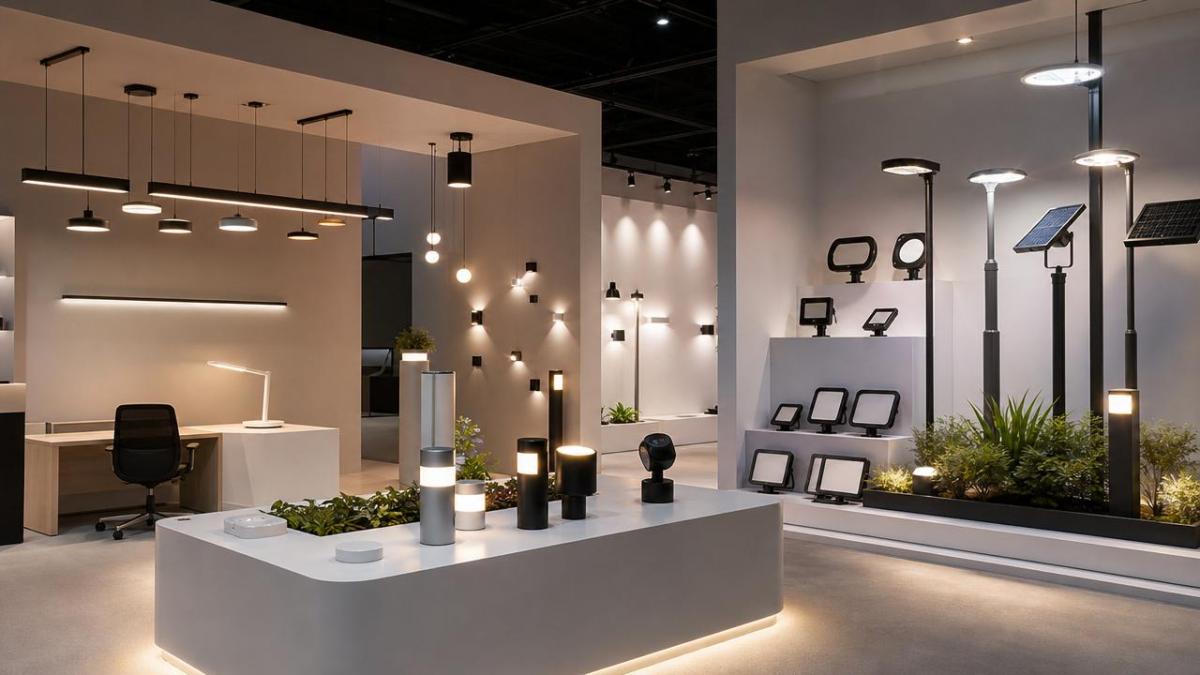
Products that drew concentrated orders from buyers in the Middle East, Latin America, and Eastern Europe included AI voice-controlled lighting, solar AI landscape lights, and LED skin-wire visual display products.
The organizer's data showed that B2B intended orders for smart lighting increased 41% year on year. Within that demand, commercial smart luminaires supporting DALI-2 and Zigbee accounted for more than 67%.
Why different market participants may feel the impact
Export-oriented lighting suppliers may see demand shifting toward clearer smart features
From an industry perspective, exporters are likely to pay attention to the fact that overseas buyers did not just show interest in general lighting products, but in categories with explicit smart-control or application-oriented selling points. The likely impact is on product selection, quotation strategy, and sales communication, especially for suppliers serving the Middle East, Latin America, and Eastern Europe.
What deserves closer attention is whether inquiries increasingly require not only price competitiveness, but also proof of function, compatibility, and use scenarios that are easier for overseas buyers to evaluate.
Commercial lighting manufacturers may face stronger pressure around protocol support
Analysis shows that the high share of products supporting DALI-2 and Zigbee points to a practical preference in commercial smart lighting procurement. For manufacturers, this may affect product planning, technical documentation, and bid or project readiness.
The issue is not only whether a luminaire is labeled as smart, but whether it aligns with buyer expectations around control standards that are already familiar in cross-border B2B transactions.
Supply chain and delivery teams may need to prepare for more concentrated follow-up work
Observably, a rise in intended orders can create pressure beyond front-end sales. Procurement coordination, component availability, order confirmation, and delivery scheduling may all become more sensitive if interest in AI voice control, solar smart products, and visual display lighting continues after the exhibition window.
For supply chain service providers and internal operations teams, the immediate issue is less about long-term forecasts and more about whether demand concentration by product type or export region creates short-term execution bottlenecks.
Overseas buyers and channel partners may put more weight on application fit
For buyers and distribution partners, the fair results suggest that selection is moving toward products with more visible end-use logic. Solar AI landscape lighting and visual display-related LED products, for example, stand out because they combine functionality with easier scenario-based evaluation.
This may influence how channel partners compare suppliers, especially when deciding between conventional lighting SKUs and products positioned around smart control or differentiated commercial display value.
What companies should monitor next
Whether inquiry growth converts into confirmed and repeat orders
The reported 41% increase refers to intended B2B orders in smart lighting. Companies should distinguish clearly between trade-show intent and finalized transactions. Follow-up contract progress, reorder behavior, and customer specification changes are likely to matter more than headline interest alone.
Whether protocol support becomes a stronger baseline requirement
Given that more than 67% of the commercial smart lighting share involved DALI-2 and Zigbee support, suppliers should closely review how they present compatibility in catalogs, technical sheets, and buyer discussions. The practical issue is not broad smart-lighting messaging, but whether protocol support is documented in a way procurement teams can quickly verify.
Which product categories are attracting cross-border attention by market
Companies serving the Middle East, Latin America, and Eastern Europe should track whether buyer interest remains concentrated in AI voice control, solar AI landscape lighting, and LED visual display-related products. The key business question is whether this is a temporary exhibition hotspot or the start of a more sustained category preference in those export markets.
Whether internal delivery materials are ready for overseas decision cycles
Where buyer interest rises quickly, practical execution often depends on specification files, compliance-related documents, lead-time communication, and sample-response speed. For sales and operations teams, preparation in these areas may be as important as product exposure at the fair itself.
How this should be read at this stage
Analysis shows that this development is best understood as a strong market signal rather than a fully settled industry conclusion. The fair data indicates that AI-linked lighting products and standard-compatible commercial smart luminaires are drawing measurable cross-border interest, especially from specific overseas regions.
At the same time, it is more appropriate to understand this as an indicator of procurement direction than proof of a complete market shift. The current information confirms buyer attention and intended order growth, but it does not by itself establish how much of that interest will translate into long-term purchasing structure, stable repeat demand, or wider category substitution.
What the update means for the lighting trade right now
The most meaningful takeaway is that overseas demand at this fair did not center on generic smart-lighting language alone. It clustered around products with visible use cases and around commercial fixtures tied to recognized protocols such as DALI-2 and Zigbee.
In practical terms, this is neither a minor short-term fluctuation nor enough evidence for sweeping conclusions. It is more appropriate to read the event as a current and credible signal that product intelligence, protocol compatibility, and export-market fit are becoming more central in cross-border lighting discussions.
Basis of this article and points still worth verifying
This article is based on the user-provided news title, event date, and event summary. The factual basis includes the reported timing of the Guzhen Lighting Fair summer show, exhibitor and overseas buyer scale, the cited product categories that attracted concentrated overseas orders, and the organizer's figures on smart-lighting intended B2B orders and protocol-supported commercial smart luminaires.
For this type of industry update, commonly relevant source categories may include organizer announcements, company statements, industry association materials, authoritative media reports, and standard-organization documents. A specific official source link was not provided in the input, so further verification remains necessary. Follow-up attention should focus on whether intended orders convert into confirmed business, whether protocol-related demand remains concentrated, and whether buyer interest from the Middle East, Latin America, and Eastern Europe continues after the exhibition period.
Recommended News