
Search News
Industry Portal
Hot Articles
EU Rule Takes Effect for Smart Lighting IoT Gateways
Time
Click Count
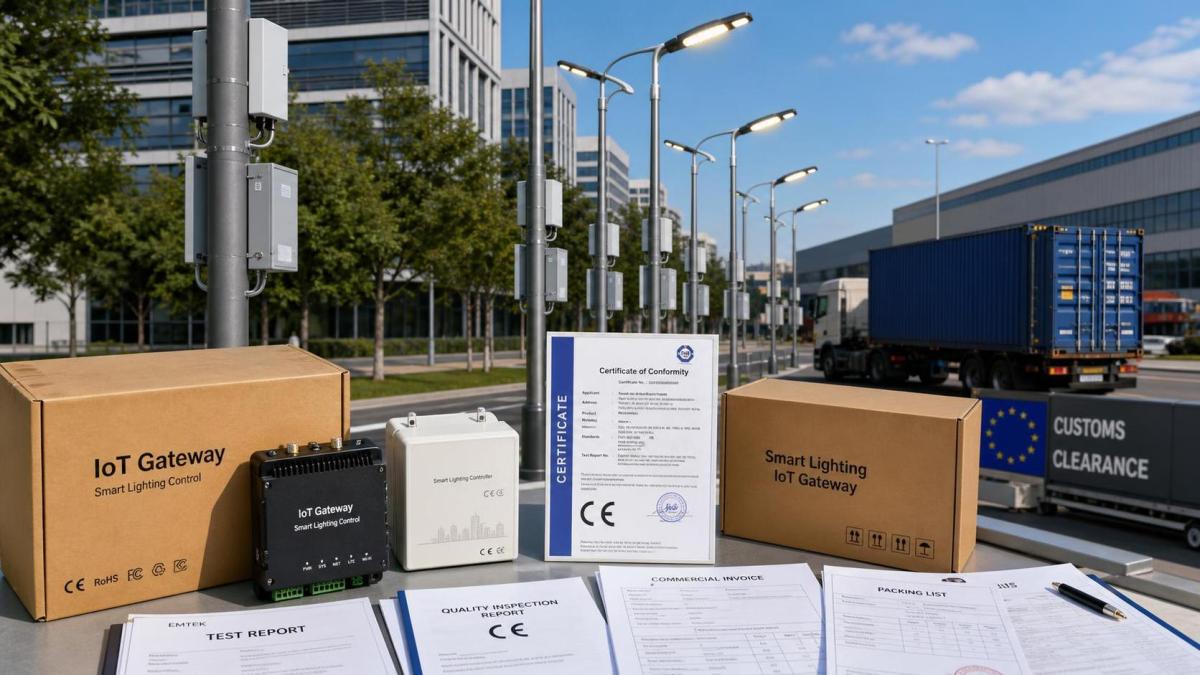
On August 6, 2026, a new EU compliance requirement took effect for smart street lighting IoT gateways: imported products now need EN 62443-4-1 security development lifecycle certification and a third-party declaration of conformity before they can clear customs. This matters beyond product testing alone, because the rule change reaches customs release, CE marking validity, and access to government procurement, making it immediately relevant to manufacturers, exporters, distributors, procurement teams, and compliance service providers involved in this equipment category.
What Has Now Become a Clearance Condition
The confirmed change is that, from August 6, 2026, the EU has formally made IEC/EN 62443-4-1 mandatory for imported smart street lighting IoT gateway devices. Under this requirement, affected products must complete security development lifecycle certification and obtain a declaration of conformity issued by a third-party body. The certification status directly affects customs release, the validity of the CE mark, and eligibility for government procurement. Products without the required certification will be refused at the border and will not be able to enter key distribution hub markets including Germany and the Netherlands.
Where the Pressure Will Appear First in the Supply Chain
Export shipments now face a document-linked market access check
For exporters and direct trading companies, the immediate exposure is at the shipment and market entry stage. Because the requirement is tied to customs clearance, the practical issue is no longer only whether a product can be sold, but whether it can physically enter the EU market. What deserves closer attention is the need to align shipment documentation, compliance files, and certification status before dispatch, especially where delivery commitments depend on uninterrupted border release.
Manufacturing teams will feel the impact through certification readiness
For manufacturers of smart street lighting IoT gateways, the rule change can affect the handoff between product development, compliance review, and shipment preparation. The confirmed requirement is not limited to a product label outcome; it includes completion of a security development lifecycle certification process and a third-party declaration. From an industry perspective, this means product release planning and export scheduling may be influenced by whether certification work is complete and whether supporting compliance materials are available in time.
Distributors and channel operators face access limits in hub markets
For channel and distribution businesses, the impact is linked to product availability and lawful entry into key routing markets. The confirmed summary states that uncertified products cannot enter important distribution hubs such as Germany and the Netherlands. Observably, this raises practical concerns for inventory planning, import sequencing, and onward distribution arrangements where these markets serve as entry or transfer points.
Public buyers and qualification reviews may become more restrictive
For procurement teams and bidders involved in government projects, the stated effect on government procurement eligibility is especially relevant. Analysis shows that certification status may become a gatekeeping issue in supplier qualification, bid document review, and product acceptance decisions. Even where commercial demand remains unchanged, access to procurement channels may depend on whether the required conformity documentation can be presented clearly and consistently.
Compliance and testing service providers may see a more time-sensitive role
For certification-related firms and testing support providers, the rule creates a more operationally urgent role in helping companies prepare declarations and supporting compliance evidence. It is more appropriate to understand this not as a general policy signal, but as a requirement tied to actual customs and procurement consequences. That makes timing, document completeness, and scope confirmation more sensitive than before for companies handling affected products.
What Companies Should Track From This Point
Review whether current products fall within the affected gateway category
Companies should first confirm whether their exported or procured smart street lighting IoT gateway products fall within the scope described in the rule summary. This is a practical screening step, because the confirmed impact relates specifically to imported smart street lighting IoT gateways rather than the broader IoT market as a whole.
Check the completeness of certification and conformity files before shipment
The immediate compliance focus should be on whether EN 62443-4-1 certification has been completed and whether the required third-party declaration of conformity is available for use in customs and procurement settings. Where delivery schedules are tight, companies should pay close attention to the consistency of technical files, declaration materials, and internal approval records tied to shipment release.
Watch procurement documents and customer qualification requirements closely
Because the rule directly affects CE marking validity and government procurement eligibility, suppliers should monitor how customers, public buyers, and channel partners reflect the requirement in tender documents, supplier onboarding materials, and acceptance conditions. The input does not provide detailed implementation language, so this should currently be treated as a point for close monitoring rather than a fully standardized market practice across every buyer.
Reassess delivery timing and post-entry service commitments
Given that uncertified products may be refused at the border, companies should review delivery timelines, allocation plans, and after-sales obligations for shipments intended for the EU market. Analysis shows that the main risk is not only non-compliance in principle, but interruption at the point where trade execution, delivery commitments, and market access meet.
Why This Looks Like an Execution Signal, Not Just a Policy Headline
Observably, this development is better understood as an already effective market-access condition rather than a distant regulatory trend. The reason is that the confirmed consequences are connected to concrete business gates: customs clearance, CE marking validity, and government procurement entry. At the same time, analysis should remain measured. The input does not provide detailed enforcement procedures, documentation review standards, or procurement wording across different buyers, so the market still needs to watch how implementation language develops in practice.
How This Update Is Best Read Right Now
At this stage, the update is most appropriately read as a rule that has moved from compliance expectation into operational effect for affected smart street lighting IoT gateways entering the EU. The practical significance lies in its direct connection to border release and procurement access, not only to formal certification status. A neutral reading is that companies in this product segment should treat certification readiness and document alignment as immediate trade and delivery issues, while continuing to monitor how execution standards and market responses develop.
Basis of This Article
This article is generated from the user-provided news title, event date, and event summary. For events of this kind, source types typically relevant to later verification may include official announcements, regulatory authority publications, customs or trade administration notices, industry association updates, standards organization documents, and reporting by authoritative media. A specific official source link was not provided in the input, so it still needs to be verified on an ongoing basis. What also remains worth tracking includes detailed implementation language, certification enforcement interpretations, procurement document changes, industry feedback, and how affected companies are executing against the new requirement.
Recommended News