
Search News
Industry Portal
Hot Articles
MWC26 Shanghai Opens With Smart Lighting IoT Inquiries
Time
Click Count
On June 24, 2026, the opening day of MWC26 Shanghai brought a notable signal for the smart street lighting IoT segment: seven Chinese vendors received targeted technical inquiries from Middle Eastern infrastructure buyers linked to NEOM in Saudi Arabia and DEWA in the UAE. For companies involved in smart lighting hardware, firmware, connectivity, compliance, and project delivery, the development is worth watching because the inquiries were not broad expressions of interest but were tied to specific protocol compatibility, environmental protection, carbon-footprint verifiability, and certification timing.
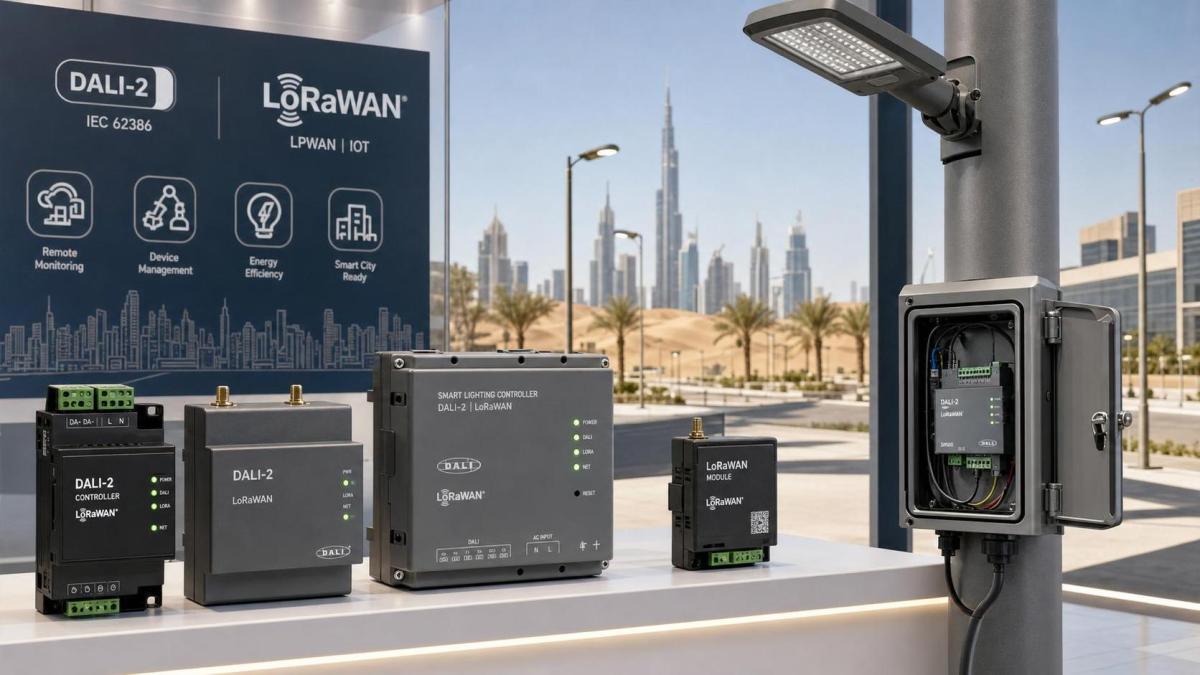
What Was Confirmed at MWC26 Shanghai
According to the provided event information, the "Future Constellation" and "Smart Infrastructure" showcase areas were linked at MWC26 Shanghai on June 24, 2026. During the event, seven Chinese smart street lighting manufacturers received directed technical inquiries from major Middle Eastern infrastructure players.
The confirmed areas of inquiry focused on DALI-2 and LoRaWAN dual-protocol compatibility, IP68-grade anti-dust firmware suited to sandy environments, and modules with verifiable carbon-footprint attributes. In addition, some orders explicitly required completion of CE-RED and Cybersecurity Act Annex I certification within Q3.
Why the Request Details Matter Across the Value Chain
For product manufacturers, the discussion is moving beyond basic device supply
From an industry perspective, manufacturers may be affected first because the inquiries center on concrete technical and compliance conditions rather than general product presentation. The impact is likely to show up in product definition, firmware adaptation, protocol integration, testing schedules, and certification planning. What deserves closer attention is whether existing smart street lighting portfolios can meet dual-protocol and environmental-resilience requirements without redesigning delivery timelines.
For component and module suppliers, documentation may matter as much as hardware
Suppliers tied to control modules, communications units, and traceability-related functions may also feel the effect. Analysis shows that when buyers ask for verifiable carbon-footprint modules, the commercial discussion can extend beyond performance and price into document readiness, evidence chains, and specification consistency. The practical impact may appear in supplier qualification, technical file preparation, and coordination with downstream assemblers.
For project delivery and channel-side teams, compliance timing becomes a business issue
Channel operators, integrators, and project delivery teams may face pressure where certification deadlines intersect with bid response and shipment planning. The stated Q3 requirement for CE-RED and Cybersecurity Act Annex I makes compliance timing relevant not only to legal review but also to quotation validity, delivery promises, and customer communication. For these participants, changes in certification progress could directly affect sales conversion and execution risk.
What Companies Should Track Next
Check whether technical compatibility is already productized
Companies should review whether DALI-2 and LoRaWAN compatibility is available as a stable deliverable configuration or only as a customized option. This distinction matters because technical inquiries can move quickly into proof-of-capability requests, and unclear product status may slow response quality.
Match environmental claims with firmware and protection evidence
The mention of IP68-grade anti-dust firmware suggests that buyers are testing whether products are suited to harsh site conditions. Companies should therefore pay attention to how firmware claims, enclosure protection language, and test evidence are presented together in customer-facing materials and technical files.
Prepare compliance timelines against Q3 expectations
Where orders already point to CE-RED and Cybersecurity Act Annex I completion in Q3, the immediate issue is not only whether certification is planned, but whether internal schedules, external testing, and customer communications are aligned. Analysis shows that timing gaps in certification can become a commercial risk even before any shipment stage begins.
Do not treat carbon-footprint verifiability as a marketing add-on
What deserves closer attention is that verifiable carbon-footprint modules were part of the technical inquiry itself. For relevant suppliers and manufacturers, this means documentation readiness and evidence consistency may increasingly sit alongside performance specifications in early-stage buyer evaluation.
How This Signal Should Be Read Now
Observably, this development is better understood as an early commercial and technical signal rather than a confirmed market outcome. The event information confirms directed inquiries and some order-linked certification requirements, but it does not confirm final procurement volumes, completed transactions, or long-term supply arrangements. Analysis shows that the strongest takeaway at this stage is the tightening connection between smart street lighting IoT demand and proof-based requirements in interoperability, environmental resilience, and compliance readiness.
It is also more appropriate to understand this as a sign that buyer conversations are becoming more specification-driven. That matters for the industry because it shifts attention from broad solution narratives to execution details that can be checked, tested, and documented.
What the Industry Can Reasonably Take From It
The immediate significance of this news lies less in scale, which has not been disclosed, and more in the structure of demand being expressed on-site. The confirmed inquiries indicate that parts of the smart street lighting IoT market are evaluating vendors through a combined lens of protocol compatibility, site durability, carbon-footprint verifiability, and certification readiness.
From a neutral industry perspective, this is best treated as a near-term signal with potential longer-term implications, not as a settled shift. Companies connected to smart lighting exports, modules, compliance services, and project delivery have a clear reason to monitor follow-up developments, but the market impact still depends on whether these inquiries convert into formal and executable orders.
Basis of This Article and What Still Needs Verification
This article is based on the user-provided news title, event date, and event summary. No specific official source link was provided in the input, so further verification remains necessary as follow-up information emerges.
For this type of industry update, source categories that are typically relevant include official event announcements, company statements, industry association releases, authoritative media reporting, and documents from standards or certification bodies. The main areas that still warrant continued verification are any subsequent official order disclosures, finalized certification progress, and any clarified technical scope tied to the inquiries mentioned above.
Recommended News