
Search News
Industry Portal
Hot Articles
- How does keyless access control for hotels work during a power outage?Dr. Matthias Vance
- Report: Tariff Disruption Could Shift $4 Billion in Aerospace Fastener Revenue by 2030Hardware Mechanics Fellow
- Industrial Fasteners Market Forecast to Reach $128.3 Billion as Tariffs Disrupt Supply ChainsHardware Mechanics Fellow
NIST to Reopen 1:N Face Recognition Testing on November 30 With New Entry Rules
Time
Click Count
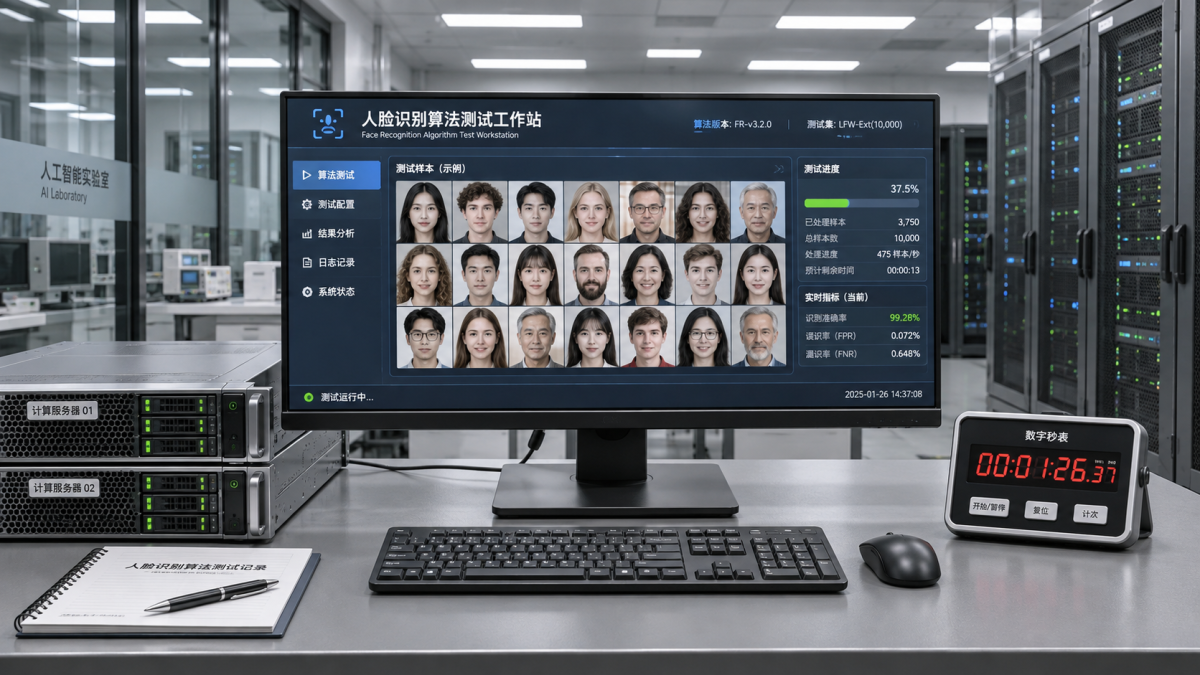
The National Institute of Standards and Technology (NIST) has announced that its Face Recognition Technology Evaluation (FRTE) 1:N identification test will reopen on November 30, 2026. The restart will introduce a new test dataset, stricter accuracy thresholds for new participants and limits on algorithm processing speed.
The changes bring both accuracy and speed into focus for organizations seeking to enter the evaluation. They also mean that readers comparing results will need to pay attention to the conditions under which algorithms were tested, particularly when considering results produced with different datasets.
What the new entry rules mean
A 1:N identification test concerns an algorithm’s ability to find a match for a face among multiple candidates. NIST’s planned accuracy thresholds will set a higher bar for new participants seeking to join that test. The announcement also introduces processing-speed limits, making the time an algorithm takes another condition relevant to entry.
Considered together, the two requirements put the relationship between accuracy and processing time at the center of the evaluation. An algorithm that meets an accuracy requirement would still need to satisfy the applicable speed limit. Conversely, fast processing alone would not establish that it meets the accuracy threshold.
The precise thresholds and speed limits will matter to prospective participants assessing whether their algorithms qualify. They will also determine how much room there is to adjust an algorithm’s operation while meeting both conditions. The announced changes establish the direction of the rules; their practical effect will depend on the detailed requirements.
A new dataset changes the context for comparisons
The introduction of a new test dataset is significant because evaluation results are tied to the material used to test an algorithm. A change in the dataset can affect how results should be interpreted, even when the broad task remains 1:N face identification.
For readers using FRTE results to assess algorithms, a comparison across different test datasets therefore calls for care. A change in a reported result should not automatically be attributed to an improvement or decline in the algorithm itself. Understanding what changed in the testing conditions will be important when interpreting any comparison.
The new dataset is intended to make the benchmark more demanding and more useful as a practical reference. How closely its results translate to a particular application, however, will depend on the relationship between the evaluation conditions and that application’s own requirements.
Where the effects may appear first
The most immediate questions concern new participants preparing to enter the reopened test. They will need to consider whether their algorithms can meet both the accuracy threshold and the processing-speed limit under the applicable evaluation conditions. The balance between those requirements may shape which algorithm configurations they submit.
Organizations that consult evaluation results may have a different focus: how to interpret performance under the revised test conditions. Accuracy and speed are both relevant to an identification system, but a benchmark result alone does not settle whether an algorithm is suitable for every intended use. The importance assigned to each measure will depend on the application.
The announcement does not establish that existing results can be directly compared with results from the new dataset, or that meeting the entry rules guarantees performance in a particular deployment. Those distinctions matter because the reopening changes the conditions for evaluation as well as the requirements for new entrants.
Further NIST information on the accuracy thresholds, processing-speed limits and new dataset will help participants and readers assess the practical consequences. Once results under the revised conditions are available, the basis for interpreting comparisons will become clearer.
Recommended News