
Search News
Industry Portal
Hot Articles
China-EU Trade Investment Dialogue in Progress, Focusing on Green Standards and Digital Compliance
Time
Click Count
On May 30, 2026, China’s Ministry of Commerce disclosed during a press briefing that technical negotiations are underway between China and the European Union to establish a regular trade and investment consultation mechanism. The initial agenda includes mutual recognition of carbon footprint accounting for new energy infrastructure materials, alignment of GDPR and China’s Cybersecurity Law compliance frameworks for intelligent security devices, and harmonized certification pathways for IoT lighting energy efficiency labels—making this development highly relevant for manufacturers, exporters, and compliance officers in green tech, digital infrastructure, and smart hardware sectors.
Event Overview
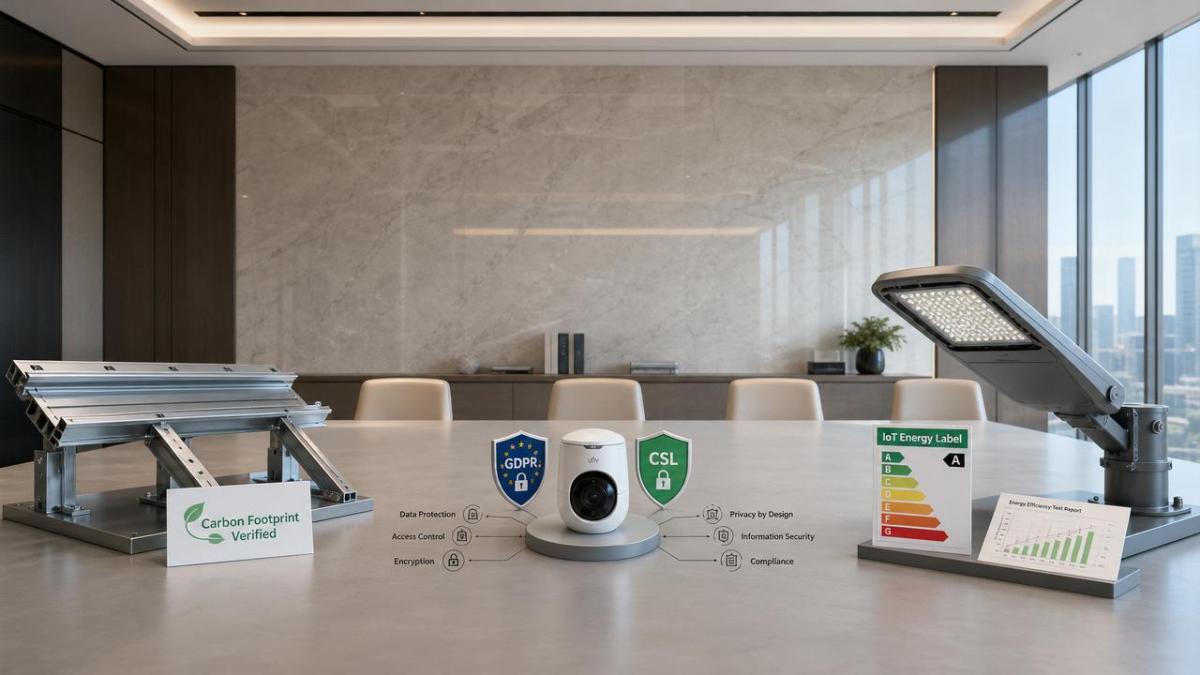
At a press conference held on May 30, 2026, China’s Ministry of Commerce confirmed that technical-level discussions are ongoing between Chinese and EU authorities regarding the establishment of a formal, standing trade and investment consultation mechanism. The first set of priority topics under discussion comprises: (1) mutual recognition of carbon footprint calculation methods for materials used in new energy infrastructure; (2) interoperability between the EU’s General Data Protection Regulation (GDPR) and China’s Cybersecurity Law concerning intelligent security equipment; and (3) coordinated energy efficiency labeling protocols for Internet-of-Things (IoT) lighting products.
Industries Affected by This Development
Direct Exporters and Importers of Green Infrastructure Materials
These firms face potential shifts in documentation, verification, and third-party certification requirements for carbon footprint reporting. Mutual recognition—if achieved—could reduce redundant testing and shorten time-to-market for steel, concrete, and composite materials supplied to EU-funded renewable projects.
Manufacturers of Intelligent Security Devices
Companies producing surveillance cameras, access control systems, or edge AI security hardware must currently comply separately with GDPR data handling obligations and China’s Cybersecurity Law. A framework for regulatory alignment would affect product architecture, data residency design, consent mechanisms, and pre-market conformity assessments.
Producers and Suppliers of IoT Lighting Systems
Firms exporting smart LED fixtures, connected streetlights, or building management-integrated luminaires may encounter divergent energy labeling rules across markets. Harmonized certification could streamline labeling compliance but requires early engagement with both EU notified bodies and Chinese certification agencies (e.g., CQC).
Supply Chain and Certification Service Providers
Testing laboratories, certification bodies, and sustainability consultants supporting cross-border clients will likely see increased demand for dual-standard verification capacity—especially in carbon accounting methodologies and cybersecurity compliance audits aligned with both jurisdictions.
What Relevant Enterprises or Practitioners Should Monitor and Do Now
Track official updates from both sides’ trade and standardization authorities
Monitor announcements from China’s Ministry of Commerce, State Administration for Market Regulation (SAMR), and the European Commission’s Directorate-General for Trade and Joint Research Centre—particularly any published working documents, draft technical annexes, or pilot program notices related to the consultation mechanism.
Identify high-priority product categories and compliance touchpoints
Focus initial internal reviews on carbon footprint reporting for structural materials (e.g., rebar, precast concrete), data processing architectures for security hardware sold in both regions, and energy label submission workflows for IoT lighting models already in EU or Chinese distribution channels.
Distinguish policy signals from operational readiness
This initiative remains at the technical negotiation stage. No binding agreements or implementation timelines have been announced. Companies should treat current developments as preparatory signals—not triggers for immediate system overhauls—while documenting existing compliance practices to support future alignment efforts.
Begin cross-functional coordination and baseline documentation
Initiate internal alignment among R&D, regulatory affairs, procurement, and sustainability teams to map current carbon accounting methods, data flow diagrams for security devices, and energy label test reports. Collecting this baseline now supports faster response if mutual recognition frameworks advance.
Editorial Perspective / Industry Observation
Observably, this initiative represents an early-stage institutional signal—not an implemented policy shift. It reflects growing bilateral recognition that fragmented green and digital standards increasingly constrain trade efficiency, especially in capital-intensive, regulation-sensitive sectors. Analysis shows that progress will likely be incremental, beginning with narrow technical annexes rather than broad regulatory equivalence. From an industry perspective, the value lies less in near-term operational change and more in strategic foresight: firms that systematically track alignment efforts can anticipate shifts in certification costs, lead times, and market entry barriers well before formal adoption.
Concluding, this development underscores a structural trend toward regulatory coordination in climate- and data-related trade governance—not a sudden policy pivot. Its significance is procedural and anticipatory: it marks the formal start of structured dialogue on interoperable standards, not the conclusion of harmonization. For stakeholders, it is more appropriately understood as a long-term signal requiring sustained monitoring, not an immediate compliance mandate.
Source: Press briefing by China’s Ministry of Commerce, May 30, 2026.
Note: The status, scope, and timeline of the proposed consultation mechanism remain subject to ongoing technical negotiations and have not yet been finalized. Continued observation is recommended.
Recommended News