
Search News
Industry Portal
Hot Articles
Biometric Security and ISO 27001: Key Compliance Gaps to Check
Time
Click Count
Biometric access now sits at the junction of physical security, identity assurance, and operational continuity. That is why biometric security ISO 27001 alignment has moved beyond policy language and into daily controls.
Across data centers, factories, smart buildings, and municipal facilities, the audit risk usually comes from small gaps. Templates are stored too long, logs are incomplete, vendors are weakly governed, or response plans ignore biometric systems.
For organizations working across AIoT and advanced hardware environments, those gaps matter because biometric systems protect the same critical spaces as industrial tools, smart lighting networks, and other operational assets.
Why biometric compliance needs a closer look
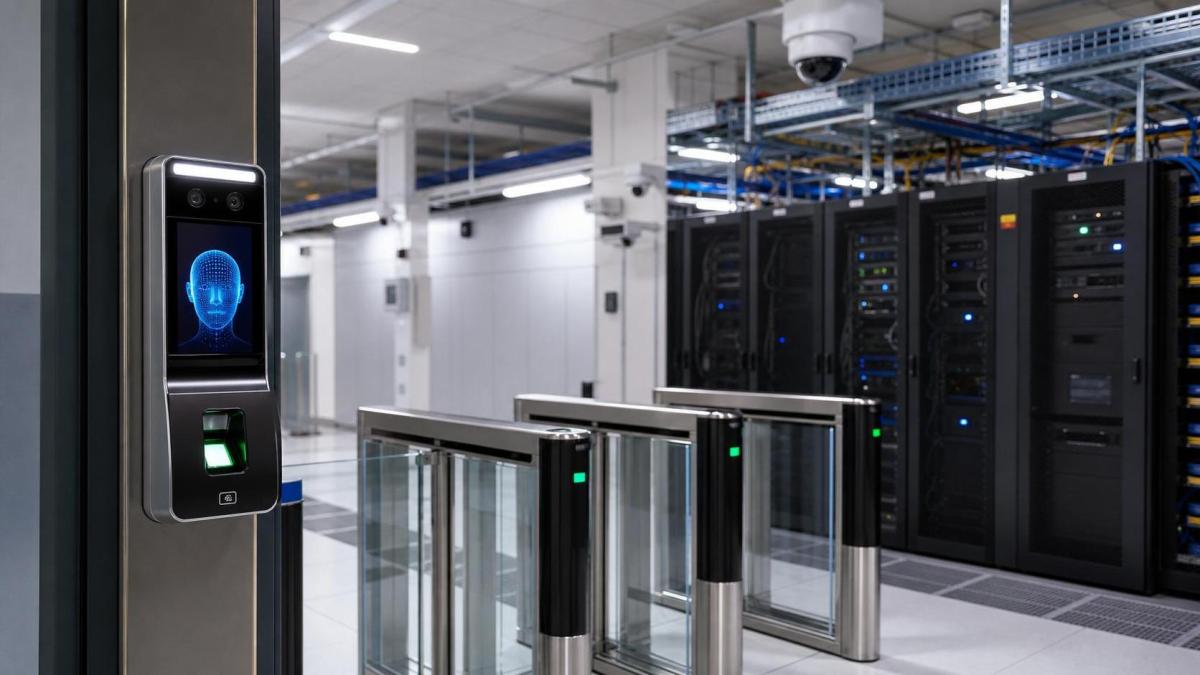
Biometric systems are not ordinary access tools. They process sensitive identifiers tied to a person’s face, iris, fingerprint, or vein pattern. Once mishandled, the impact is harder to contain than a password reset.
ISO 27001 does not prescribe one biometric architecture. It does, however, require an information security management system that identifies risks, assigns controls, and proves that those controls operate consistently.
That is where many deployments drift. The system may be technically strong, with liveness detection and edge processing, but governance around collection, retention, access, and exception handling is often thinner.
In sectors tracked by SHSS, this issue appears in mixed environments. A building may combine biometric entry, connected lighting, maintenance devices, contractor access, and cloud dashboards. Security is then only as strong as the weakest operational link.
What biometric security ISO 27001 really means in practice
In practical terms, biometric security ISO 27001 means treating biometric data, matching engines, devices, administrators, and connected services as one controlled risk domain.
The standard expects a documented method for deciding what must be protected, what can go wrong, and which safeguards are proportionate. For biometric deployments, that scope should include both digital and physical components.
This includes enrollment stations, edge terminals, mobile credentials if used, cloud synchronization, API integrations, maintenance laptops, and backup procedures. A narrow scope creates false assurance.
It also means that accuracy claims alone are not enough. A terminal that recognizes a face in 0.3 seconds may still fail compliance if role permissions are loose or if biometric templates can be exported without strong controls.
Core control areas usually under pressure
- Data mapping from capture to deletion
- Administrative access and segregation of duties
- Third-party hosting, support, and firmware trust
- Incident detection for spoofing, tampering, or leakage
- Evidence that controls are reviewed and improved
The most common compliance gaps to check
The most frequent biometric security ISO 27001 failures are rarely dramatic. They are routine oversights that accumulate until an audit, breach, or dispute exposes them.
1. Incomplete data lifecycle control
Many teams know where biometric data is collected, but not every place it is replicated. Copies may exist on enrollment devices, local controllers, backup images, testing systems, or vendor support environments.
Check whether retention periods are justified, enforced, and auditable. Templates kept after role changes, contract exits, or site decommissioning often create unnecessary exposure.
2. Weak privilege management
Biometric platforms often have multiple high-impact permissions. Enrollment, template deletion, threshold adjustment, device reset, and log export should not sit under one broad administrator account.
Review shared credentials, dormant accounts, and emergency access. ISO 27001 auditors usually look beyond the access matrix and ask whether the permission model matches real operational duties.
3. Vendor controls that stop at procurement
Biometric hardware and software are often sourced through layered supply chains. Devices, algorithms, storage, firmware updates, and support services may come from different parties.
A contract alone does not close the gap. There should be evidence of supplier risk reviews, update authenticity checks, vulnerability handling, and clear responsibility for data incidents.
4. Logging that misses meaningful events
Organizations often log successful entry attempts but miss higher-risk actions. Failed liveness checks, repeated mismatches, threshold changes, offline operation, and firmware modifications deserve stronger monitoring.
Logs also need time synchronization and review ownership. If no one checks anomalies, the log becomes a storage exercise instead of a security control.
5. Incident response plans that ignore biometric specifics
A general cyber incident playbook may not answer key biometric questions. Can templates be isolated quickly. How are affected users notified. What happens if a terminal is physically stolen or cloned.
The response path should address spoofing attempts, sensor tampering, insider misuse, and synchronization errors between edge devices and central platforms.
Where these gaps appear across real operating environments
Biometric security ISO 27001 questions vary by site type, but the pattern is familiar. The system protects a critical boundary, yet compliance depends on the surrounding process discipline.
This is especially relevant in converged environments. A smart building may link biometric entry with cameras, lighting controls, visitor workflows, and maintenance alerts. Compliance then depends on system boundaries being clearly defined.
How to evaluate controls without turning the review into paperwork
A useful review starts with operational evidence, not just policies. The goal is to confirm that biometric security ISO 27001 controls actually work under normal conditions and under stress.
Questions worth testing on site
- Can the team trace one biometric record from enrollment to deletion
- Who can change matching thresholds, and how is approval recorded
- Are vendor sessions monitored and time-limited
- Do backups contain biometric templates, and are they encrypted
- How quickly can a compromised device be isolated from the network
- Are failed spoofing attempts visible in routine dashboards
This style of review helps separate mature deployments from nominally compliant ones. It also reveals where physical safeguards and information security controls need tighter coordination.
Why this matters for broader smart hardware governance
SHSS follows industries where reliability is judged at the point of failure. A fastener is tested under load, a tool under torque, and a biometric system under real access pressure.
That perspective is useful because biometric security ISO 27001 is not only about legal defensibility. It is also about operational trust in systems that guard high-value spaces and sensitive workflows.
When edge AI, connected controls, and physical security converge, governance has to keep pace with engineering. The strongest sensor can still sit inside a weak control environment.
A practical next step
The most effective next step is a focused gap review built around one active deployment. Choose a live site, define the biometric data flow, test privileged actions, inspect supplier touchpoints, and compare the evidence against ISO 27001 control intent.
That approach usually surfaces the real issues faster than a broad paper exercise. It also creates a clearer basis for prioritizing remediation, strengthening audit readiness, and improving confidence in biometric security ISO 27001 performance over time.
Recommended News