
Search News
Industry Portal
Hot Articles
Commercial Building Security Risks That Basic Access Systems Miss
Time
Click Count
Why do basic access systems leave hidden gaps in commercial building security?
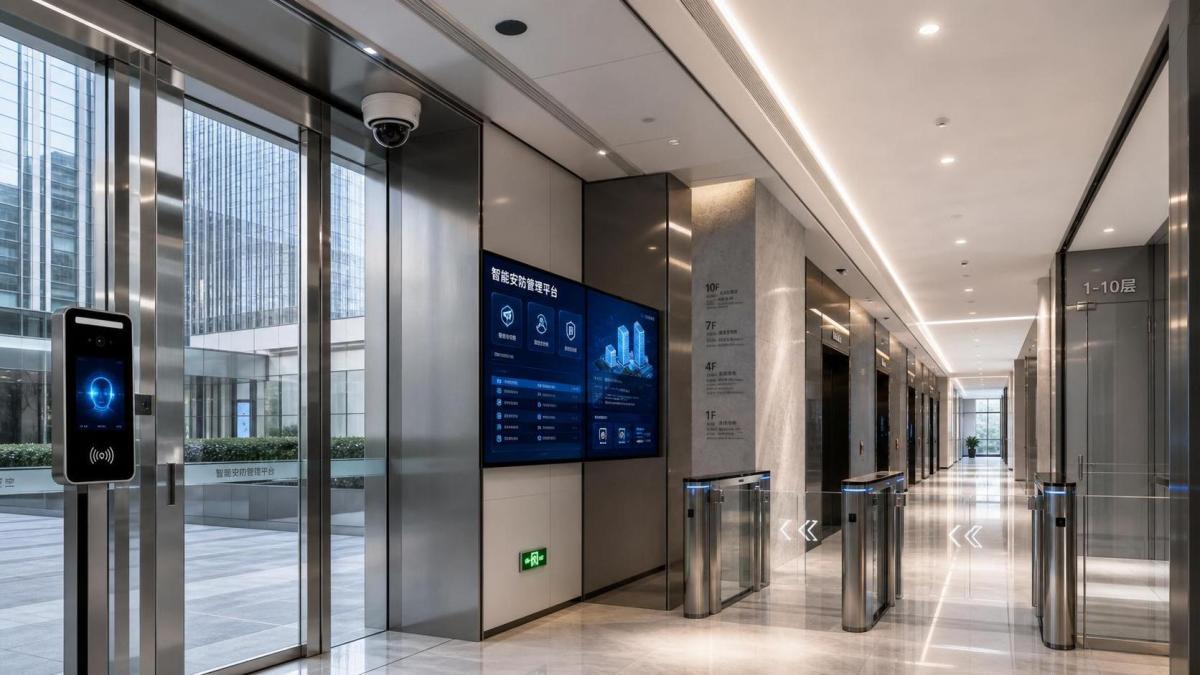
Commercial building security often looks adequate until a real incident exposes weak points. A badge reader may control entry, yet still miss the behavior around the door.
That is the core problem with basic access control. It validates a credential, but it does not fully understand people flow, intent, or context.
In practice, breaches rarely begin with dramatic forced entry. More often, they start with convenience habits, shared cards, propped doors, visitor confusion, or delayed alarms.
This is why commercial building security now sits at the intersection of physical barriers, biometric verification, lighting visibility, response workflow, and compliance.
SHSS follows this wider view closely. Its intelligence work connects biometric security, smart lighting, structural hardware, and protective systems because real-world safety depends on how those layers work together.
So the better question is not whether a door unlocks correctly. It is whether the whole building can detect, slow, verify, and respond before a minor gap becomes an operational event.
Which risks are most commonly missed by outdated access control?
Several risks appear repeatedly across offices, mixed-use towers, logistics hubs, and technical facilities. They are easy to overlook because the system still appears to be functioning normally.
- Tailgating and piggybacking at employee entrances or loading points.
- Credential misuse after staff turnover, contractor changes, or role transfers.
- Blind spots between access events and video coverage.
- Unlocked internal zones with higher asset or data sensitivity.
- Poor linkage between alarms, elevators, lighting, and emergency procedures.
Tailgating is especially underestimated. One valid card can unintentionally grant entry to several people, and the system records only a legitimate open event.
Credential misuse is another recurring issue. A lost badge is obvious. Shared credentials, borrowed visitor passes, and delayed deactivation are harder to spot.
Blind spots matter because incident review depends on timing. If video, access logs, and door status do not align, investigators lose the sequence that explains what happened.
For commercial building security, those gaps create more than theft risk. They affect compliance, tenant confidence, business continuity, and insurance discussions after an event.
How can you tell whether a building needs more than cards and PINs?
A practical way to judge commercial building security is to look at the building’s consequence profile, not just the entrance count.
If the site contains server rooms, executive floors, pharmaceutical storage, tenant suites, or restricted maintenance areas, simple credentials may no longer be enough.
The same applies when the site has frequent visitors, rotating contractors, after-hours access, or multiple delivery routes. More traffic usually means more exceptions, and exceptions create risk.
A useful checkpoint is whether security teams can answer three questions quickly after any alert. Who entered, who followed, and what happened in adjacent spaces?
If those answers require manual log matching, camera hunting, and phone calls, the commercial building security model is already underpowered.
More advanced buildings increasingly rely on layered verification. That may include biometrics at critical points, anti-tailgating controls, intelligent video, and lighting that preserves visibility instead of creating shadows.
SHSS often frames this as a physical defense chain. Strong hardware, smart access, responsive illumination, and reliable last-line protection all support the same outcome: fewer unverified moments.
A quick decision table for common building conditions
The table below helps translate common conditions into practical commercial building security priorities.
Are biometrics, smart lighting, and hardware upgrades really part of the same security conversation?
Yes, because commercial building security fails at connection points. A secure credential means less if the door hardware is weak, the corridor is poorly lit, or response teams cannot verify identity quickly.
Biometric security helps reduce credential sharing. In higher-risk zones, facial recognition, iris verification, or other contactless methods strengthen the audit trail and shorten verification time.
Lighting matters more than many teams expect. Entrances, parking transitions, stairwells, and service corridors need stable visibility for cameras, occupants, and guards.
Smart LED systems using DALI or Zigbee can support commercial building security by improving sightlines, triggering scene changes, and reducing dark intervals after-hours.
Physical hardware is another overlooked layer. Strike plates, hinges, closers, panic devices, and tamper-resistant fasteners determine whether a controlled opening stays controlled under repeated stress.
This broader view aligns with how SHSS studies building protection. Biometric intelligence, lighting controls, fastening integrity, and worker protection are separate domains, yet they influence the same risk chain.
In real facilities, that integration is not theoretical. It shapes whether suspicious movement is detected early, documented clearly, and contained without confusion.
What implementation mistakes raise cost without improving commercial building security?
One common mistake is buying advanced devices without redesigning workflows. A new reader does little if visitor handling, offboarding, and emergency escalation stay informal.
Another issue is overprotecting the perimeter while underprotecting interior layers. Many incidents become serious only because critical rooms remain too easy to access once inside.
Poor integration also drives waste. If access control, video, lighting, and incident reporting live in separate silos, operators spend more time reconciling systems than managing events.
Privacy and compliance cannot be ignored either. Biometric commercial building security requires careful rules for consent, storage, retention, and regional regulation.
That is why legal and technical review should happen together. SHSS frequently highlights this balance, especially where biometric data and cloud architecture intersect with strict governance expectations.
- Map high-consequence areas before choosing devices.
- Set deactivation rules for staff, vendors, and temporary access.
- Test tailgating scenarios, not just credential reads.
- Review door hardware durability under frequent use.
- Confirm data handling requirements before enabling biometrics.
What should the next upgrade path look like if the current system feels too basic?
A sensible upgrade path starts with evidence, not assumptions. Review incident logs, after-hours entries, door-held-open alerts, tenant complaints, and maintenance records together.
Then separate the building into risk layers. Public access, tenant circulation, technical rooms, executive zones, loading areas, and emergency routes usually need different controls.
For many sites, the first improvement is not a full replacement. It is better visibility between systems, stronger interior zoning, and faster identity verification where consequences are highest.
Commercial building security becomes more resilient when upgrades are staged. Start with the areas where one failed decision could stop operations, expose data, or create occupant risk.
From there, compare options using practical criteria: detection quality, auditability, hardware durability, privacy fit, maintenance effort, and response speed.
The main lesson is straightforward. Basic access systems can open doors, but strong commercial building security must also verify identity, protect critical zones, support clear evidence, and connect every layer that matters.
A useful next step is to run a gap review against real building scenarios, then build an upgrade standard that covers access, biometrics, lighting, hardware, and response procedures as one security framework.
Recommended News