
Search News
Industry Portal
Hot Articles
How to Evaluate a Biometric Lock Supplier for Multi-Site Access Control
Time
Click Count
How to Evaluate a Biometric Lock Supplier for Multi-Site Access Control
Choosing the right biometric lock supplier for multi-site access control is more than a pricing decision. It shapes security consistency, rollout speed, compliance, and maintenance across every location.
A weak supplier creates uneven performance between sites. A strong one brings stable authentication, simpler administration, and fewer surprises after installation.
That is why supplier evaluation should go beyond product brochures. The real question is whether the vendor can support a multi-site security program over time.
Start with the Multi-Site Reality
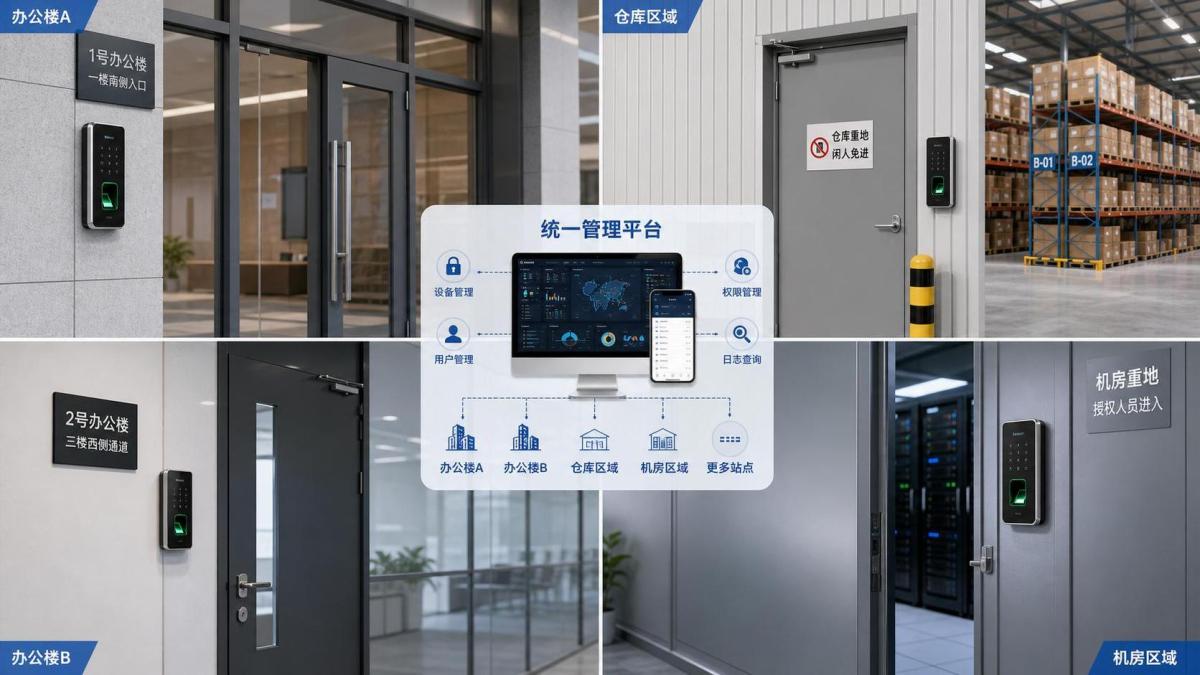
Multi-site access control rarely fails because of one lock. Problems usually appear when standards vary across branches, warehouses, offices, and restricted rooms.
Before comparing any biometric lock supplier, define the operating environment. Count locations, doors, user groups, shift patterns, and local compliance requirements.
Also map the mix of indoor, outdoor, and semi-exposed entrances. A biometric lock that works well in a head office may struggle at a dusty loading area.
This early baseline helps separate suitable suppliers from those offering generic hardware without operational depth.
Check Core Product Performance First
Any biometric lock supplier should prove more than feature count. The first review area is authentication performance under real conditions, not just lab claims.
Biometric accuracy and speed
Look for false acceptance rate, false rejection rate, and response time. For busy sites, even small delays can create queues and user frustration.
Ask the biometric lock supplier how testing was conducted. Real performance should include wet fingers, poor lighting, gloves nearby, and varied user demographics.
Spoof resistance
Liveness detection matters. A biometric lock supplier should explain how the system resists fake fingerprints, printed images, masks, or replay attacks.
Mechanical and environmental durability
For multi-site use, the lock body is just as important as the algorithm. Review IP rating, operating temperature, corrosion resistance, and cycle life.
If sites include factories or logistics yards, confirm vibration tolerance and housing strength. Hardware failure creates the same access risk as software failure.
Evaluate Integration, Not Just the Lock
A capable biometric lock supplier should fit into the wider access control architecture. Standalone devices may look cheaper, but they often raise management costs later.
Check whether the supplier supports existing controllers, credential systems, visitor management platforms, and building security software.
Integration questions should include:
- Can the biometric lock supplier support centralized user provisioning across all sites?
- Does the platform sync access rights in real time or near real time?
- Are audit logs exportable for investigations and compliance reviews?
- Does it support API access, mobile admin tools, or cloud dashboards?
- How are offline events stored and reconciled after reconnection?
In practice, integration quality often determines whether a biometric lock supplier becomes a long-term asset or a fragmented point solution.
Review Scalability Across Sites and Users
A biometric lock supplier may perform well in a pilot and still fail at scale. This is a common mistake during sourcing.
Ask how many doors, users, and concurrent transactions the platform can support. Then compare that with your expected expansion over three to five years.
More importantly, review how new sites are added. Deployment should follow a repeatable template for hardware, firmware, user policy, and reporting.
A strong biometric lock supplier can explain multi-site onboarding in clear operational steps. That usually signals maturity in both product and support.
Assess Data Security and Compliance Readiness
Biometric data is sensitive by default. That makes compliance a supplier issue, not only an internal policy issue.
A biometric lock supplier should describe where templates are stored, how they are encrypted, and who can access them.
Review whether the supplier supports local storage, edge processing, or cloud deployment models. Different sites may require different data handling rules.
From a risk perspective, ask for documented controls covering:
- Encryption in transit and at rest
- Role-based administration
- Consent workflows and retention settings
- Deletion procedures for former employees
- Incident response and breach notification process
- Relevant certifications or audit records
If a biometric lock supplier answers vaguely here, that is an immediate warning sign. Security hardware without data discipline creates unnecessary legal and operational exposure.
Test Service Capability and Support Coverage
Multi-site access control depends on service consistency. The best biometric lock supplier is the one that can still support you after rollout pressure fades.
Check support structure before awarding business. That includes pre-sales engineering, installation guidance, firmware maintenance, and incident response.
Useful questions include:
- What are the service hours and escalation paths?
- Is support delivered directly or through local partners?
- What are the firmware update policies and rollback options?
- How quickly can replacement units reach each site?
- Are training materials available for administrators and installers?
In distributed operations, local response capability often matters more than a polished central sales presentation.
Compare Total Cost, Not Only Unit Price
A low initial quote can be misleading. A realistic comparison of any biometric lock supplier should include total cost of ownership.
That means hardware price, software licensing, onboarding, integration work, training, support, spare stock, and upgrade costs.
It is also worth estimating the cost of downtime. One failed high-security door can interrupt operations, trigger guard costs, or expose sensitive areas.
This kind of cost model makes supplier comparison more credible and easier to defend internally.
Use a Structured Supplier Scorecard
A practical way to evaluate a biometric lock supplier is to use a weighted scorecard. It keeps discussion focused on evidence rather than sales pressure.
Typical scoring categories include product performance, integration, compliance, service coverage, scalability, and commercial terms.
During review, request supporting proof for every critical claim. Brochures are useful, but field references, test reports, and pilot results matter more.
If possible, run a limited pilot at two or three different site types. That quickly reveals whether the biometric lock supplier can perform beyond a showroom demo.
Final Decision Criteria
The right biometric lock supplier should deliver secure authentication, reliable hardware, usable software, and service coverage that matches your footprint.
Just as important, the supplier should reduce operational complexity instead of adding another fragmented platform to manage.
A confident decision usually comes from three checks: proven field performance, clear compliance controls, and a scalable support model for every site.
When those elements align, a biometric lock supplier becomes more than a vendor. It becomes part of the long-term access control strategy.
The next step is straightforward: define evaluation criteria, shortlist qualified suppliers, and validate claims through a controlled pilot before scaling network-wide.
Recommended News