
Search News
Industry Portal
Hot Articles
Industrial Nuts Material Guide: Strength, Corrosion, and Cost Tradeoffs
Time
Click Count
Material choice for industrial nuts sits at the intersection of mechanics, environment, and lifecycle economics. A nut that performs well in a dry indoor assembly may fail quickly in a coastal enclosure, a chemical plant, or a vibration-heavy machine frame. That is why selection cannot stop at nominal strength alone. It needs to weigh preload stability, corrosion behavior, service access, coating compatibility, and replacement cost across the full operating context.
Across construction, advanced manufacturing, energy, transport, and smart infrastructure, industrial nuts remain small components with outsized responsibility. SHSS tracks this category as part of the broader high-strength hardware landscape, where fastening reliability supports everything from BLDC-powered tools and industrial assemblies to secure building systems and urban equipment that cannot tolerate avoidable loosening or material loss.
Why Material Selection Matters More Than It First Appears
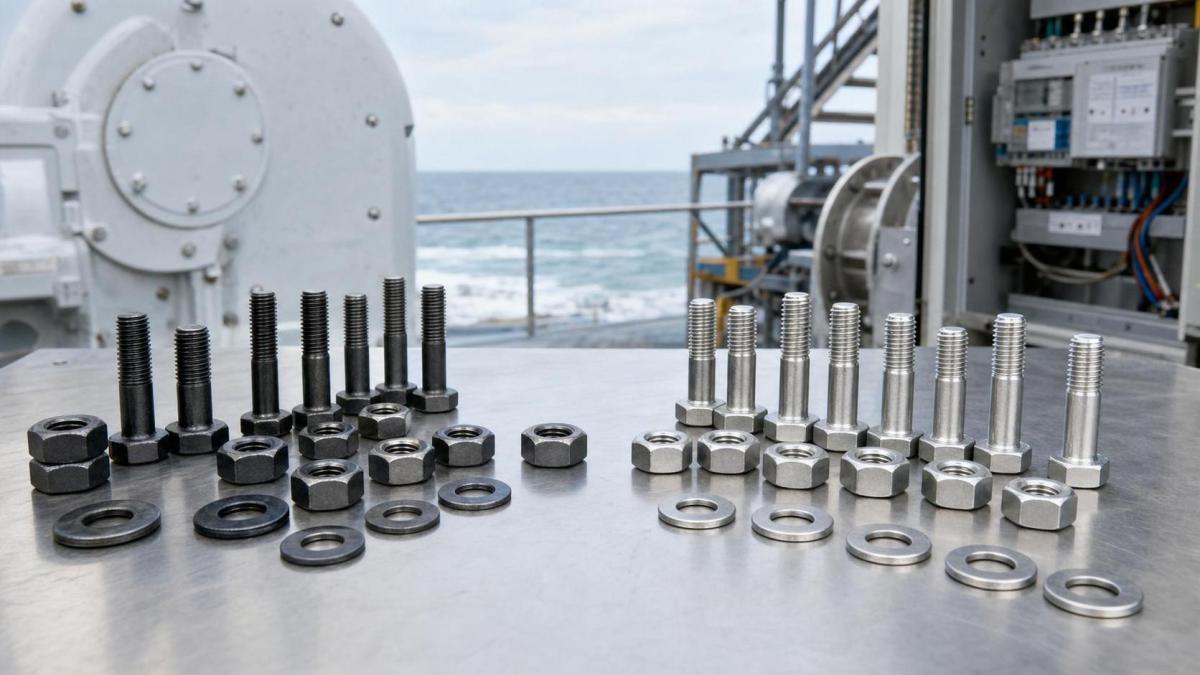
Industrial nuts are usually evaluated together with bolts, washers, surface treatments, and the joined materials. The nut material affects load transfer, thread wear, clamp retention, and resistance to seizure or galling.
In practice, failure rarely starts with one dramatic overload event. More often, it begins with gradual corrosion, embedding, thermal cycling, or installation mismatch. A low-cost nut can become the most expensive part of an assembly if downtime, access labor, or safety exposure is high.
This is especially relevant in mixed-use industrial environments. Smart city cabinets, lighting poles, access control housings, heavy equipment, and structural frames all place different demands on industrial nuts, even when thread size looks similar on paper.
The Core Tradeoff: Strength, Corrosion, and Cost
The most useful way to compare industrial nuts is to avoid searching for a universally best material. The better question is which compromise best matches the service profile.
Strength
High-strength carbon steel and alloy steel nuts are often preferred where clamp load is critical. Structural joints, power equipment, and vibration-prone assemblies typically depend on this category.
Higher strength supports preload retention, but it also narrows margin for material mismatch. Hard nuts paired with unsuitable bolts, poor lubrication, or aggressive plating can create cracking or thread damage risks.
Corrosion Resistance
Stainless steel industrial nuts are often selected for humid, outdoor, washdown, or mildly chemical settings. Their value is not simply cosmetic. Corrosion products can lock threads, reduce section thickness, and complicate maintenance.
Even here, stainless is not one material. Grade selection matters. Some grades perform well in general atmospheric exposure, while chloride-rich environments may require a higher alloy level.
Cost
Unit price still matters, especially in high-volume assemblies. Yet technical evaluation should separate purchase price from installed cost and service cost.
A plated carbon steel nut may be economical in indoor production lines. In a corrosive outdoor installation, that same choice can trigger repeated inspection, replacement, and lost uptime.
How Common Materials Behave in Real Service
Carbon steel remains the baseline for many industrial nuts because it is widely available, economical, and suitable for many coated fastening systems. Zinc-plated and mechanically galvanized variants are common where moderate corrosion protection is enough.
Alloy steel enters when higher proof load and structural confidence are needed. It is a practical choice for load-bearing joints, but corrosion protection and hydrogen embrittlement control become more important.
Stainless steel offers a different balance. It usually gives up some strength compared with high-grade alloy steel, yet it reduces rust-driven maintenance and preserves appearance in exposed installations.
Brass and nonferrous options serve narrower roles. They can be useful in electrical hardware, decorative fixtures, or assemblies where conductivity, machinability, or spark resistance matters more than high clamp load.
For specialty projects, titanium and nickel alloys may appear, but these are not standard choices for most industrial nuts. They make sense only when weight, heat, or chemical resistance justifies the premium.
Where the Decision Changes by Application
Application context should shape the shortlist before any final specification is written.
Outdoor Smart Infrastructure
Street lighting poles, sensor mounts, access control enclosures, and edge devices face moisture, UV exposure, and pollutants. Here, stainless steel industrial nuts often reduce maintenance visits and preserve fastener integrity.
Heavy Equipment and Tooling
Assemblies connected to torque tools, pneumatic systems, or machine frames usually prioritize preload and vibration resistance. High-strength steel nuts are often favored, provided coating and lubrication strategy are properly controlled.
Electrical and Control Cabinets
Indoor cabinets may not need premium corrosion performance. Cost-efficient carbon steel industrial nuts can be suitable, especially when climate exposure is limited and inspection access is easy.
Washdown or Chemical Areas
Food processing, wastewater, and certain industrial cleaning environments quickly expose weak material choices. Stainless options usually justify their cost here because corrosion can spread into threads and mating parts fast.
Evaluation Points That Prevent Expensive Mistakes
A strong review process for industrial nuts should check more than material name and thread size. Several details often decide whether a choice remains reliable after installation.
- Match nut grade with bolt grade and target preload.
- Review coating system, especially for outdoor or galvanized assemblies.
- Check galvanic compatibility with joined metals.
- Account for vibration, thermal cycling, and service temperature.
- Assess thread lubrication and galling risk for stainless combinations.
- Include access difficulty in the total cost model.
- Confirm standards, traceability, and batch consistency.
This is where the SHSS perspective is useful. Fasteners are rarely isolated purchasing items. They connect to tool torque capability, structural safety, enclosure durability, and the uptime logic behind modern industrial and smart-city systems.
Reading Cost as a Lifecycle Variable
The cheapest industrial nuts may still be the right choice in protected, accessible, noncritical assemblies. There is nothing inherently wrong with optimizing purchase cost when risk is low and replacement is simple.
The problem appears when low initial cost is mistaken for low total cost. Corrosion-driven seizure, structural retightening, coating failure, and maintenance travel can erase the savings quickly.
A practical cost review usually asks three questions. How expensive is a failure event? How difficult is replacement? How stable is the material under the expected environment for the full service interval?
A Practical Path to the Right Specification
Start with load case, exposure class, and design life. Then narrow material options by mechanical need and corrosion risk. After that, compare coatings, standards compliance, and installed cost rather than relying on piece price alone.
For many projects, the best answer is not the strongest or the most corrosion-resistant nut. It is the one that keeps the assembly stable, inspectable, and economical over time.
That makes industrial nuts a useful indicator of broader engineering discipline. When the material decision is clear, matched, and traceable, downstream maintenance and reliability planning usually become clearer as well. The next step is to map each fastening point by environment, load, and service interval, then compare candidate materials against those real conditions before final approval.
Recommended News