
Search News
Industry Portal
Hot Articles
Commercial Indoor Lighting for Retail: Reducing Flicker Without Raising Energy Use
Time
Click Count
Commercial Indoor Lighting for Retail: Reducing Flicker Without Raising Energy Use
For project managers balancing shopper comfort, visual consistency, and operating costs, commercial indoor lighting for retail must do more than look bright on paper.
Reducing flicker without increasing energy use is now essential for better product presentation, staff performance, and customer dwell time.
This guide explains how to evaluate fixtures, drivers, and controls to achieve stable illumination, stronger ROI, and smarter retail lighting decisions.
Why Flicker Matters in Commercial Indoor Lighting for Retail
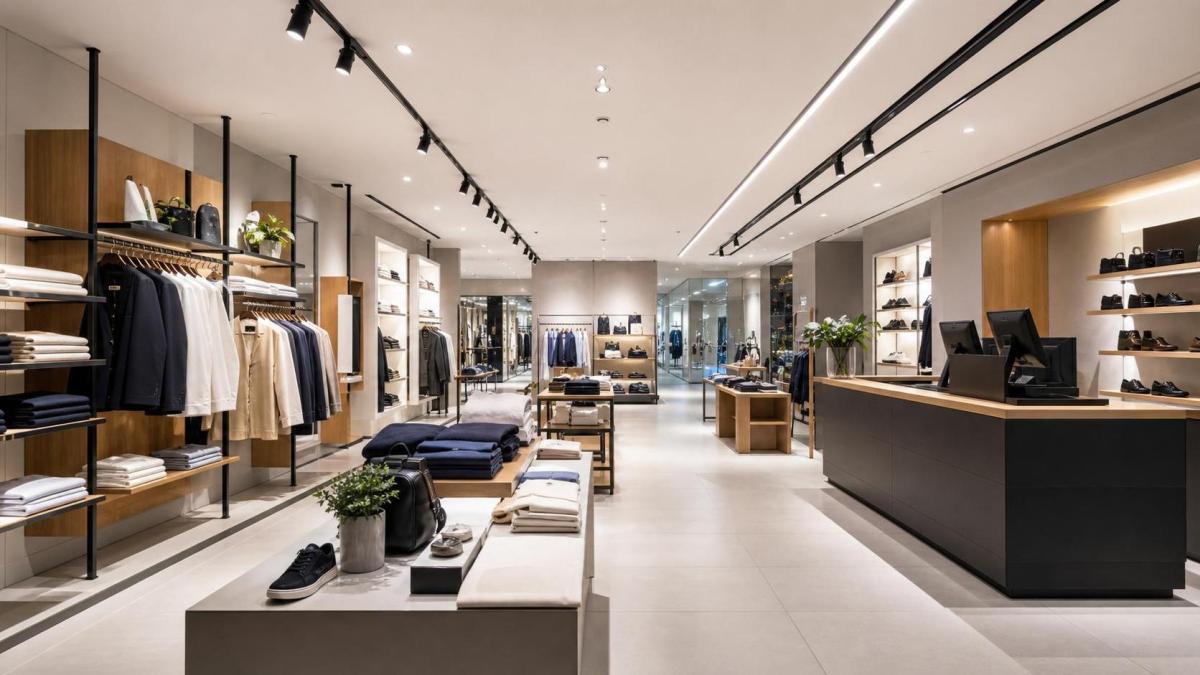
Flicker is often treated as a minor technical issue. In retail, it is not minor at all.
It affects how products look, how long people stay, and how staff feel during long shifts.
In practical terms, poor light stability can make polished surfaces shimmer, fabric colors shift, and shelves appear uneven.
That problem becomes more visible near checkout counters, fitting rooms, cosmetic displays, and refrigerated zones.
The stronger signal today is that retail lighting is now judged by experience, not just lux levels.
A store may meet basic illumination targets and still underperform because the light feels unstable.
This is why commercial indoor lighting for retail must be evaluated through visual comfort, control quality, and energy performance together.
The goal is not simply less flicker. The goal is stable, efficient light that supports sales activity.
What Usually Causes Flicker Without Warning
Many teams blame the LED chip first. In most cases, the driver and control strategy are the real issue.
Low-quality constant-current drivers often create visible or invisible flicker, especially at partial dimming levels.
In older retrofits, incompatible dimmers make the problem worse even when fixtures seem efficient on specification sheets.
Power quality also matters. Voltage fluctuation, overloaded circuits, and mixed fixture types can destabilize performance.
From recent project trends, another common cause is aggressive energy-saving logic without real commissioning.
Occupancy sensors, daylight harvesting, and scheduled dimming reduce consumption, but poor tuning can introduce pulse effects.
This also means commercial indoor lighting for retail should never be selected by fixture wattage alone.
The driver topology, dimming protocol, and commissioning process are just as important as efficacy.
How to Reduce Flicker Without Raising Energy Use
The best approach is to improve power delivery and control precision, not simply add more light.
That keeps commercial indoor lighting for retail efficient while solving the real performance issue.
1. Specify low-flicker LED drivers
Ask suppliers for flicker percentage, flicker index, and modulation depth across the actual dimming range.
Do not accept “flicker-free” as a marketing claim without test data.
High-quality drivers often maintain stable output while preserving the fixture’s rated energy efficiency.
2. Use dimming systems built for LED performance
0-10V, DALI, and digitally managed controls generally perform better than legacy phase-cut systems in retail retrofits.
Stable dimming means less flicker and more usable energy savings during low-traffic hours.
3. Tune controls after installation
Commissioning is where many projects either succeed or drift into complaints.
Set minimum dimming thresholds, ramp times, and sensor sensitivity based on store activity, not default values.
A slower fade can eliminate visible instability without increasing electrical load.
4. Match lighting design to merchandising zones
Accent lighting, shelf lighting, and general ambient lighting should not share the same control assumptions.
Zone-based control reduces overlighting and helps commercial indoor lighting for retail stay stable and efficient.
Procurement Checks That Prevent Expensive Rework
A low bid can become a costly lighting correction project within months.
That is why procurement reviews should include performance details that directly affect flicker and energy use.
- Request third-party test reports for flicker metrics at full and dimmed output.
- Confirm compatibility between fixture drivers, controls, and the building power environment.
- Review total harmonic distortion and power factor, not only fixture efficacy.
- Check lumen maintenance, thermal behavior, and warranty terms for driver replacement.
- Require mock-up testing in key sales areas before full rollout.
In actual retail business, mock-ups catch problems that paper specs miss.
This is especially true for reflective packaging, glass shelving, cosmetics, and digital signage zones.
Best Use Cases for Stable and Efficient Retail Lighting
Not every retail format experiences flicker the same way. Some environments are far more sensitive.
These examples show why commercial indoor lighting for retail should be tailored by task, surface, and customer flow.
How Smart Controls Support ROI Instead of Hurting It
Some teams avoid advanced controls because they fear added complexity or unstable light output.
That concern is valid when devices are mixed without a clear control strategy.
Still, well-matched smart lighting can cut waste while improving consistency.
DALI, Zigbee, and sensor-based control platforms allow more precise response to daylight and traffic patterns.
This matters because energy savings become more reliable when the system dims smoothly and predictably.
For commercial indoor lighting for retail, smart controls work best when they support clear operational goals.
- Reduce baseline output during restocking or off-peak hours.
- Maintain stronger vertical illuminance in product engagement zones.
- Respond gradually to daylight so storefront areas stay visually balanced.
- Track runtime and driver health for maintenance planning.
That combination improves both shopper experience and life-cycle cost performance.
A Practical Evaluation Framework Before Final Approval
Before approving any lighting package, use a short evaluation sequence that connects technical quality to store outcomes.
- Measure existing conditions, including complaint zones, dimming behavior, and energy baseline.
- Compare shortlisted fixtures by flicker data, efficacy, driver design, and control compatibility.
- Build a live mock-up in one representative area with merchandising in place.
- Observe the space during opening, peak traffic, and evening dimming periods.
- Approve only after visual comfort, power quality, and expected savings are confirmed together.
This framework keeps commercial indoor lighting for retail aligned with both operational discipline and customer-facing performance.
It also reduces the chance of post-installation disputes between procurement, facilities, and store operations.
When the right driver, control logic, and zoning strategy come together, lower flicker does not require higher energy use.
The better path is smarter specification, cleaner commissioning, and closer attention to real retail conditions.
For the next upgrade cycle, treat commercial indoor lighting for retail as a performance system, not a commodity line item.
Recommended News