
Search News
Industry Portal
Hot Articles
Smart LED Lighting: How to Cut Energy Costs Without Sacrificing Visibility
Time
Click Count
For financial approvers, every facility upgrade must prove its value in measurable savings, risk reduction, and operational continuity. Smart LED lighting offers a practical path to lower electricity bills without compromising visibility, safety, or productivity. By combining high-efficiency luminaires with occupancy sensing, daylight harvesting, and centralized controls, organizations can reduce waste while maintaining the right illumination where and when it matters. This article explains how decision-makers can evaluate costs, ROI, and performance factors before approving a smart lighting investment.
In commercial buildings, warehouses, plants, campuses, hospitals, and municipal infrastructure, lighting is not a decorative expense. It is a daily operating system that affects energy budgets, inspection readiness, worker confidence, and incident prevention.
For SHSS, smart lighting belongs to the same safety ecosystem as biometric access, high-strength hardware, industrial tools, and protective equipment. It is an optical layer that supports secure, efficient, and resilient physical operations.
Why Smart LED Lighting Matters to Financial Approvers
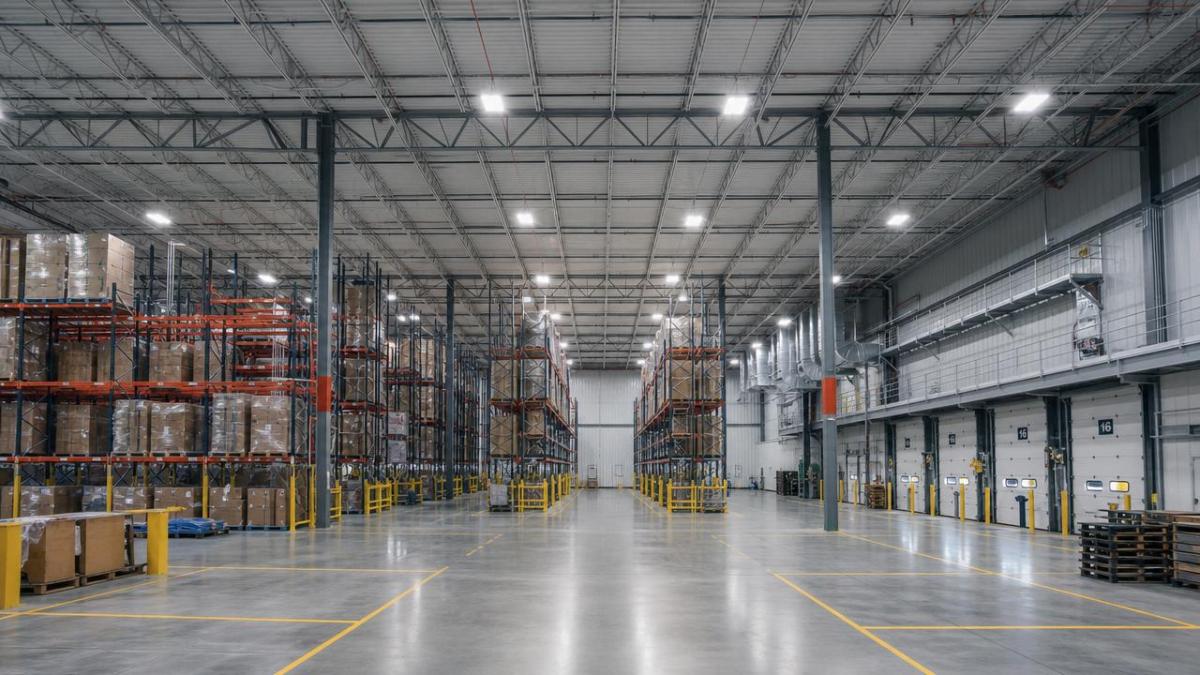
Traditional lighting upgrades often focused on replacing lamps one-for-one. Smart LED lighting changes the business case by reducing both wattage and unnecessary runtime, often across 10, 12, or 24 operating hours per day.
A finance team should view lighting as a controllable load. In many facilities, fixtures run during empty shifts, daylight hours, or low-traffic periods because no one owns the switching decision in real time.
The Cost Logic Behind the Upgrade
A conventional LED retrofit may cut connected load by 40% to 60% compared with legacy fluorescent, HID, or halogen systems. Adding sensors and controls can reduce further waste by dimming or switching zones automatically.
The payback calculation should include at least 5 cost lines: electricity, maintenance labor, replacement parts, downtime disruption, and control software or commissioning. Ignoring any one of these can distort ROI.
- Energy savings from lower wattage and reduced operating hours.
- Maintenance savings from longer rated life, commonly 50,000 hours or more.
- Risk reduction through reliable illumination in stairs, loading docks, and production aisles.
- Operational flexibility through scheduling, zoning, dimming, and remote monitoring.
The following table helps compare typical lighting investment paths. Values should be validated through a site audit, but the categories show where finance teams usually find hidden value.
The key conclusion is simple: the cheapest fixture is not always the lowest-cost asset. Smart LED lighting usually performs best when the approval model considers total lifecycle cost over 3 to 7 years.
Visibility Cannot Be Sacrificed for Savings
Cost reduction should never create dark corners, glare, poor color recognition, or uneven illumination. In industrial and commercial environments, poor visibility can increase errors, near misses, and security blind spots.
Financial approvers should ask for lighting designs, not only fixture quotations. A responsible proposal will address lux levels, uniformity, mounting height, beam angle, color temperature, and emergency lighting integration.
Performance Metrics That Protect Operations
For many interior workplaces, target illumination may range from 200 to 500 lux depending on task difficulty. Precision inspection, assembly, or safety-critical work may require higher levels and tighter uniformity.
Color temperature is also a financial concern. A 4000K neutral white system often supports general productivity, while 5000K may be preferred in detailed industrial work, warehouses, or high-bay environments.
Visibility Factors to Include in Approval Documents
- Illuminance targets for each zone, measured in lux at the working plane.
- Uniformity ratio to prevent bright islands and unsafe dark transitions.
- Glare control through optics, lens selection, shielding, and fixture placement.
- Color rendering needs, especially where wiring, labels, product defects, or PPE colors must be recognized.
- Emergency behavior during power loss, control failure, or fire safety events.
Smart LED lighting should be commissioned after installation. A 30-minute walkthrough cannot replace measured verification across shifts, aisles, dock doors, high shelves, ramps, and access-controlled areas.
Building a Practical ROI Model
A credible ROI model starts with the current baseline. Finance teams need existing fixture counts, wattages, operating hours, tariff assumptions, maintenance frequency, and replacement labor costs before approving smart LED lighting.
The model should separate hard savings from operational benefits. Hard savings include kWh reduction and maintenance. Operational benefits include improved uptime, safer movement, audit readiness, and data-driven facility management.
A 5-Step Evaluation Method
- Map zones by function, including offices, production lines, storage, parking, exterior paths, and security perimeters.
- Record operating schedules, such as 8-hour office use, 16-hour warehouse use, or 24-hour critical operations.
- Estimate new connected load, control strategy, and expected dimming profiles by area.
- Add installation, commissioning, training, software, replacement parts, and contingency allowances.
- Compare payback, net present value, and sensitivity at different electricity prices.
For many projects, a 10% variation in operating hours can materially change payback. This is why sensor data, utility bills, and facility schedules should be reconciled before final approval.
Financial teams should also consider phased deployment. A pilot across 1 floor, 1 warehouse zone, or 20 to 50 fixtures can validate settings before a full-site rollout.
Choosing Controls, Sensors, and Network Architecture
The control layer is where smart LED lighting becomes more than efficient hardware. It enables scheduling, sensing, diagnostics, zoning, and remote adjustment without asking maintenance teams to inspect every fixture manually.
Procurement should not approve controls based only on buzzwords. The correct architecture depends on building size, cybersecurity expectations, maintenance capacity, interoperability, and whether the facility will integrate with a BMS.
Key Control Choices for Commercial and Industrial Sites
The table below summarizes common control decisions. It is designed for approval meetings where finance, facilities, safety, IT, and procurement must agree on both cost and risk.
The financial takeaway is that controls must match the facility’s governance model. A complex system without trained owners can underperform, while a well-designed simple system can deliver steady savings.
Cybersecurity and Operational Continuity
Networked lighting should be reviewed like other connected hardware. Access permissions, firmware update processes, data retention rules, and failure modes should be documented before commissioning.
In critical locations, lighting should fail safely. If communication is interrupted, zones should maintain predefined illumination rather than leaving employees, visitors, or security staff in uncertainty.
Implementation Plan: From Audit to Stable Operation
A smart LED lighting project should not start with a purchase order. It should begin with an audit that identifies where visibility is essential, where energy is wasted, and where installation risk is highest.
A typical implementation may take 2 to 8 weeks for a mid-sized facility, depending on fixture quantity, ceiling access, shift constraints, control integration, and required safety permits.
Recommended Project Sequence
- Week 1: site survey, fixture inventory, operating-hour validation, and pain-point interviews.
- Week 2: photometric design, control zoning, budget estimate, and ROI review.
- Weeks 3 to 5: procurement, installation planning, safety coordination, and pilot configuration.
- Weeks 6 to 8: rollout, commissioning, user training, and savings baseline documentation.
For active production or logistics sites, installation should be staged around operating windows. A 4-hour shutdown may be feasible in one zone but unacceptable near loading bays or security entrances.
Acceptance Criteria Finance Should Request
Approval should require measurable acceptance criteria. These may include installed fixture count, functional control zones, lux readings at agreed points, sensor response times, and documentation for maintenance teams.
A practical handover package should include 3 documents: an as-built fixture schedule, a control logic summary, and a maintenance guide covering replacement drivers, sensors, and troubleshooting steps.
Common Approval Mistakes and How to Avoid Them
Smart LED lighting projects fail financially when assumptions are too optimistic or responsibilities are unclear. The goal is not to buy the most advanced system, but the most appropriate system.
Finance teams should challenge any proposal that promises savings without showing baseline data, control logic, maintenance assumptions, or a method for post-installation verification.
Four Mistakes That Erode ROI
- Approving fixture pricing without installation, commissioning, or disposal costs.
- Selecting sensors that do not match ceiling height, aisle geometry, or occupant behavior.
- Failing to train facility teams on schedules, overrides, dashboards, and alerts.
- Ignoring replacement availability for drivers, lenses, sensors, and control modules over 5 years.
Another frequent issue is over-dimming. A facility may save electricity but create employee complaints or inspection concerns. Savings targets should be balanced against task visibility and safety requirements.
Procurement Questions Before Signing
Before approval, ask whether the supplier provides photometric files, control diagrams, warranty terms, spare-part guidance, and commissioning support. These details protect the investment after invoices are paid.
For multi-site organizations, procurement should also request standardization. Consistent fixture families, sensor settings, naming conventions, and reporting formats reduce training burden across 2, 10, or 50 locations.
Where Smart LED Lighting Delivers the Strongest Value
The best use cases share two characteristics: high operating hours and variable occupancy. That combination allows smart LED lighting to cut waste while preserving visibility during active work.
Warehouses, distribution centers, manufacturing lines, parking structures, commercial corridors, and exterior security zones often provide strong business cases because lighting demand changes across shifts and traffic patterns.
Scenario-Based Recommendations
- High-bay warehouses: use aisle-based sensors, high-efficiency optics, and dimmed standby modes around 10% to 30% output.
- Offices and campuses: combine daylight harvesting, scheduling, and meeting-room occupancy controls.
- Parking and perimeter areas: prioritize uniformity, vandal-resistant housings, emergency response behavior, and security camera compatibility.
- Industrial plants: coordinate lighting with machine layouts, PPE visibility, maintenance access, and inspection zones.
For SHSS readers, lighting is also part of a wider physical safety architecture. It supports biometric checkpoints, secure loading zones, tool rooms, protective equipment stations, and fastener inspection areas.
When light, access, hardware, tools, and PPE are evaluated together, facility investment decisions become more strategic. The result is not only lower utility cost, but stronger operational confidence.
Final Approval Guidance for Decision-Makers
Smart LED lighting can reduce energy costs without sacrificing visibility when finance, facilities, safety, and IT evaluate the project from the same evidence base. The strongest proposals show both numbers and operating logic.
Before approving a project, confirm 6 essentials: baseline data, photometric design, control strategy, installation plan, verification method, and long-term service responsibilities. These items turn a lighting purchase into a managed asset.
For organizations managing factories, commercial buildings, logistics assets, or smart city infrastructure, SHSS can help frame the questions that matter before capital is committed. The right lighting decision protects budgets, visibility, and continuity.
If your team is evaluating smart LED lighting for a new facility, retrofit, or multi-site standardization plan, contact us to discuss product details, compare solution paths, or request a customized approval framework.
Recommended News