
Search News
Industry Portal
Hot Articles
Commercial LED Lighting: Cutting Energy Costs Without Sacrificing Comfort
Time
Click Count
Is commercial LED lighting really a cost strategy, or just another retrofit line item?
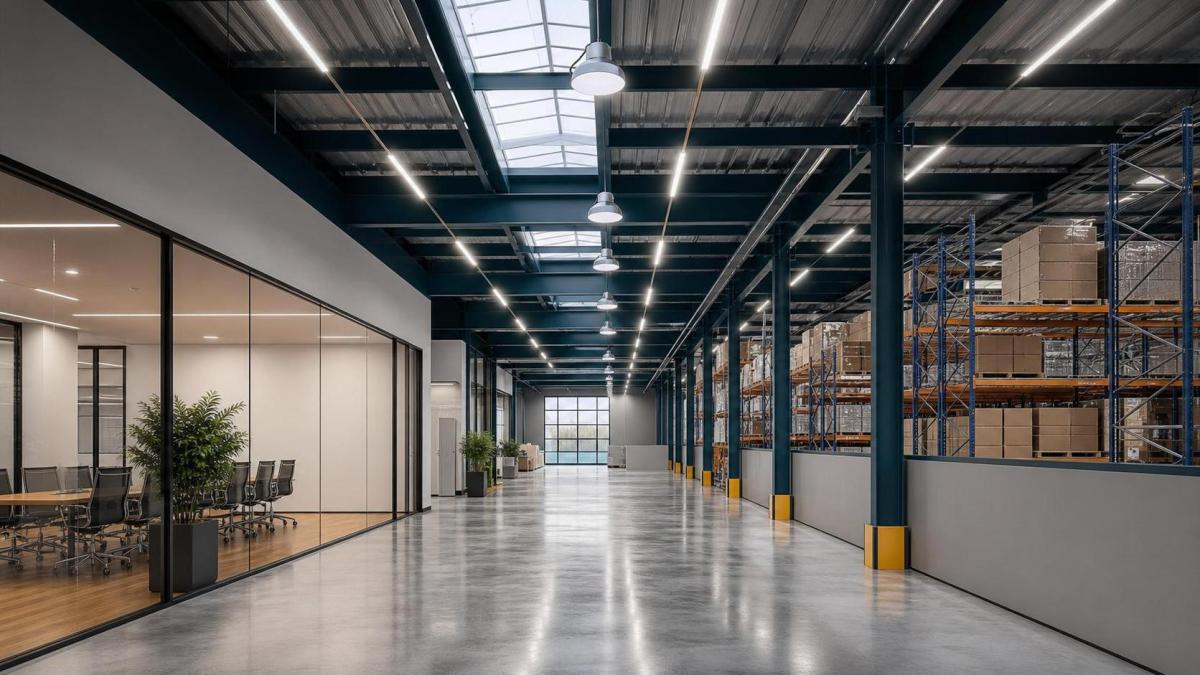
That question sits at the center of many building upgrade decisions.
Commercial LED lighting affects energy use, maintenance schedules, occupant comfort, and even leasing appeal.
So the real issue is not whether LEDs save power.
It is whether the full system produces measurable savings without creating complaints about glare, dim spaces, or visual fatigue.
In practice, modern commercial LED lighting often reduces electricity demand by 40% to 70% versus legacy fluorescent, HID, or halogen systems.
The bigger financial advantage usually comes from combining efficient luminaires with controls.
Occupancy sensing, daylight harvesting, and scheduled dimming extend those savings beyond fixture efficiency alone.
This matters across offices, logistics hubs, retail floors, schools, hospitals, parking structures, and municipal sites.
SHSS follows this broader hardware ecosystem closely.
Its research lens connects lighting performance with smart controls, building security, industrial reliability, and operational resilience.
That perspective is useful because lighting rarely works in isolation anymore.
A well-planned LED upgrade now interacts with occupancy data, access schedules, smart city platforms, and maintenance planning.
What should be measured before deciding if commercial LED lighting makes financial sense?
A quick price-per-fixture comparison almost always misses the point.
A stronger decision starts with five numbers: annual operating hours, current wattage, maintenance frequency, utility tariff, and target payback period.
From there, commercial LED lighting becomes easier to model in business terms.
The table below helps frame the first-pass evaluation.
More common than expected, the weak spot is baseline data.
Without it, projected ROI for commercial LED lighting becomes guesswork.
A basic audit is often enough to improve confidence.
It should record fixture counts, wattage, control opportunities, and site-specific maintenance difficulty.
Where do comfort and savings usually collide?
This is where many projects succeed or fail.
Teams often pursue maximum watt reduction, then discover the space feels harsh or uneven.
Commercial LED lighting works best when efficiency and human experience are designed together.
The usual pain points are not mysterious.
- Excessive brightness from high-output fixtures in low-ceiling interiors.
- Glare on screens, polished floors, or warehouse labels.
- Color temperatures that feel too cold for hospitality or office zones.
- Overaggressive motion sensor settings that switch lights off too early.
- Low-quality drivers that introduce flicker or dimming instability.
In actual projects, comfort is protected through specification discipline.
That means checking beam distribution, unified glare rating, color rendering, dimming compatibility, and control logic.
For offices and education settings, balanced visual softness often matters more than headline lumen output.
For logistics and industrial sites, visibility, vertical illumination, and sensor reliability usually take priority.
SHSS frequently highlights this systems view in smart lighting coverage.
Protocols such as DALI and Zigbee are not just technical extras.
They make commercial LED lighting more adaptable to occupancy patterns, daylight changes, and security-linked building operations.
How do you compare fixture options without getting lost in specifications?
A practical comparison starts by separating core performance from nice-to-have features.
Not every site needs the same level of intelligence.
Yet almost every site benefits from durable, well-matched commercial LED lighting.
A useful short list usually includes these checkpoints.
- Luminous efficacy: Higher efficacy lowers energy use, but only if light distribution suits the space.
- Rated life: Look beyond marketing claims and review lumen maintenance data.
- Driver quality: Stable drivers reduce failures, flicker, and nuisance maintenance.
- Control readiness: Confirm compatibility with sensors, DALI, Zigbee, or building management systems.
- Environmental fit: IP rating, thermal performance, and housing quality matter in harsh locations.
- Warranty structure: Review what is covered, for how long, and under which operating conditions.
One useful habit is to compare complete installed outcomes, not component labels.
A cheaper fixture may consume more support time, fail earlier, or deliver weaker light uniformity.
That is especially relevant in high-bay facilities, parking decks, hospitals, and public infrastructure.
Maintenance access in those spaces is expensive.
So the right commercial LED lighting choice often favors reliability over the lowest purchase price.
What mistakes tend to weaken ROI after the project is approved?
The most common mistake is assuming all savings come from the fixture swap.
In many buildings, controls generate the difference between a decent payback and a strong one.
Another frequent issue is installing uniform lighting where usage patterns are not uniform.
Corridors, meeting rooms, washrooms, loading zones, and storage aisles rarely need identical output all day.
There are also softer risks that matter financially.
- Ignoring commissioning, which leaves sensors and dimming scenes poorly calibrated.
- Skipping occupant testing in sensitive work areas.
- Choosing one color temperature for every zone.
- Underestimating disposal, rewiring, or emergency lighting integration.
- Failing to track post-install performance against the original model.
A better approach is phased verification.
Pilot one representative area, confirm light quality, review usage data, then scale.
For larger portfolios, that method often reduces both specification errors and budget surprises.
It also aligns with the SHSS view that smart hardware decisions should be evidence-led, not assumption-led.
How should the next step be framed when evaluating commercial LED lighting?
The next step is usually not a purchase decision.
It is a decision framework.
Commercial LED lighting delivers the best value when the review covers cost, comfort, controls, and operating risk together.
If the goal is durable savings, several actions are worth taking before final selection.
- Audit current lighting hours, wattage, and replacement effort by area.
- Identify where controls can reduce burn time without harming comfort.
- Compare fixture options by installed performance, not just unit price.
- Test color temperature and glare conditions in real working zones.
- Model payback using both energy and maintenance savings.
- Plan post-install measurement so expected ROI can be verified.
That sequence keeps the conversation grounded in outcomes.
It also helps distinguish a superficial retrofit from a resilient operating-cost strategy.
When commercial LED lighting is specified carefully, energy savings and comfort do not have to compete.
They can reinforce each other, especially in facilities where smart lighting supports broader building intelligence goals.
That is why this category keeps gaining attention across construction, industry, commercial real estate, and smart city infrastructure.
Recommended News