
Search News
Industry Portal
Hot Articles
DALI Protocol Basics: Wiring, Dimming, and Common Integration Issues
Time
Click Count
Why does the DALI protocol matter so much in smart lighting projects?
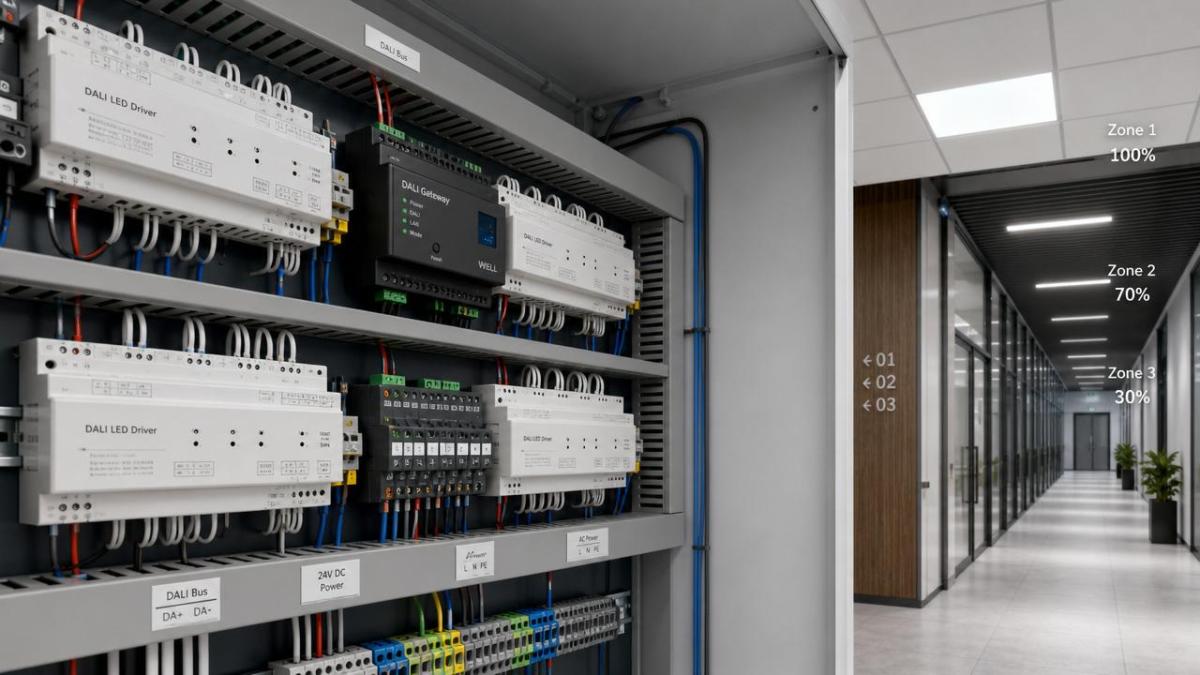
The DALI protocol is more than a lighting control language. It is often the difference between a smooth rollout and a site full of callbacks.
In commercial buildings, factories, campuses, and smart city assets, lighting now sits beside access control, safety systems, and energy reporting.
That is why the DALI protocol keeps showing up in specifications. It supports addressable control, scene setting, fault feedback, and structured commissioning.
For organizations following the broader SHSS view of resilient infrastructure, this matters. Reliable lighting is part of operational safety, not just visual comfort.
A warehouse aisle, a transit platform, a hospital corridor, or a data center entrance all depend on predictable response.
So when people ask about DALI protocol basics, they are usually asking a practical question: how do we avoid wiring mistakes, dimming surprises, and integration delays?
What exactly is the DALI protocol, and where is it usually the right fit?
The DALI protocol stands for Digital Addressable Lighting Interface. In simple terms, it lets each compatible light device receive digital commands on a shared control bus.
Unlike basic switching, DALI protocol systems can dim individual fixtures, build groups, trigger scenes, and report device status.
That makes it a strong fit for applications where flexibility matters after installation. Offices are one example, but they are not the only one.
It is commonly used in:
- Commercial buildings with changing occupancy layouts
- Industrial spaces needing zone-based dimming and maintenance feedback
- Healthcare and education sites requiring scene control
- Smart street and campus lighting with centralized supervision
- Projects that may later connect with sensors, BMS, or IoT gateways
The DALI protocol is not always the cheapest starting point. Yet it often lowers lifecycle friction when layouts, usage patterns, or compliance demands evolve.
A common mistake is treating DALI as only a dimming feature. In reality, its real value is controlled change over time.
How should DALI wiring be understood before installation begins?
This is where many early assumptions go wrong. The DALI protocol uses a dedicated two-wire control bus, separate from mains power.
The control pair carries digital communication, not line voltage switching. That gives the system more flexibility during addressing and reconfiguration.
In practical terms, DALI wiring is less rigid than some legacy control schemes. Star, line, and mixed topologies are generally possible.
Still, “possible” does not mean “careless.” Cable routing, voltage drop, bus power capacity, and device count still need planning.
The safer approach is to verify four things before rough-in:
- How many DALI devices sit on each loop
- Whether the selected power supply supports the total bus load
- Where gateways, panels, and emergency interfaces are located
- How fixture schedules match the addressing and grouping plan
In mixed-discipline projects, lighting teams sometimes finalize bus design after ceilings are closed. That usually creates avoidable rework.
The DALI protocol is forgiving in topology, but unforgiving when documentation is weak. Labeling and commissioning records are not optional extras.
A quick judgment table before wiring starts
A short checkpoint like this often prevents the most common field disputes.
Why does dimming behavior sometimes look inconsistent even when the system is “working”?
This is one of the most misunderstood DALI protocol issues. A device can respond correctly and still produce disappointing visual results.
The problem usually comes from driver behavior, fixture design, or programming choices rather than a failed bus.
For example, two luminaires may both support the DALI protocol, yet dim differently at low levels because their LED drivers use different dimming curves.
Another frequent issue is mismatch between intended mood control and actual task lighting requirements. A smooth fade in a lobby may be unacceptable in a production area.
When dimming complaints appear, check these points before replacing hardware:
- Minimum dim level settings in the driver
- Fade rate and fade time parameters
- Mixed fixture brands within one visual zone
- Sensor logic causing rapid level changes
- Emergency lighting constraints overriding normal scenes
In actual deployments, “bad dimming” is often a coordination issue. Electrical design, control programming, and end-use expectations need to meet earlier.
The DALI protocol provides the command structure. It does not guarantee identical optical behavior across every driver and luminaire combination.
Where do DALI integration issues usually appear when systems expand?
Integration trouble rarely starts with the DALI protocol alone. It starts when lighting is expected to cooperate with other control layers.
That may include BMS platforms, occupancy sensors, daylight harvesting, emergency testing, or smart building dashboards.
The first risk is unclear protocol ownership. One team expects the DALI controller to manage logic, while another expects the building platform to do it.
The second risk is incomplete interoperability testing. A gateway may connect physically, but still miss scene recall behavior, status feedback, or fault mapping.
This becomes more relevant in the SHSS ecosystem, where lighting may share digital space with access control, security analytics, and urban infrastructure software.
A corridor light level might need to react to occupancy data, security states, or time schedules. That is an integration design issue, not just a wiring issue.
More common friction points include:
- Gateway selected too late for the required control logic
- Different vendors interpret feature support differently
- Addressing changes after commissioning break dashboards
- Sensor zones do not match DALI group structure
- Site teams skip full scenario testing before handover
A practical rule helps here: if the system must report, react, and scale, then the integration narrative should be written before the first fixture is energized.
What should be checked before choosing a DALI protocol solution?
Selection should not begin with brand names alone. It should begin with operational intent.
Ask whether the project needs simple grouped dimming, granular fixture monitoring, sensor-based automation, or future expansion into a broader smart building stack.
The DALI protocol is often a strong option when changes are expected after occupancy. It is less compelling when the control scheme is fixed and very simple.
Before approval, a useful evaluation list includes:
- Compatibility between drivers, controllers, sensors, and gateways
- Commissioning software quality and documentation depth
- Availability of replacement components and local support
- Emergency lighting and code compliance requirements
- Lifecycle cost, not only installed cost
Need to compare options quickly? This simplified view helps anchor the decision.
How can common DALI protocol problems be reduced before handover?
Most DALI protocol failures are not dramatic technical faults. They are planning gaps that surface late.
A better handover usually comes from tighter coordination between electrical design, controls logic, fixture procurement, and site commissioning.
A practical closing checklist should include documented addresses, tested scenes, verified sensor behavior, and confirmed failure reporting.
It also helps to keep one version-controlled source for room names, fixture tags, and group definitions. That sounds simple, but it prevents many disputes.
If the lighting system connects with security, access, or city-scale controls, insist on live integration tests rather than paper confirmation.
The DALI protocol rewards disciplined execution. When wiring, dimming, and integration are aligned early, the result is a lighting system that stays useful long after occupancy.
A sensible next step is to map the actual control intent, check the bus design, review driver compatibility, and define integration ownership before commissioning begins.
Recommended News