
Search News
Industry Portal
Hot Articles
Commercial LED Lighting: Cost Drivers, Payback, and Hidden Spec Risks
Time
Click Count
Commercial LED Lighting: Cost Drivers, Payback, and Hidden Spec Risks
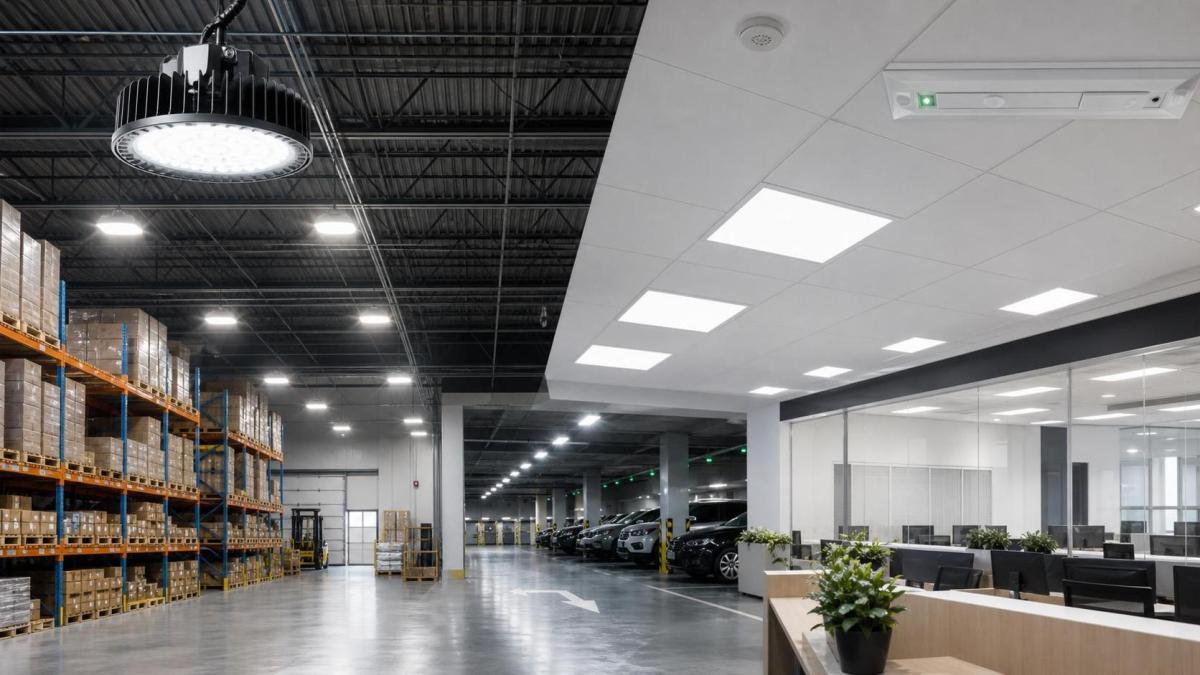
Commercial LED lighting can reduce energy bills quickly. That part is well known. The harder question is whether the project still makes sense after every real cost is counted.
In practice, payback depends on fixture quality, controls, installation complexity, maintenance savings, and specification discipline. A cheaper fixture can produce a worse financial result.
That is why commercial LED lighting should be evaluated as a total cost decision, not only as an energy project. Small choices at procurement stage often create large differences later.
This article breaks down the main cost drivers, realistic ROI ranges, and the hidden spec risks that often weaken an otherwise strong business case.
Why Commercial LED Lighting Costs Vary More Than Expected
Many buyers compare fixture prices first. That is understandable, but it rarely tells the whole story. Commercial LED lighting pricing changes based on performance, durability, and control capability.
A low upfront quote may exclude sensors, drivers, emergency backup, commissioning, or warranty support. Once these items are added, the gap can shrink fast.
Core Cost Drivers
- Fixture efficacy, usually measured in lumens per watt.
- Driver quality, lifetime rating, and surge protection level.
- Optics, beam control, and glare management requirements.
- Color rendering, color consistency, and color temperature stability.
- Control systems such as occupancy sensors, daylight harvesting, DALI, or Zigbee.
- Installation labor, lift access, rewiring, and ceiling conditions.
- Maintenance access in warehouses, schools, hospitals, and retail sites.
More importantly, application type matters. A warehouse high bay project has a different cost logic than office troffers or exterior area lighting.
That also means one benchmark does not fit every portfolio. Commercial LED lighting should be reviewed by building use, operating hours, and risk tolerance.
How to Calculate Real Payback, Not Promotional Payback
Vendors often present a simple payback number. It can be useful, but only if the assumptions are realistic. Otherwise, it becomes a sales figure, not a decision figure.
Start With Four Financial Inputs
- Current annual energy consumption of existing lighting.
- Projected energy use after the commercial LED lighting upgrade.
- Installed project cost, including controls and commissioning.
- Maintenance savings across lamps, drivers, labor, and downtime.
A realistic model should also include utility rebates, financing cost, and expected operating hours. If the site runs sixteen hours a day, ROI improves much faster.
For many indoor retrofits, simple payback lands between two and five years. Exterior or high-hour facilities can perform even better when controls are added correctly.
A Practical ROI Example
Assume a site spends $120,000 yearly on lighting electricity. A commercial LED lighting retrofit cuts that by 55%. Annual energy savings reach $66,000.
If maintenance savings add $14,000, total annual benefit becomes $80,000. On a $260,000 installed project, simple payback is about 3.25 years.
Now add a rebate of $30,000. Net project cost drops to $230,000. Payback improves to under three years, which often changes internal approval confidence.
The Hidden Spec Risks That Distort Total Cost
This is where many commercial LED lighting projects go off track. The fixture appears compliant on paper, yet the installed result underperforms financially or operationally.
1. Overstated Lifetime Claims
A 50,000-hour claim is not enough by itself. Ask whether it refers to LED package life, driver life, or full luminaire performance under actual ambient conditions.
Driver failure often arrives before LED failure. If replacement requires lifts or shutdowns, maintenance cost rises much faster than expected.
2. Weak Thermal Management
Heat is one of the biggest enemies of commercial LED lighting. Poor thermal design accelerates lumen depreciation, shortens driver life, and increases color shift.
This problem is more common in enclosed fixtures, hot climates, and industrial environments. Savings look strong on day one, then fade early.
3. Incomplete Control Integration
Controls can unlock major savings. They can also create frustration if interoperability is not checked. Sensors, gateways, and drivers must speak the same language.
If DALI, Zigbee, or building management links are loosely specified, commissioning delays and callback costs can erase part of the projected return.
4. Misleading Photometric Equivalence
Replacing a legacy fixture watt-for-watt is risky. Commercial LED lighting should be matched by delivered light, distribution, and task visibility, not by label only.
A poor optic can create dark zones, glare, or customer discomfort. Then the site adds more fixtures later, and the original savings model fails.
What Strong Procurement Specifications Should Include
A good commercial LED lighting specification protects both budget and outcome. It reduces substitution risk and makes vendor comparisons more meaningful.
In actual procurement work, the best approach is to define performance first, then verify service and support terms with equal discipline.
Recommended Specification Checklist
- Minimum efficacy target and verified photometric data.
- Driver brand, surge protection, and ambient temperature rating.
- Color rendering, color consistency, and flicker performance.
- Control protocol compatibility and commissioning scope.
- Ingress protection or impact rating for harsh environments.
- Warranty duration, labor coverage, and failure response process.
- Third-party certifications relevant to the installation market.
It also helps to request a sample installation or mockup. That simple step catches glare, dimming behavior, and visual comfort issues before full deployment.
Where Commercial LED Lighting Delivers the Fastest Financial Returns
Not every site should be upgraded in the same order. The strongest returns usually come from facilities with long hours, high maintenance cost, or poor legacy controls.
High-Priority Upgrade Targets
- Warehouses with metal halide or fluorescent high bays.
- Parking areas with old HID fixtures and long nightly operation.
- Retail chains seeking consistent lighting across many sites.
- Schools and offices with occupancy-based room usage patterns.
- Industrial plants where relamping disrupts production schedules.
In these settings, commercial LED lighting saves more than power. It often lowers labor calls, reduces safety risks, and improves operational consistency across portfolios.
Questions to Ask Before Approving the Project
Before approval, a few direct questions can reveal whether the proposal is financially solid or simply attractive on the surface.
- Are savings based on verified operating hours or generic assumptions?
- Does the commercial LED lighting proposal include controls, commissioning, and training?
- Which component is most likely to fail first, and who pays for replacement labor?
- Are warranty terms clear on drivers, sensors, and communication devices?
- Can the system scale later without changing the core platform?
- Has a lighting layout validated actual task visibility and glare control?
If these answers are vague, the payback model is probably too optimistic. Good projects survive detailed questioning. Weak ones usually do not.
A Better Way to Judge Commercial LED Lighting Investments
The best commercial LED lighting decisions balance upfront cost with measurable long-term performance. Energy savings matter, but they are only one part of the return.
The stronger metric is total value over the asset life. That includes reliability, maintenance burden, visual quality, control flexibility, and service accountability.
When commercial LED lighting is specified carefully, payback is often compelling and risk stays manageable. When details are skipped, hidden costs can quietly erase expected gains.
The practical next step is simple: review the proposal line by line, test the assumptions behind ROI, and treat specification quality as a financial control, not a technical extra.
Recommended News