
Search News
Industry Portal
Hot Articles
Can adaptive LED control cut energy use without reducing visibility?
Time
Click Count
Yes, adaptive LED control can reduce energy use without reducing visibility, but only when the system is designed around the visual task rather than around dimming alone. The objective is not to make every area darker whenever possible. It is to maintain the light people need for safe movement, accurate work, inspection, security, and comfort while avoiding full-output operation in areas that do not currently require it.
For a business deciding whether to invest, the practical question is not “Will smart controls save electricity?” They usually will. The more useful question is: can the control strategy preserve required light levels at the point of use, under real operating conditions? That depends on zoning, sensor placement, commissioning, fixture quality, and the way the site is actually used.
Visibility is protected by controlling the right variables
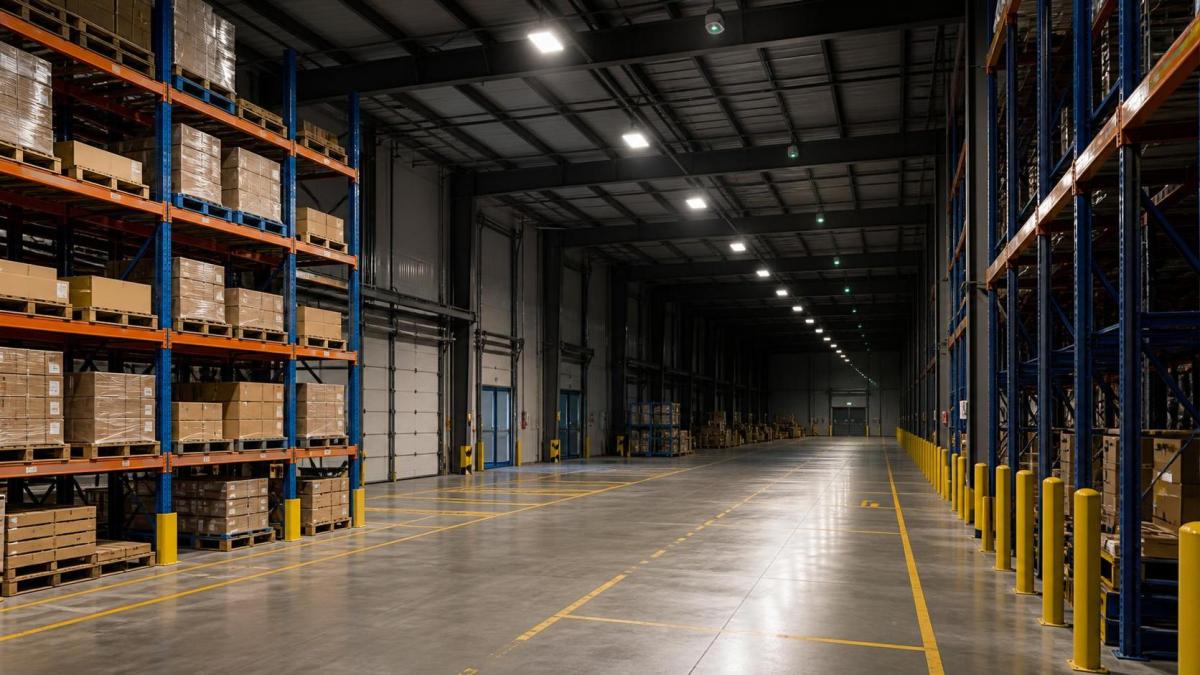
Adaptive LED control adjusts light output in response to inputs such as occupancy, available daylight, time schedules, traffic patterns, and, in some installations, weather or operational status. A warehouse aisle may operate at a lower standby level when empty, then rise promptly when a worker or vehicle enters. A perimeter path may brighten during active access periods while retaining enough background illumination for cameras and wayfinding. An office near windows can reduce electric light as daylight increases, without making interior workstations feel uneven.
That distinction matters because visibility is not simply a matter of maximum brightness. People need enough light on the task, usable contrast between objects and their surroundings, controlled glare, and stable transitions when they move between zones. An adaptive system that drops output too far or responds too slowly may reduce the energy bill while creating a safety, productivity, or security problem. A well-configured system treats minimum illumination as a fixed operating requirement and adjusts only the surplus above it.
In procurement discussions, this means the lighting design must define a baseline for each zone before controls are selected. Loading bays, stairwells, inspection stations, emergency routes, machine areas, reception spaces, car parks, and storage aisles should not all receive the same control settings. Their risks and visual tasks are different.
Where energy savings are most credible
Adaptive lighting delivers its strongest economic value where light demand changes materially across the day, shift, season, or physical area. A constantly occupied cleanroom with strict lighting requirements may benefit more from efficient LED fixtures and maintenance reduction than from aggressive occupancy dimming. By contrast, a distribution center with intermittent aisle activity, a multi-tenant car park, or a municipal outdoor network often has clear periods when full output is unnecessary.
The lesson is straightforward: savings come from reducing unnecessary operating hours and unnecessary output, not from applying the same dimming level everywhere. Sites with a varied occupancy pattern generally justify more sophisticated controls than spaces with uniform, continuous use.
Do not evaluate controls separately from luminaires
A common purchasing mistake is to compare control platforms as if they operate independently from the lighting hardware. They do not. Dimming range, flicker behavior, driver compatibility, optical distribution, color consistency, and communication reliability all affect whether a system can reduce output gracefully while preserving usable light.
A low-quality driver may have limited dimming performance at the bottom of its range. Poorly selected optics can leave dark spots when fixtures are dimmed. In areas with cameras, entry control, or security patrols, lighting changes can also affect image quality and scene interpretation. The lighting controller, fixture driver, sensor, and management software should therefore be evaluated as one operating system.
For larger commercial or industrial estates, open or widely supported control approaches can reduce future replacement risk. DALI-based wired systems are often suited to projects that require detailed fixture-level addressing and predictable infrastructure. Wireless approaches such as Zigbee can be practical where adding control wiring is disruptive or where layouts are likely to change. Neither is automatically the lower-cost choice. The installed environment, building fabric, maintenance access, cybersecurity requirements, and expected expansion matter more than the protocol label.
The commissioning plan determines whether occupants accept the system
Most objections to smart lighting are not objections to the idea of automated control. They arise when people encounter abrupt changes, poorly timed switch-off behavior, false sensor triggers, or areas that feel underlit during routine work. These are commissioning failures as much as product failures.
Before installation, document how each space is used: shift changes, cleaning periods, forklift routes, meeting patterns, visitor access, security patrols, seasonal daylight changes, and tasks that require close visual attention. This creates the basis for sensible scenes and control priorities.
During commissioning, test the lighting in the conditions that matter rather than only in an empty building. Check response time when a person approaches an aisle or stairwell. Observe whether dimmed areas remain visually connected to adjacent zones. Test daylight settings on bright and overcast days. Confirm that emergency lighting and required safety functions remain independent of normal energy-saving logic.
It is also wise to provide simple local override where staff have a legitimate reason to increase light temporarily. An inspector, maintenance technician, or facilities team should not need to bypass the entire system to complete a task safely. Overrides should be controlled, time-limited, and visible in the management interface so that they do not become permanent waste.
Build the business case from operating behavior, not a headline saving claim
Procurement teams should avoid approving a project based on a generic energy-saving percentage. The financial value depends on current fixture wattage, daily operating hours, electricity cost, occupancy pattern, daylight availability, maintenance burden, and the cost of installation disruption. Controls can be highly valuable in one building and add complexity with little return in another.
A more reliable evaluation compares several operating scenarios. Start with the existing lighting schedule and actual usage, not the schedule written in an old facilities manual. Then model the proposed LED fixture load at full output. Finally, define realistic control states: normal occupied level, standby level, vacant state, daylight-reduced state, and any security or emergency override. This makes it possible to see where the savings are actually expected to come from.
Costs should include more than luminaires and sensors. Account for design, wiring or wireless infrastructure, gateways, software licensing where applicable, installation access, commissioning, staff training, future reconfiguration, and support. A cheaper system can become expensive if it is difficult to adjust after a layout change. Conversely, a higher initial investment can be justified when the site has substantial variable use, many independently controlled zones, or a long ownership horizon.
Minimum light levels should be specified as operating rules
“Maintain visibility” is too vague for a tender document. The specification should describe how the system is expected to behave in each critical area. For example, it may require a defined occupied level for a work zone, a lower but still navigable standby level for an empty aisle, a gradual fade rather than an abrupt change, and an advance trigger that lights the next zone before a person reaches it.
For visual inspection, detailed assembly, or tasks involving moving machinery, the system should prioritize the task plane and hazard visibility. For external areas, priority may shift toward safe route recognition, entrance visibility, and the light conditions needed by security operations. A site with biometric access equipment should review lighting at approach points carefully: a sensor-driven dimming event should not create inconsistent conditions at the moment a person is being identified.
SHSS’s focus on smart lighting alongside physical security is relevant here because lighting is often treated as a utility system when it is also part of the operating environment for access control, surveillance, and safe movement. The purchasing decision is stronger when facilities, safety, IT, and security teams agree on the critical lighting states before equipment is selected.
Questions to put in the supplier evaluation
- Can the proposed fixtures dim smoothly across the intended operating range without visible flicker or unacceptable color shift?
- How are zones configured, and can facility staff revise schedules, occupancy settings, and light scenes without specialist intervention?
- What happens if a sensor, gateway, network connection, or controller fails? Does the area revert to a safe lighting state?
- How are manual overrides handled, recorded, and returned to automatic operation?
- Can the system provide usable energy and operating data by zone, rather than only a site-wide total?
- What compatibility is available for replacement fixtures, added sensors, and future building-management integration?
- How will the supplier demonstrate performance after commissioning in occupied conditions?
These questions reveal more than a feature list. They show whether a system can remain useful after the initial installation team has left.
When adaptive control is not the first priority
There are cases where basic LED replacement, improved optical design, and a dependable schedule should come before advanced adaptive control. Small sites with stable occupancy, little daylight variation, few zones, and limited facilities support may gain little from fixture-level automation. In such cases, unnecessary complexity can dilute the value of the project.
The same caution applies where a space has poorly understood safety requirements or an aging electrical infrastructure that needs attention first. Controls cannot compensate for inadequate fixture placement, obstructed light distribution, or a layout that leaves work surfaces unevenly illuminated. Solve the lighting design problem before adding intelligence to it.
For enterprises with variable operations, however, adaptive LED control is not simply an energy feature. It is a way to align lighting consumption with real demand while keeping visual performance deliberate and measurable. The best starting point is a zone-by-zone review of task requirements, operating patterns, and failure conditions. That produces a control strategy that can lower avoidable energy use without asking workers, visitors, or security teams to accept poorer visibility.
Recommended News