
Search News
Industry Portal
Hot Articles
What Drives Industrial Safety Clothing Price in Bulk Orders?
Time
Click Count
Start with the protection level, not the quote
When buyers ask why industrial safety clothing price varies so much in bulk orders, the short answer is this: the garment is only as cheap as the risk it is built to handle. A basic cotton work jacket and a flame-resistant, chemical-splash, high-visibility coverall may look similar in a spreadsheet, but they are priced on completely different cost structures.
The mistake I see most often is starting with unit price before locking down the hazard profile. If your site involves welding, arc flash exposure, oil and grime, roadside visibility, cut risk, or limited chemical contact, those conditions drive fabric choice, trim, seam construction, testing needs, and replacement cycle. That is where the real money goes.
Before you compare suppliers, define the job use case by worker group, task, environment, and required protection. Otherwise, you end up comparing offers that are not actually equivalent.
Check the fabric specification line by line
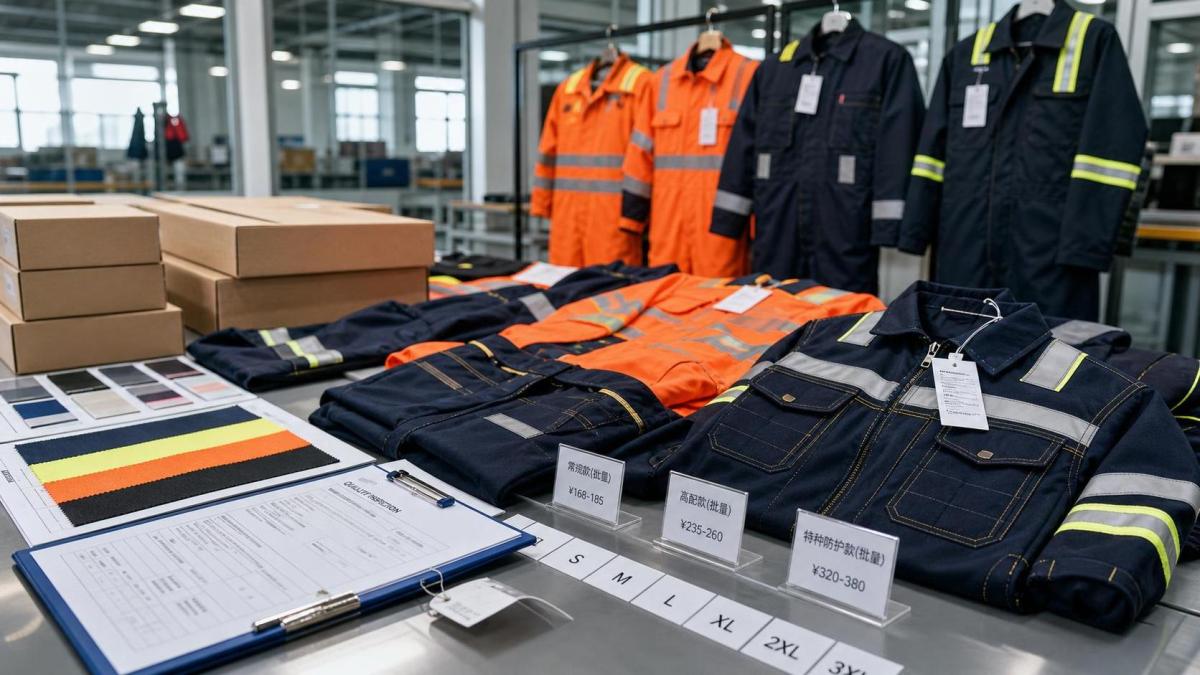
Fabric is usually the biggest pricing lever in bulk PPE clothing. Not just the fiber name, but the full build.
- Fiber composition: cotton, polyester-cotton blends, aramid blends, modacrylic blends, coated fabrics, and laminated materials sit in very different cost bands.
- Fabric weight: heavier GSM often means more material cost, but not always better value if it reduces comfort and pushes workers to avoid wearing it correctly.
- Finish or treatment: water repellency, oil resistance, anti-static performance, or flame-retardant treatment all add cost and can affect wash durability.
- Construction: ripstop, twill, canvas, knits, multilayer assemblies, and reinforced panels change both price and service life.
A practical buying move: ask for the fabric data sheet and compare not just composition, but weight, finish, care instructions, and expected performance retention after laundering. Two garments may both be labeled flame resistant, but one may rely on a treatment and another on inherently resistant fibers. That difference often shows up in long-term replacement cost.
Do not separate certification cost from garment cost
Compliance is not a side issue in bulk pricing. It is one of the main reasons two visually similar garments can land far apart on price.
What matters is not a generic claim that the clothing is “certified,” but whether the product is built and documented for the market you are supplying. Buyers should check the exact standard referenced on the technical file, garment label, declaration, or test documentation tied to that product type. For high-visibility apparel, flame-resistant workwear, anti-static garments, and chemical protective clothing, the applicable requirement depends on the hazard and destination market. If you buy for multiple countries, one approval path may not cover all shipments.
Certification-related costs typically show up through:
- tested materials and trims
- approved reflective tape or specialty components
- factory quality documentation
- traceability and labeling requirements
- retesting when design details change
A common cost trap is requesting a cheaper zipper, tape, or pocket revision after sampling, then assuming the original compliance file still applies. In many programs, that change forces a fresh review or test scope. Cheap change, expensive consequence.
Customization can quietly erase bulk savings
Bulk buyers expect lower unit cost, and usually they get it. But customization is where savings disappear: logo embroidery, heat transfer branding, name tags, custom colors, nonstandard reflective layout, extra pockets, knee pad compartments, size ratios outside the supplier’s normal run, retail packaging, barcode labels, and multilingual care inserts all add labor, setup time, and material complexity.
The expensive part is often not the decoration itself. It is the disruption to production flow. A standard garment can run through the line in volume. A customized one needs extra handling, extra checks, and more chances for mismatch between logo file, size set, carton mark, and wearer assignment.
If branding matters, keep the base garment standard and limit custom elements to one or two fixed positions. If wearer identification matters, compare sewn labels with external issue tracking. Sometimes the lower-cost answer is operational, not textile-based.
Minimum order quantity matters more than buyers expect
The phrase “bulk order” can mean 300 pieces to one supplier and 30,000 to another. Price breaks only work when your order fits the factory’s economic batch size.
Ask these questions early:
- Is the MOQ set by style, by color, by fabric, or by total order value?
- Do odd size ratios trigger surcharges?
- Will split deliveries still qualify for the quoted volume price?
- Is the price based on one consolidated production run or repeated call-off orders?
This is especially relevant for specialized PPE. If the supplier has to source a custom fabric lot or set up a separate production line for your spec, a mid-sized order may still behave like a small order in pricing terms.
Construction details affect both price and field life
Procurement teams sometimes treat sewing details as minor, but they are often where low quotes hide. Reinforced seams, bartacks at stress points, double knees, abrasion panels, covered closures, gussets, and stronger thread all raise build cost. They can also reduce early failure in real use.
If your workers crawl, climb, lift, weld, or wash garments heavily, these details matter. A lower-priced garment that fails at the crotch seam, knee, cuff, or zipper after a short use cycle is not cheaper. It just shifts cost from purchase to replacement and downtime.
During sample review, do not stop at fit. Turn the garment inside out. Check seam density, reinforcement points, edge finishing, trim attachment, and reflective tape application. Those are often the clearest clues about whether a quote is aggressive because the supplier is efficient or because something has been stripped out.
Lead time and factory loading can move the number fast
Buyers usually think of price as a product issue. In PPE clothing, it is also a calendar issue.
Rush orders cost more. Small urgent repeat orders cost more. Orders that require the supplier to hold raw material for uncertain release schedules can cost more too. On the other hand, a well-forecast annual program with stable specifications often gets better pricing than a larger but unpredictable spot buy.
When comparing quotes, match the commercial terms carefully. One supplier may be pricing against a normal lead time with consolidated production. Another may already be building in priority scheduling. The garment looks the same on paper, but the delivery promise changes the cost base.
Freight, packaging, and delivery terms are not secondary costs
For bulk orders, logistics can reshape the landed cost enough to reverse the ranking of supplier quotes. This happens often with safety clothing because cartons are bulky even when garments are lightweight.
If you issue clothing by worker, ask for packing configuration upfront. A cheap garment packed in a way that creates hours of sorting work at your warehouse may not stay cheap for long.
Supplier capability affects price stability, not just the first quote
A very low first quote can be real, but procurement should test whether it is repeatable. In safety clothing, weak supplier control usually shows up later through shade variation, inconsistent sizing, substituted trims, delayed replenishment, or failure to keep certified components aligned with the approved spec.
That is why factory capability belongs in price analysis. Check whether the supplier actually handles the product category you are buying, whether they have stable access to the required materials, and whether they can maintain the same specification across repeat orders. Price volatility often starts with supply volatility.
For framework agreements, ask how long the quoted fabric, trims, and conversion cost are held, and what triggers repricing. Without that, the opening quote tells you very little about year-round purchasing cost.
Look at wear life, laundering, and replacement frequency
This is where experienced buyers separate a low purchase price from a low ownership cost. Some garments are cheaper because they are meant for lighter duty or shorter use cycles. That may be fine. It may also be the wrong fit for heavy industrial work.
Ask how the garment is expected to perform under your actual maintenance method: industrial wash, home wash, limited reuse, or disposable rotation. Reflective performance, shrinkage, colorfastness, finish durability, and seam integrity can all change after repeated cleaning. If the clothing is replaced twice as often, the “budget” option becomes expensive very quickly.
This is also why end-user comfort matters to price. If workers reject stiff, hot, or poorly fitted clothing, compliance drops and replacement misuse rises. A slightly higher-cost garment that gets worn properly and lasts longer is usually the better procurement decision.
Use a buying checklist that forces apples-to-apples comparison
If you want a clean comparison across suppliers, keep the review sheet tight:
- hazard and use scenario by worker group
- fabric composition, weight, and finish
- required compliance documents tied to the exact garment
- construction details and reinforcement points
- customization scope
- size breakdown and MOQ rules
- lead time, replenishment model, and price validity period
- packing method, delivery term, and landed cost basis
- expected wash method and replacement cycle
That list sounds basic, but it prevents the two pricing errors that cost buyers the most: paying extra for protection they do not need, or buying a cheaper garment that fails in compliance, durability, or wearability.
Where to focus before placing the order
For bulk PPE clothing, the best sequence is simple. Lock the hazard requirement first. Freeze the specification second. Then compare landed cost, supplier consistency, and replacement economics. Only after that should you negotiate the unit price.
That order matters. Most industrial safety clothing price problems do not start with fabric inflation or freight swings. They start much earlier, when the buyer requests quotes against an incomplete spec and tries to solve a technical decision with a commercial shortcut.
Recommended News