
Search News
Industry Portal
Hot Articles
Road LED Lamps Face Mandatory Energy Labels From June 1
Time
Click Count
From June 1, 2026, a new compliance requirement takes effect for road LED lighting products: newly manufactured and imported road and tunnel LED luminaires must carry the updated energy efficiency label under GB 37478-2025. For manufacturers, importers, exporters, and project supply-chain participants, this is not just a packaging change. It directly affects product compliance, documentation alignment, and market access discussions tied to destinations such as the EU, Saudi SASO, and ASEAN PVoC-related markets.
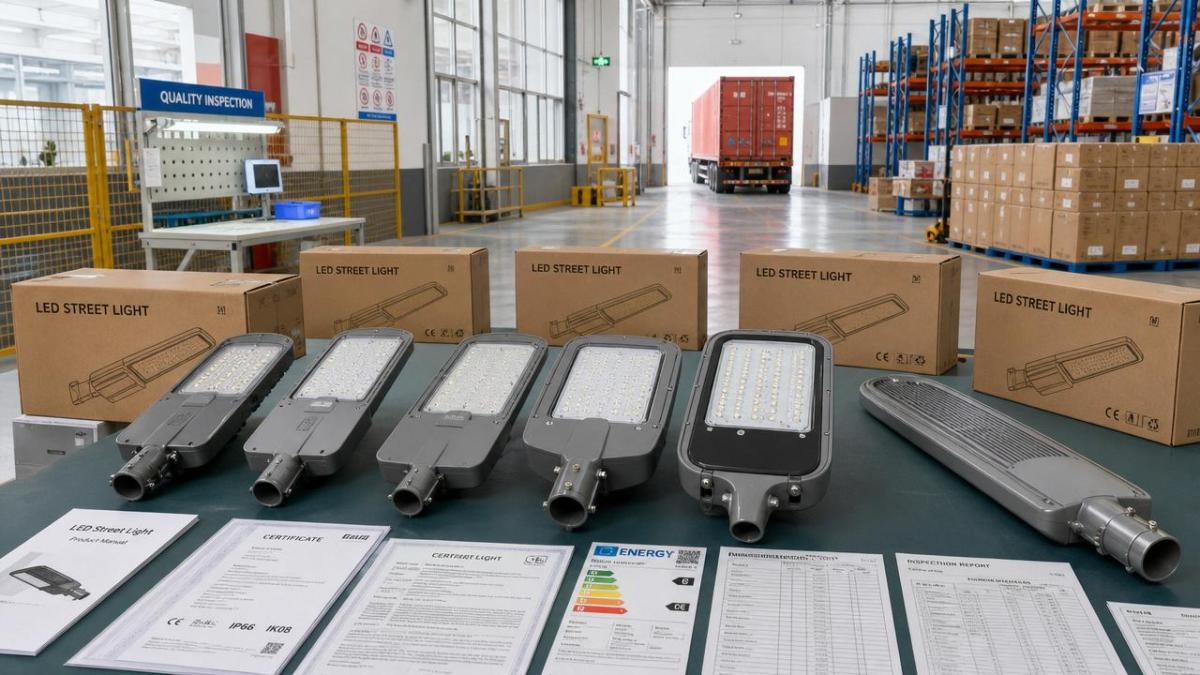
What the new rule formally requires
According to the information provided, the National Development and Reform Commission and the State Administration for Market Regulation jointly issued the new rule. The standard, GB 37478-2025, titled Minimum Allowable Values of Energy Efficiency and Energy Efficiency Grades for LED Luminaires for Road and Tunnel Lighting, becomes mandatory on 2026-06-01.
From that date, all newly manufactured or imported road LED luminaires are required to use the new version of the energy efficiency label. The previous version of the label may continue to be used until 2028-06-01. The same information also indicates that the standard will directly affect energy-efficiency mutual recognition and local market entry for exports to the EU, Saudi SASO, and ASEAN PVoC-related markets.
Why the impact goes beyond product labeling
For manufacturers, the issue is no longer limited to factory output
From an industry perspective, manufacturers are likely to be affected first because labeling requirements are tied to the point of new production. The most immediate business impact may appear in product release, compliance review, technical file preparation, and shipment readiness. What deserves closer attention is whether product labeling, specification documents, and export-facing materials remain consistent once the new rule is in force.
For importers and trading companies, documentation consistency becomes more important
Importers and direct trading companies may be affected because the rule explicitly covers imported products as well. Analysis shows that the practical pressure here is likely to fall on customs preparation, product identification, and contract execution. Where shipments involve multiple destinations, companies may need to pay closer attention to whether label use, product declarations, and destination-market requirements remain aligned during the transition period.
For exporters, market access discussions may become more operational
The information provided states that the standard will directly affect energy-efficiency mutual recognition and local entry in the EU, Saudi SASO, and ASEAN PVoC-related markets. Observably, this means export businesses may need to look at the new label not only as a domestic compliance matter, but also as an element that can influence overseas acceptance, qualification review, and buyer-side verification.
For project buyers and supply-chain service providers, delivery risk may need closer review
Procurement teams, logistics coordinators, and compliance service providers may also be affected where road lighting products are supplied into public infrastructure or export projects. The likely pressure point is not the rule itself, but timing: whether products manufactured or imported after 2026-06-01 are correctly labeled, and whether transition arrangements involving the old label up to 2028-06-01 are handled clearly in documents and delivery planning.
What companies should watch now
Separate the immediate requirement from the transition window
The immediate requirement is clear in the provided information: newly manufactured and imported products must carry the new label from 2026-06-01. At the same time, the old label may continue to be used until 2028-06-01. Analysis shows that companies should not treat these two dates as interchangeable. The first concerns mandatory implementation for new output and imports, while the second concerns continued use of the previous label version.
Check which product flows are exposed first
What deserves closer attention is which business lines are most directly tied to road and tunnel LED lighting products. Companies with mixed product portfolios may need to identify where the new standard applies first, especially in manufacturing batches, import SKUs, and export orders linked to markets named in the provided information.
Prepare customer and partner communication early
Where supply chains involve overseas buyers, local agents, inspection bodies, or project contractors, it may be useful to clarify how the new label requirement affects product presentation and supporting documents. Observably, the rule may create less disruption where communication is handled before shipment or tender stages rather than after goods are ready to move.
Keep watching for official wording and implementation details
Analysis shows that businesses should distinguish between the confirmed high-level requirement and any later operational clarification. The confirmed facts in the provided information establish the standard number, effective date, mandatory scope for newly manufactured and imported products, the old-label transition timeline, and export relevance. Any further interpretation on procedures or market-specific implementation should still be checked against subsequent official materials.
How this news is best understood at this stage
As an editorial observation, this development is better understood as both an immediate compliance change and a longer-term policy signal. The immediate change is straightforward: labeling obligations for relevant products are now mandatory from 2026-06-01. The longer-term signal is that energy-efficiency compliance for road lighting products is becoming more closely tied to trade recognition and overseas market entry, not just domestic labeling formality.
At the same time, it would be premature to treat this as a fully settled outcome for every export scenario. Observably, the provided information confirms direct relevance to the EU, Saudi SASO, and ASEAN PVoC-related markets, but the exact business impact will still depend on how companies map the new requirement into product documents, transaction flows, and destination-specific compliance processes.
What the industry should take from this update
The clearest takeaway is that the new energy label requirement for road LED luminaires should be read as an operational compliance issue with trade implications. It is not merely a symbolic update, but neither should it be overstated beyond the facts provided. For now, it is more appropriate to understand this as a confirmed short-term regulatory change that also signals a broader direction: energy-efficiency labeling is becoming more closely connected to product admissibility and cross-market compliance coordination.
Basis of this article and what still needs verification
This article is based on the user-provided news title, event date, and summary. The core facts used here come from the provided description of the joint rule issued by the National Development and Reform Commission and the State Administration for Market Regulation, the implementation date of GB 37478-2025, the mandatory labeling requirement for newly manufactured and imported road LED luminaires, the continued use period for the old label, and the stated relevance to the EU, Saudi SASO, and ASEAN PVoC-related markets.
For this type of industry update, relevant source categories typically include official announcements, regulator notices, standard documents, industry association updates, company compliance notices, and authoritative media reporting. A specific official source link was not provided in the input, so the exact publication document and any subsequent interpretive notices still need ongoing verification. Follow-up attention should focus on any official implementation clarifications and any market-specific guidance affecting mutual recognition or local access procedures.
Recommended News