
Search News
Industry Portal
Hot Articles
Smart Lighting Exports Face CCC Rule From June 1
Time
Click Count
Starting on June 1, 2026, smart lighting products with Wi-Fi or Bluetooth functions will face a stricter compliance threshold before they can leave factories, enter the market, or be imported for sale. The update matters not only to smart ceiling light and controller manufacturers, but also to exporters, overseas importers, sourcing teams, and supply chain coordinators, because the new CCC requirement is paired with longer certification lead times and higher testing costs.
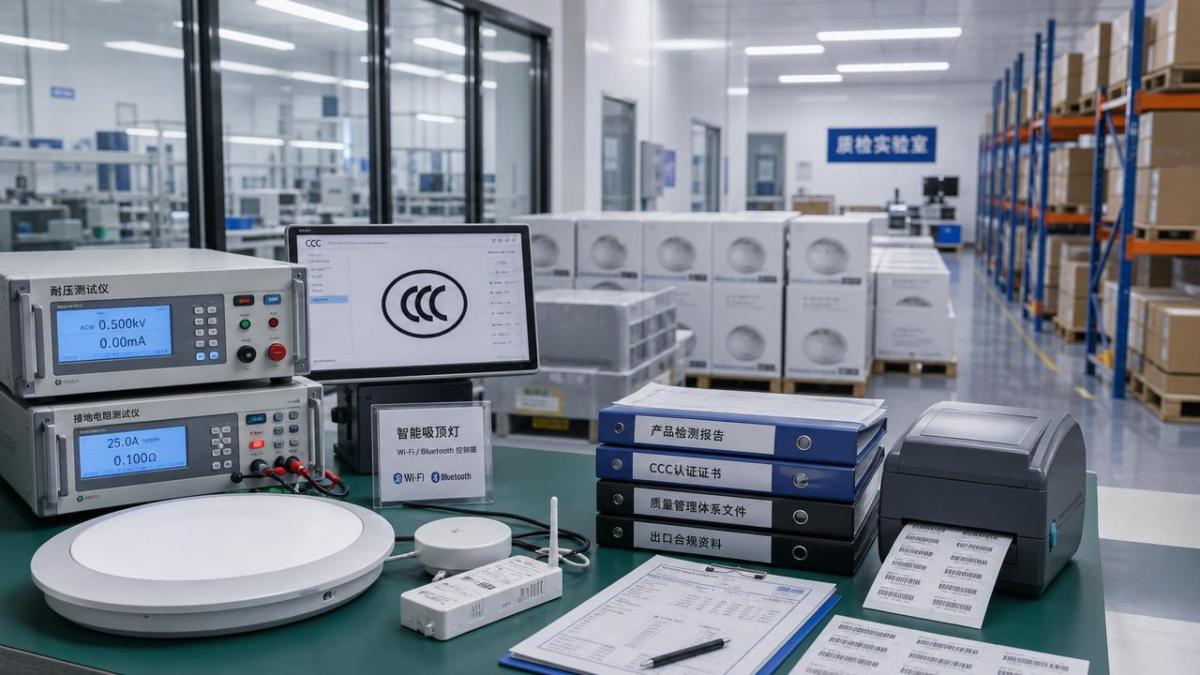
What the new requirement specifically covers
According to the information provided, the National Certification and Accreditation Administration has clarified that from June 1, 2026, products such as smart ceiling lights and gateway-type controllers that include Wi-Fi or Bluetooth communication functions must obtain CCC certification before they can be manufactured for release, imported, or sold.
The rule also covers higher-risk categories including integrated lighting products with USB-C fast charging and AI voice-controlled lighting devices.
The certification cycle is stated to extend to 10 to 12 weeks, and testing fees are stated to rise by 30%.
Overseas importers are advised to check the certification status of their China-based suppliers to reduce the risk of customs delays and product delisting.
Where the pressure is likely to appear first
Export-oriented manufacturers will face a tighter release schedule
From an industry perspective, manufacturers of connected lighting products are likely to feel the impact first because CCC certification becomes a condition tied directly to factory release and marketability. The most immediate business effect is likely to be on production scheduling, shipment planning, and model readiness, especially for products that combine lighting with connectivity or added control functions.
Importers and sourcing teams will need to verify supplier readiness earlier
Analysis shows that overseas importers and procurement teams may be affected at the order validation stage rather than only at customs. If a supplier's covered products have not completed CCC certification, the risk may extend beyond delayed delivery to possible sales interruption after import. What deserves closer attention is whether supplier qualification checks are being done early enough in the purchasing cycle.
Channel and distribution businesses may need to watch listing compliance
For distributors and channel operators, the issue is not only product availability but also whether covered smart lighting items remain compliant for sale. Observably, products identified in the new rule as higher-risk categories could require closer document review before listing, replenishment, or promotional planning.
Supply chain service providers may see more coordination work
Logistics, documentation, and cross-border supply chain teams may not be the direct certification applicants, but they are likely to be affected by longer lead times and compliance verification needs. In practice, this can influence booking windows, handover timing, and customs preparation where covered products are involved.
What companies should watch now
Confirm whether current product lines fall within the covered scope
The first practical issue is product classification. Companies should review whether their products include Wi-Fi or Bluetooth communication functions and whether they fall into the categories explicitly mentioned, such as smart ceiling lights, gateway-type controllers, USB-C fast-charging integrated lighting, or AI voice-controlled lighting devices.
Recalculate lead times against the 10–12 week certification cycle
Because the certification period is stated to extend to 10 to 12 weeks, delivery planning may need to be adjusted. Analysis shows that this is especially relevant for export orders with fixed launch windows, seasonal delivery requirements, or synchronized installation schedules.
Prepare for higher testing costs in quotation and procurement planning
The stated 30% increase in testing fees means the cost issue is no longer marginal for affected product categories. Companies involved in pricing, sourcing, and contract negotiation may need to reassess whether current quotations, margin assumptions, and supplier agreements still reflect actual compliance costs.
Strengthen supplier document checks before shipment and customs stages
What deserves closer attention is not only whether certification is being pursued, but whether documentation status can be verified in time for shipment, import, and sale. For overseas importers, the immediate task is to check the certification position of China-based suppliers to reduce exposure to customs delays and delisting risk.
Why this should be read as more than a routine compliance update
This section is an observation. It is more appropriate to understand this development as a concrete regulatory tightening for connected lighting products rather than a minor procedural change. The reason is that the requirement is linked directly to manufacturing release, import, and sales eligibility, while the longer certification cycle and higher testing cost add operational consequences beyond paperwork alone.
At the same time, it should not be overstated beyond the provided facts. Based on the current information, the clearest immediate implication is compliance pressure on covered smart lighting categories and earlier verification demands across export supply chains. Further industry interpretation still depends on how businesses adjust product planning and supplier management in practice.
How the market may need to frame this change
In summary, the June 1, 2026 CCC requirement for certain smart lighting exports signals an immediate compliance threshold for products with communication functions, especially those identified as higher-risk categories. A neutral reading is that this is already a concrete short-term operational change for affected businesses, while its broader long-term market impact still merits continued observation.
Basis of this article and follow-up verification
This article is based on the user-provided news title, event date, and event summary. For developments of this type, commonly relevant source categories may include official notices, company statements, industry association updates, authoritative media reports, and standard-setting or certification-related documents.
No specific official source link was provided in the input, so the exact official publication path still needs to be continuously verified. Follow-up attention should focus on any further official clarification regarding covered product scope, implementation details, and certification execution in actual trade and supply chain workflows.
Recommended News