
Search News
Industry Portal
Hot Articles
UK 2G Switch-Off Raises Upgrade Pressure for Importers
Time
Click Count
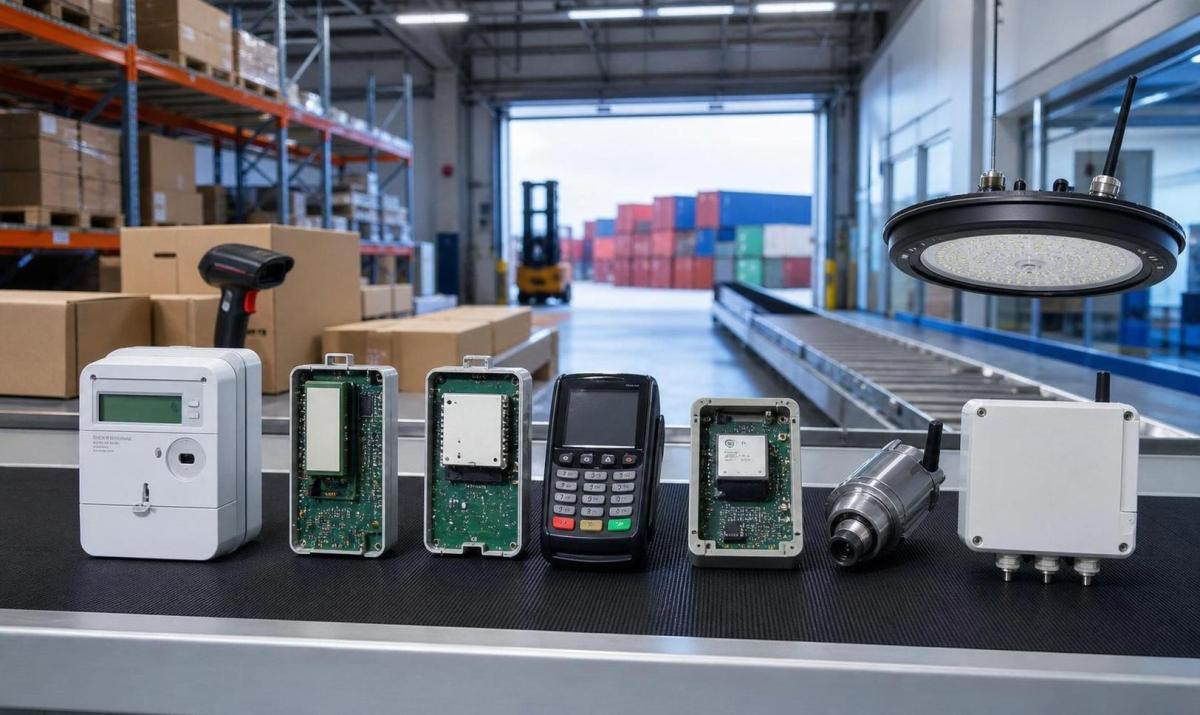
On January 1, 2029, the planned withdrawal of 2G services in the UK became a direct compliance and market-access signal for importers and suppliers of connected hardware. With Virgin Media O2 confirming a phased 2G shutdown from 2029 and EE moving in the same direction, products that still rely on 2G connectivity, including smart meters, POS terminals, and remote monitoring devices, face a clear continuity risk. For companies serving Europe and the Middle East with cellular-enabled PPE, industrial sensors, and smart lighting controllers, the issue is no longer only technical compatibility; it now affects procurement specifications, module selection, and market entry expectations.
The confirmed change in network expectations
Confirmed information shows that Virgin Media O2 has formally announced a phased shutdown of its UK 2G network starting in 2029, with EE following the same path. Devices that depend on 2G communications, such as smart meters, payment terminals, and remote monitoring equipment, therefore face a risk of losing connectivity. The event summary also makes clear that this development directly affects entry requirements in Europe and the Middle East for hardware with cellular communication functions, including PPE, industrial sensors, and smart lighting controllers. Importers are being pushed to review the compliance status of communication modules used in products already on sale and to request LTE-M, NB-IoT, or Cat-1 alternatives from Chinese suppliers.
Where the pressure will surface first in the supply chain
Import-side product screening becomes more urgent
Importers are likely to feel the immediate impact because they sit between market access requirements and upstream supply decisions. Where a product still uses a 2G module, the business risk is not limited to future usability; it can also affect whether the product remains acceptable in tenders, procurement reviews, or customer technical assessments. What deserves closer attention is the need to identify which in-market models still depend on 2G and whether replacement communication options are already documented by suppliers.
Chinese manufacturers may face new specification demands
For Chinese suppliers, the signal is practical rather than abstract. Buyers may begin asking for LTE-M, NB-IoT, or Cat-1 alternatives as part of new orders, ongoing supply discussions, or model transition plans. From an industry perspective, this can affect bill-of-material alignment, technical file updates, and delivery planning for products shipped into Europe and the Middle East, especially where cellular functionality is part of the product's core use case.
Distributors and after-sales teams may need continuity plans
Channel partners and service teams may also be affected because installed or stocked products using 2G could face service disruption after network withdrawal progresses. The operational issue is not only selling compliant new units, but also managing installed devices, replacement cycles, and customer communication where connectivity is essential to the product's function.
What companies should review now
Check module compliance in current sales portfolios
Companies should first map which products sold into the relevant markets still depend on 2G modules. This is particularly important for smart meters, POS terminals, remote monitoring devices, and other hardware categories mentioned in the event summary, as well as connected PPE, industrial sensors, and smart lighting controllers.
Update supplier requests and technical documentation
Importers may need to ask suppliers for alternative module configurations based on LTE-M, NB-IoT, or Cat-1. Analysis shows that this is not only a sourcing question; it also affects technical documents, product specifications, and any supporting materials used in customer review, qualification, or tender submission.
Watch for changes in procurement language and acceptance criteria
Even where no full execution detail has yet been provided in the input, companies should monitor whether buyers, project owners, or channel customers begin to change their wording around communication compatibility. It is more appropriate to understand this as an area requiring close observation rather than as a fully standardized requirement across all transactions at this stage.
Prepare for delivery and service adjustments
If a product line requires a module transition, delivery timing, replacement planning, and service support may all need review. Observably, the businesses most exposed are those with installed devices or long supply cycles, because network withdrawal affects both future shipments and products already deployed in the field.
Why this looks like an execution signal, not just a technical update
Analysis shows that the significance of this development lies in how a telecom network decision starts to reshape practical market-entry conditions for connected devices. It is not merely a background infrastructure change. For importers, distributors, and manufacturers, the announcement functions as an execution signal that communication-module selection is becoming a live compliance and procurement issue. At the same time, it would be premature to treat every downstream requirement as already uniform, because the input does not provide detailed enforcement language, certification positions, or buyer-specific implementation rules.
How the market should read this development
The most balanced reading is that the UK 2G phase-out from 2029 creates a concrete trigger for product review across connected hardware categories tied to Europe and the Middle East. The confirmed facts support immediate attention to module compatibility and supplier coordination, but not broad claims about final enforcement outcomes beyond the information provided. Current conditions make this better understood as a clear market and compliance direction with direct operational consequences, while specific execution standards still need to be watched closely.
Basis of this article and points still requiring verification
This article is generated from the user-provided title, event date, and event summary. For developments of this kind, relevant source types typically include operator announcements, regulator releases, trade or customs information, industry association notices, standards documentation, and reporting by authoritative media. No specific official source link was provided in the input, so the exact official documentation still requires follow-up verification. Observably, the next points to monitor include any more detailed implementation language, certification interpretation, procurement document changes, market feedback, and how companies execute module replacement in practice.
Recommended News