
Search News
Industry Portal
Hot Articles
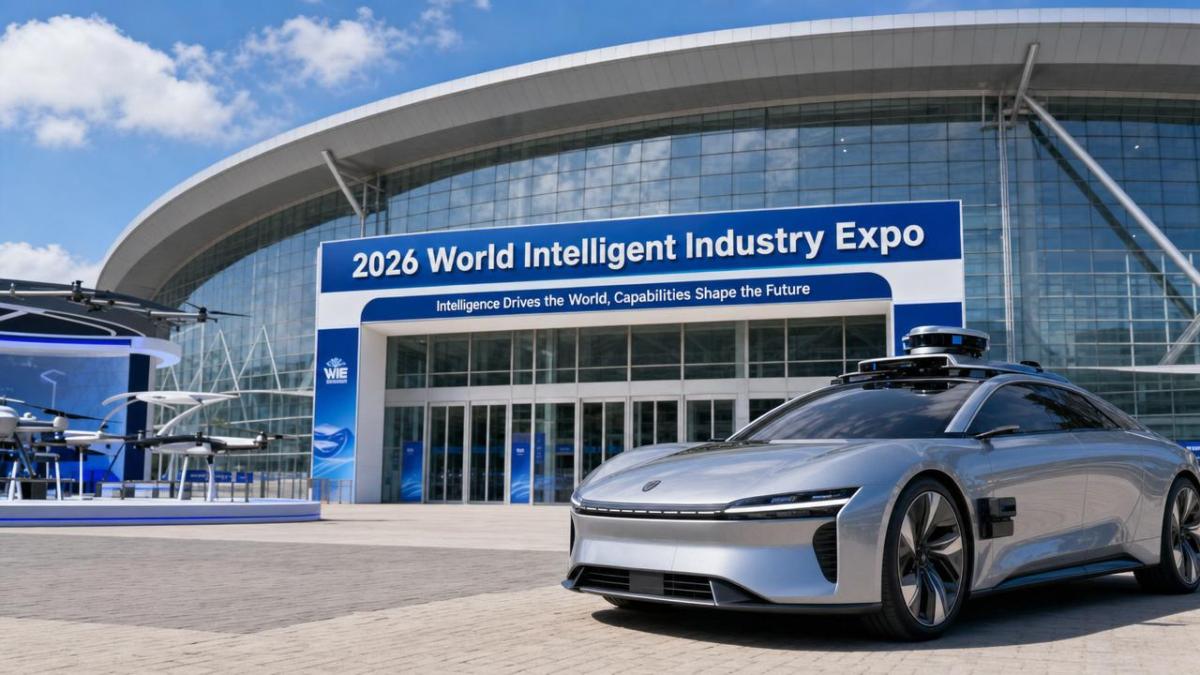
2026 World Intelligent Industry Expo Opens in Tianjin
Time
Click Count
The 2026 World Intelligent Industry Expo opened in Tianjin on May 28, 2026, under the theme ‘Intelligence Drives the World, Capabilities Shape the Future.’ With embodied AI and intelligent connected vehicles emerging as focal points for overseas procurement, the event signals shifting priorities in global smart industry supply chains — particularly for trade, manufacturing, and logistics stakeholders engaged with emerging markets along the Belt and Road.
Event Overview
Held from May 28 to 31, 2026, in Tianjin, the 2026 World Intelligent Industry Expo featured over 700 exhibitors, including Tesla, Huawei, Unitree Robotics, and EHang. The expo centered on four key technology domains: embodied intelligence, autonomous driving, intelligent connected vehicles, and low-altitude economy. The Shanghai Cooperation Organization (SCO) served as the guest-of-honor country, and procurement delegations from Belt and Road Initiative (BRI) countries participated in targeted B2B closed-door matchmaking sessions. Pre-signing outcomes included more than 30 cross-border supply chain projects.
Industries Affected
Direct Trade Enterprises
Trade firms facilitating exports of intelligent hardware or mobility solutions face heightened demand visibility from SCO and BRI markets. The pre-signed cross-border supply chain projects indicate early-stage commercial traction — not just exhibition interest — especially for standardized, certification-ready products in robotics and vehicle telematics.
Component & Module Suppliers
Suppliers of sensors, edge computing modules, V2X communication units, and battery management systems are seeing indirect but growing relevance. The emphasis on intelligent connected vehicles and embodied AI implies upstream demand for interoperable, safety-certified subassemblies — particularly those aligned with international functional safety standards (e.g., ISO 26262, IEC 62443).
Contract Manufacturing & System Integrators
Manufacturers offering turnkey integration for autonomous mobile robots (AMRs), ADAS-enabled chassis, or drone-based logistics platforms may experience increased inbound inquiry from regional procurement consortia. However, current evidence shows no large-scale orders announced — only pre-signing activity in structured B2B formats.
Supply Chain Service Providers
Logistics, customs brokerage, and compliance advisory firms supporting high-tech exports must now prioritize understanding regulatory alignment across SCO member states — especially regarding data localization, cybersecurity review requirements, and type-approval pathways for AI-integrated hardware.
What Relevant Enterprises or Practitioners Should Focus On
Monitor official follow-up announcements from SCO and BRI procurement agencies
Pre-signed projects require formal contract execution and implementation timelines. Observably, no public details have been released on delivery schedules, volume commitments, or technical specifications — meaning these remain conditional engagements pending further verification.
Track certification readiness for target export markets
Analysis shows that procurement interest is concentrated on products already compliant with EU CE, UN R155, or China’s GB standards — suggesting limited near-term appetite for prototype-grade or domestically certified-only offerings. Firms should verify conformity pathways for key markets like Kazakhstan, Uzbekistan, and Indonesia before engaging.
Distinguish between diplomatic signaling and operational readiness
While the SCO’s participation as guest-of-honor reflects political prioritization, the actual scale and speed of procurement conversion remain unconfirmed. Current more relevant indicators include signed MOUs with specific OEMs or Tier-1 suppliers — not general government-level cooperation statements.
Prepare for localized technical dialogue, not just commercial negotiation
From industry perspective, B2B matchmaking sessions emphasized joint development and co-localization models — particularly for intelligent connected vehicle software stacks and embodied AI control firmware. Companies should allocate engineering resources for technical scoping calls, not only sales or legal teams.
Editorial Perspective / Industry Observation
This expo functions primarily as a coordination signal — not yet a transactional inflection point. Observably, the concentration of procurement attention on embodied AI and intelligent connected vehicles reflects broader strategic realignment by emerging-market governments toward infrastructure-adjacent AI deployment, rather than consumer-facing applications. Analysis shows that the pre-signed projects emphasize supply chain resilience (e.g., dual-sourcing, regional assembly) over cost arbitrage — suggesting longer-term partnership models are gaining traction. However, without published contract values, delivery milestones, or enforcement mechanisms, the current impact remains preparatory rather than operational. Continued monitoring of post-expo implementation reports — especially from participating SCO national standards bodies — will clarify whether this marks an acceleration or merely a formalized starting point.
Conclusion
The 2026 World Intelligent Industry Expo underscores a structural shift in how emerging economies approach intelligent industrial imports: less focused on standalone hardware acquisition, more on embedded capabilities, interoperability, and co-development frameworks. It is better understood as a procedural milestone — aligning technical roadmaps and regulatory expectations — than as a near-term revenue catalyst. For industry participants, sustained attention should focus on traceable implementation steps, not headline metrics alone.
Information Sources
Main source: Official announcements from the 2026 World Intelligent Industry Expo Organizing Committee (Tianjin Municipal Government and Ministry of Industry and Information Technology of China).
Note: Project implementation status, contractual terms, and market-specific certification requirements remain unconfirmed and require ongoing observation.
Recommended News