
Search News
Industry Portal
Hot Articles
AI-Driven Grid Storage Maintenance Boosts Peak Power Output, Elevates Smart Infrastructure Export Services
Time
Click Count
Southern Power Grid Energy Storage Company has deployed an AI-powered data analytics platform to enhance intelligent operation and maintenance of energy storage units, significantly improving peak power supply reliability during summer high-demand periods. The exact event date was not specified. This initiative directly impacts the global power infrastructure sector—particularly in technology export, equipment procurement, and integrated service delivery—by transforming how smart grid assets are maintained and certified for international deployment.
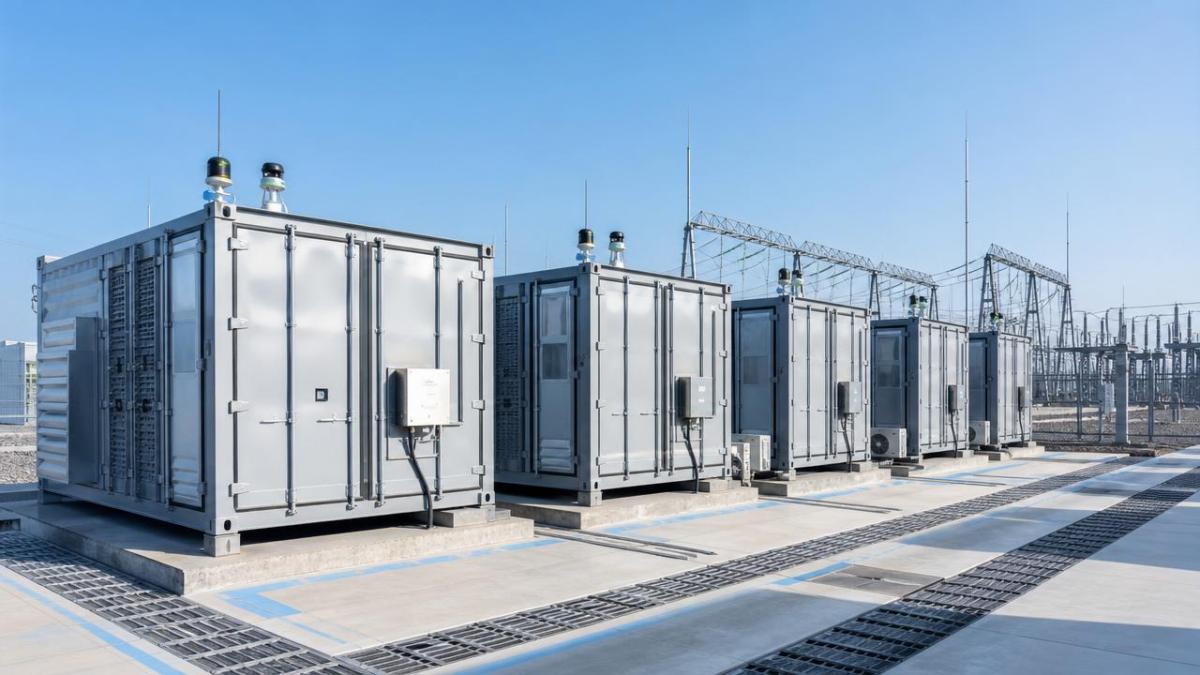
Confirmed Implementation of AI-Enhanced Operational Protocols
Southern Power Grid Energy Storage Company implemented an AI-based analytics platform to strengthen real-time monitoring and predictive maintenance of energy storage units. The system demonstrated measurable improvements in unit availability and responsiveness during peak-load conditions, especially in summer demand surges. Based on this experience, the company formalized a standardized operating procedure titled ‘AI + Power Infrastructure O&M SOP’. This SOP is now being licensed and deployed internationally via EPC contractors—including China Power Engineering Consulting Group (CPECC) and China Energy Engineering Group (CEEC)—to renewable energy projects across Southeast Asia, the Middle East, and Africa. The deployment includes bundled technical services alongside physical hardware exports, such as high-strength bolts, intelligent sensors, and fall arrest systems classified as personal protective equipment (PPE).
Supply Chain and Market Participant Impacts
Direct Exporters and EPC Contractors
These firms face increased demand for integrated solutions—not just standalone components—requiring alignment between hardware specifications, AI-compatible communication protocols, and localized compliance documentation. They must adapt tender responses to reflect both equipment performance and embedded digital maintenance capabilities.
Raw Material and Component Suppliers
Suppliers of high-strength fasteners, sensor modules, and PPE-grade safety systems encounter new technical requirements tied to interoperability with AI-driven monitoring platforms—for example, data output formats, environmental durability under continuous telemetry, and traceability standards for certification audits.
Equipment Manufacturers
Manufacturers must ensure product designs support remote diagnostics, firmware-upgradable interfaces, and compatibility with common industrial IoT frameworks. Certification pathways (e.g., IEC 62443 for cybersecurity, ISO 55001 for asset management integration) are becoming prerequisites—not optional enhancements—in bid submissions.
Logistics and Technical Service Providers
Service providers involved in commissioning, training, and lifecycle support must now offer AI platform configuration assistance, sensor calibration validation, and SOP-aligned maintenance reporting—shifting from reactive field support to proactive digital service bundling.
Strategic Priorities for Enterprise Preparedness
Alignment with AI-Integrated Technical Tender Requirements
Enterprises supplying hardware must review upcoming EPC tenders for clauses referencing AI-readiness, data interface specifications (e.g., MQTT/OPC UA), and embedded diagnostic capability—ensuring technical bids explicitly address these dimensions rather than treating them as ancillary features.
Certification and Compliance Documentation Readiness
Exporters should verify whether existing test reports (e.g., for bolt tensile strength, sensor IP ratings, or PPE fall arrest performance) meet jurisdiction-specific requirements when bundled with AI-based O&M services—especially where regulatory authorities link equipment approval to system-level cyber-physical assurance.
Supplier Qualification and Traceability Management
Downstream EPC integrators increasingly require full bill-of-materials traceability, including firmware version logs and sensor calibration certificates, to validate end-to-end SOP compliance. Suppliers must prepare digital documentation packages aligned with ISO/IEC 17025 and IEC 61508 principles where applicable.
Delivery Coordination for Bundled Hardware-Software Packages
Lead times must account for joint verification cycles—e.g., sensor integration testing with the AI platform prior to shipment—and coordinated logistics for co-deployed hardware, software licenses, and training materials.
Industry Observation: From Component Export to Embedded Intelligence Delivery
Analysis shows that this shift reflects a broader transition in global energy infrastructure trade—from transactional equipment sales toward embedded intelligence delivery models. Observably, technical barriers are no longer defined solely by mechanical or electrical performance but by interoperability, data governance, and lifecycle service continuity. It is more appropriate to understand this as a de facto standardization pressure emerging from large-scale EPC deployments, rather than a top-down regulatory mandate. What deserves closer attention is how regional certification bodies may begin incorporating AI-O&M readiness into conformity assessment scopes—potentially increasing pre-market validation costs and extending qualification timelines for exporters without digital integration capacity.
Broader Significance for Global Energy Infrastructure Markets
This development signals a maturing of China’s smart infrastructure export model—moving beyond hardware replication toward scalable, service-integrated digital solutions. Its significance lies not in isolated technological novelty, but in the institutionalization of cross-domain operational protocols that bind physical assets, digital tools, and human workflows. For market participants, success will hinge less on standalone product excellence and more on demonstrable integration readiness, documented SOP alignment, and responsive service architecture.
Source Attribution and Monitoring Guidance
This article was generated exclusively from the provided title, event timing note (‘not specified’), and event summary. Specific official source links were not provided in the input and should be verified continuously. Stakeholders are advised to monitor upcoming tender documents issued by CPECC and CEEC, updates to national grid interconnection codes in target markets (e.g., Thailand’s EGAT, Saudi Arabia’s SEC), and evolving guidance from international standardization bodies—including IEC TC 57 (power system management), ISO/IEC JTC 1/SC 41 (IoT), and the International Electrotechnical Commission’s emerging work on AI in asset management (IEC TR 63245).
Recommended News