
Search News
Industry Portal
Hot Articles
Industrial Brushless Tools: Runtime vs Torque Trade-Offs
Time
Click Count
Industrial Brushless Tools: Runtime vs Torque Trade-Offs
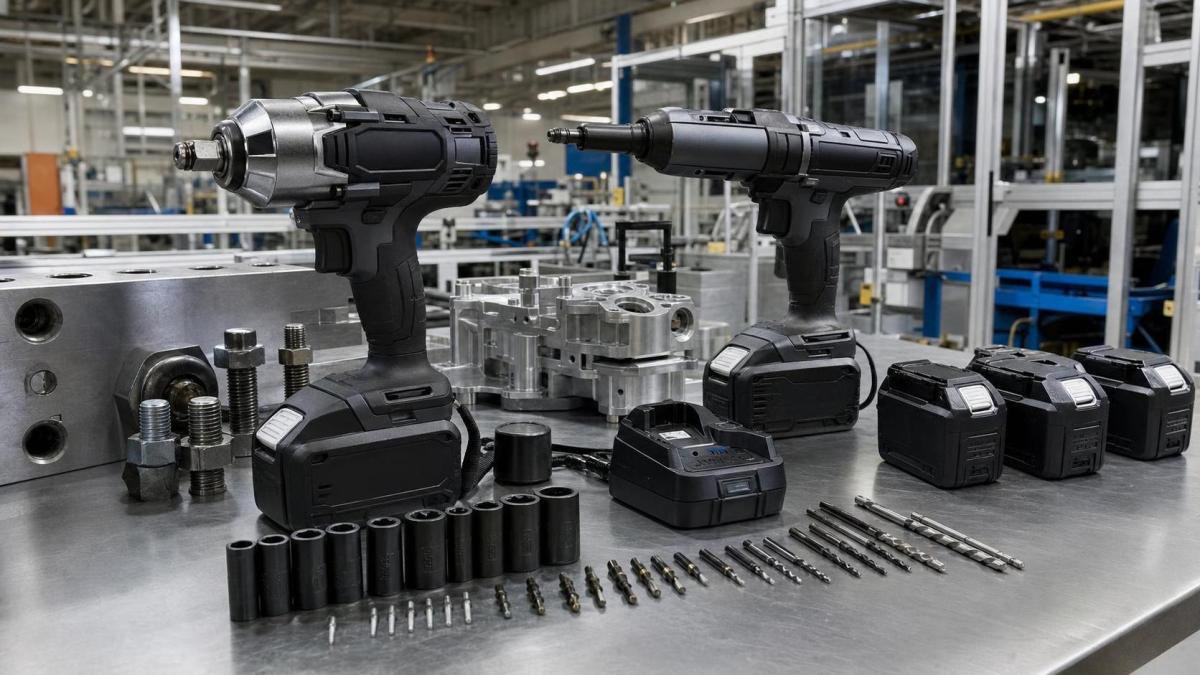
For technical evaluation, peak power is rarely the deciding factor alone.
With industrial brushless tools, runtime and torque interact under real load, not just on spec sheets.
That interaction affects cycle time, battery swaps, heat buildup, operator fatigue, and maintenance planning.
In practice, the best choice depends on whether the job rewards short bursts of force or long periods of steady output.
This is why industrial brushless tools should be assessed as systems, not isolated devices.
Motor design, battery chemistry, control logic, gearbox efficiency, and duty cycle all shape the result.
A tool that looks stronger on paper may underperform in continuous fastening, drilling, or overhead assembly.
On the other hand, a tool optimized for runtime may struggle when joints tighten suddenly or dense materials resist cutting.
Why the Runtime and Torque Trade-Off Matters
Torque is the turning force available at the spindle, anvil, or output shaft.
Runtime is how long the tool sustains useful work before battery replacement, recharge, or thermal derating.
These are linked because higher torque usually demands higher current.
Higher current raises heat in the motor, controller, and battery pack.
That heat can shorten effective runtime even before the battery is empty.
This becomes more obvious in repetitive industrial tasks.
A structural fastener line needs repeatable torque and minimal interruption.
A field maintenance team may value lighter batteries and longer uptime between charging points.
For this reason, industrial brushless tools should always be matched to the real duty profile.
Where Spec Sheets Can Mislead
Many industrial brushless tools advertise peak torque, not sustained torque.
Peak numbers often reflect short bursts under controlled conditions.
Actual production use includes friction changes, bit wear, operator angle, and thermal limits.
Likewise, runtime claims may be based on light loads or intermittent trigger use.
The smarter comparison is work completed per charge, under the intended fastening or drilling pattern.
How to Evaluate Industrial Brushless Tools Under Load
A useful evaluation starts with the load profile, not the catalog page.
Ask how the tool behaves during startup, steady operation, and stall recovery.
Brushless systems respond differently depending on firmware, sensor feedback, and battery voltage stability.
That means two tools with similar ratings can feel very different on the same joint.
Core Questions to Test
- How many cycles are completed per battery in the real application?
- Does torque remain stable as battery charge drops below mid-level?
- How quickly does housing temperature rise during continuous use?
- Does the control system reduce output to protect motor or battery?
- What happens when hard joints, rusted fasteners, or dense materials appear?
- How much operator force is needed to maintain control at higher torque?
Metrics That Matter More Than Marketing
For industrial brushless tools, evaluate output stability, battery efficiency, and thermal endurance together.
Also review recharge turnaround, spare pack count, and charger capacity at shift level.
These factors often influence productivity more than a headline torque figure.
When Higher Torque Creates Real Value
Higher torque is worth paying for when resistance is frequent and predictable.
Examples include large-diameter anchors, structural bolts, hardened fasteners, and metal drilling under pressure.
In those cases, underpowered industrial brushless tools waste time through stalls, retries, and bit damage.
More importantly, they can compromise process consistency and joint quality.
Best-Fit Use Cases for High Torque
- Steel structure assembly with repeated heavy fastening
- Rail, energy, and infrastructure maintenance tasks
- Industrial MRO work involving seized or corroded fasteners
- Fabrication cells handling thick metal or dense composite layers
Still, extra torque should not be treated as a universal upgrade.
It can increase reaction force, battery draw, and tool mass.
That trade-off matters in overhead tasks, repetitive assembly, and mobile service work.
When Longer Runtime Delivers Better Economics
Longer runtime often produces stronger economic value than maximum torque.
That is especially true where tasks are repetitive, moderate-load, and spread across long shifts.
In such environments, fewer battery changes reduce interruption and simplify fleet management.
This also lowers charger congestion and spare battery inventory.
Best-Fit Use Cases for Runtime Priority
- Light-to-medium fastening on assembly lines
- Facility maintenance teams covering large sites
- Commercial installation crews with limited charging access
- Applications where reduced weight improves ergonomics
Here, industrial brushless tools with balanced output can outperform heavier high-torque models.
The gain comes from sustained workflow, not dramatic peak force.
Thermal Control, Battery Strategy, and Total Cost
The runtime versus torque decision is really a system economics decision.
Industrial brushless tools that run hot may require more downtime, more batteries, and earlier pack replacement.
That hidden cost can erase the benefit of higher output.
From a procurement view, battery ecosystem planning matters as much as tool selection.
A Practical Comparison Table
This is where SHSS market intelligence becomes useful.
Across industrial power tools, smart hardware, and protective systems, the same rule keeps appearing.
A higher-rated component is not automatically the better operational choice.
A Smarter Selection Framework for Industrial Brushless Tools
The most reliable decisions come from a simple, structured comparison process.
- Define the true load case, including joint hardness, material thickness, and daily cycle count.
- Separate peak torque needs from sustained torque needs.
- Measure completed work per charge, not just nameplate battery capacity.
- Track temperature rise during the longest realistic operating window.
- Review ergonomics, especially for repetitive or overhead tasks.
- Calculate battery fleet size, charger throughput, and replacement cost.
- Pilot industrial brushless tools on real jobs before standardizing the platform.
This approach keeps selection grounded in business outcomes.
It also reduces the common risk of buying oversized tools for tasks that need endurance instead.
For most teams, the winning industrial brushless tools are the ones that maintain output predictably.
They finish the shift with fewer interruptions and lower stress on both batteries and operators.
If the application regularly hits hard resistance, choose torque with clear thermal margins.
If the workflow depends on steady repetition, prioritize runtime and battery efficiency.
That is usually the difference between impressive specs and reliable industrial performance.
Start with the duty cycle, validate under load, and let real work decide the balance.
Recommended News