
Search News
Industry Portal
Hot Articles
When a Brushless Drill Costs Less Over Time
Time
Click Count
When a Brushless Drill Costs Less Over Time
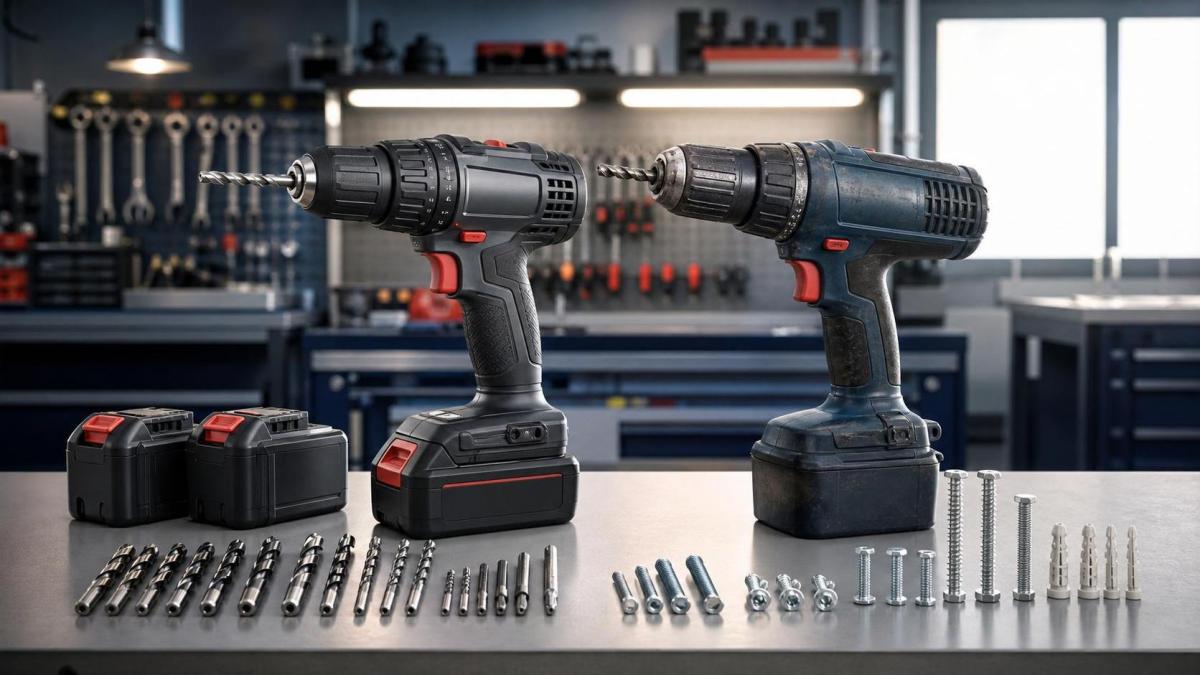
A brushless drill may cost more on day one. That part is obvious.
The less obvious part is what happens after months of daily use.
For cost control, the better question is total cost of ownership.
That includes repairs, battery runtime, downtime, replacement cycles, and labor productivity.
In many procurement cases, a brushless drill wins on those numbers.
This is especially true in construction, maintenance, industrial assembly, and facilities work.
A brushed motor uses physical carbon brushes. Those parts create friction and wear.
A brushless drill removes that contact point and uses electronic motor control instead.
That design change sounds technical, but its business effect is simple.
Lower wear often means lower lifetime cost.
Why the Upfront Price Can Be Misleading
At checkout, a brushed drill often looks like the budget choice.
But purchase price alone rarely reflects real operating cost.
A lower ticket price can hide more service events and shorter usable life.
It can also hide soft costs that quietly affect budgets.
Those soft costs usually include idle workers, delayed tasks, and faster battery turnover.
A brushless drill tends to reduce those hidden losses.
That matters when tools are shared across crews or used every day.
In actual operations, repeated interruptions cost more than many teams expect.
What finance teams should count
- Initial purchase price per unit
- Average annual maintenance expense
- Battery charging frequency and battery replacement timing
- Tool downtime during repair or overload failure
- Productivity loss from reduced torque consistency
- Expected replacement cycle across the fleet
Once those items are visible, the cheap option often stops looking cheap.
Where a Brushless Drill Creates Measurable Savings
The main savings usually come from four areas.
They are maintenance, motor life, battery efficiency, and jobsite uptime.
1. Lower maintenance demand
A brushed motor contains parts that physically wear out.
That leads to more frequent servicing over time.
A brushless drill eliminates that specific wear mechanism.
Fewer moving contact parts generally means fewer maintenance stops.
2. Longer working life
Heat is a major driver of motor stress and component aging.
A brushless drill usually runs cooler under similar workloads.
That can support a longer service life in demanding environments.
Longer life helps delay replacement spending across tool inventories.
3. Better battery use
Efficiency is a direct budget issue, not just a technical feature.
A brushless drill often converts battery power into work more effectively.
That can mean more holes or fastenings per charge.
It also means fewer charge swaps during active work hours.
4. Less downtime on the job
Downtime is where tool cost becomes labor cost.
When a drill overheats, stalls, or needs repair, workflow slows immediately.
A reliable brushless drill helps keep crews moving.
That benefit is often more valuable than the hardware cost difference.
A Simple Cost Comparison Over Three Years
A quick model makes the point clearer.
Assume two tools serve the same workload.
One is a brushed drill at lower purchase cost.
The other is a brushless drill with a higher upfront price.
Now add labor impact and service delays.
The total cost curve often shifts toward the brushless drill.
In heavier use environments, that shift usually appears faster.
In lighter use settings, the payback period may simply take longer.
When a Brushless Drill Makes the Most Financial Sense
Not every operation needs the same tool strategy.
But some purchase conditions strongly support a brushless drill decision.
- Daily or multi-shift use creates faster payback.
- Remote jobsites make tool failure more expensive.
- Large tool fleets amplify small savings per unit.
- High labor rates increase the cost of downtime.
- Battery platform standardization improves overall returns.
This is why many industrial buyers now review tool cost as an asset question.
They are not just comparing features. They are comparing lifecycle outcomes.
From a procurement planning view, that is the better lens.
How to Evaluate a Brushless Drill Before Purchase
A solid purchase decision needs more than brand preference.
It should use workload data and cost assumptions.
Use this practical checklist
- Estimate annual usage hours per drill.
- Review repair history for current brushed tools.
- Measure battery swaps per shift.
- Calculate labor cost during tool downtime.
- Compare expected service life between models.
- Request warranty terms and service response details.
- Run a pilot with one crew before larger rollout.
That pilot step is especially useful.
It turns a purchase debate into a measurable operating comparison.
It also helps confirm whether the brushless drill premium is justified in your setting.
The Strategic View: Better Tools Support Better Budget Discipline
A brushless drill is not always the lowest-price line item.
But it is often the lower-cost decision over the asset lifecycle.
That distinction matters in disciplined procurement.
The goal is not to buy the cheapest drill.
The goal is to buy the drill that protects output, reduces interruptions, and holds value longer.
That is where a brushless drill often stands out.
If the workload is real and uptime matters, the math usually becomes clear.
Start with a small comparison, track cost per operating year, and let the numbers decide.
Recommended News