
Search News
Industry Portal
Hot Articles
Brushless Impact Drivers: Torque, Control, and Battery Runtime Compared
Time
Click Count
Brushless impact drivers sit at the center of a practical shift in fastening work. They no longer compete on raw compact power alone. What matters now is how torque is delivered, how cleanly speed can be controlled, and how long battery output stays stable under repeated load.
That matters across construction, maintenance, industrial assembly, utilities, and smart infrastructure projects. In the broader SHSS view of modern hardware, fastening tools are not isolated products. They are part of the physical reliability chain that supports safe buildings, durable equipment, and efficient urban operations.
When comparing brushless impact drivers, the useful question is simple: which tool keeps fastening consistent without adding fatigue, stripped screws, overheated batteries, or unnecessary downtime? The answer depends less on headline numbers and more on how torque, control, and runtime interact on real tasks.
Why brushless impact drivers deserve closer comparison
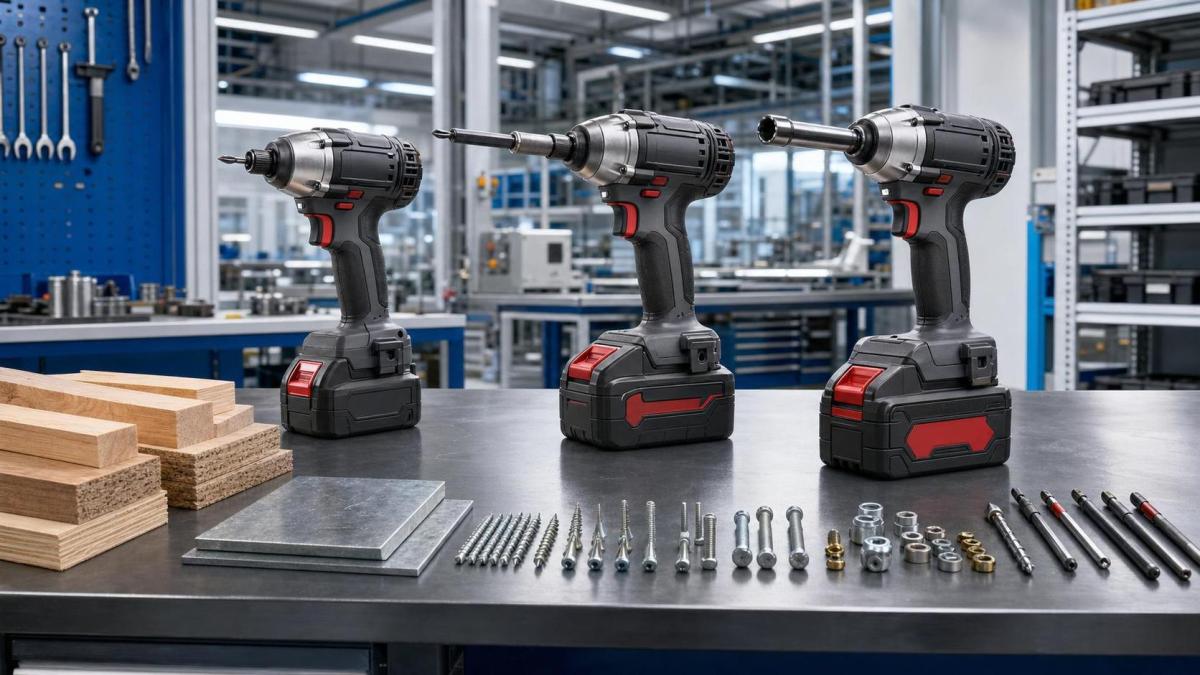
The move from brushed motors to BLDC platforms changed expectations. Operators now expect higher efficiency, lower maintenance, better thermal behavior, and more compact tool bodies without giving up fastening force.
Brushless impact drivers also fit a wider set of jobs than before. They drive long structural screws, install metal fixings, handle repetitive cabinet work, and support service tasks where portability matters more than maximum size.
From an industry perspective, this is important because fastening quality affects everything around it. A smart access enclosure, a lighting bracket, a high-strength hardware assembly, or a protective guard can all fail early if fastening is rushed or inconsistent.
Torque is more than a headline specification
Manufacturers often highlight maximum torque because it is easy to market. Yet peak torque does not describe the full behavior of brushless impact drivers. Real performance depends on how quickly that force arrives and how steadily the tool repeats it.
A driver with aggressive impact energy may sink long fasteners quickly in timber. The same tool can be less suitable for self-drilling screws in thin metal, where overdriving and head damage become more likely.
This is why fastening context matters. Softwood, hardwood, sheet metal, anchors, machine screws, and high-strength fasteners all react differently to impact pulses. The right comparison is task-based, not only spec-based.
What to look for in torque behavior
- Breakaway strength for stubborn or partially seized fasteners.
- Sustained driving force during long fastening cycles.
- Consistency near battery depletion, where weaker tools fade early.
- Mode tuning for delicate work, not only maximum output.
In practice, brushless impact drivers with balanced torque curves often feel stronger than tools with a higher published peak. They waste less motion, reduce bit cam-out, and stay predictable when material density changes.
Control often separates productive tools from tiring ones
Control is where many comparisons become more meaningful. A powerful tool that reacts too abruptly can slow work down. Operators compensate with lighter trigger input, interrupted starts, and extra visual checking.
Good brushless impact drivers translate trigger pressure into smooth acceleration. They also use electronics to manage startup, impact frequency, and shutoff behavior. That combination improves precision, especially on repetitive fastening or exposed finish materials.
Electronic modes are now a major differentiator. Low-speed settings, assist modes, and auto-stop functions are not cosmetic features. They reduce overtightening, dropped fasteners, and thread damage during installation or removal.
Signs of strong control in daily use
This matters especially where fastening quality supports other systems. A poorly controlled driver can damage brackets for smart lighting, deform security panel housings, or distort repeated assemblies that depend on tight tolerances.
Battery runtime is really about usable output time
Battery runtime is often misunderstood. Amp-hour ratings alone do not tell the whole story. Runtime depends on motor efficiency, impact mechanism design, electronics, thermal control, and the type of fastening being performed.
Brushless impact drivers generally use energy more efficiently than brushed models. Less friction and better electronic management mean more work per charge, especially in repetitive fastening cycles.
Still, runtime comparisons should be realistic. Driving short screws into softwood is not the same as sinking long structural fasteners or repeatedly fixing steel anchors. The battery pack, charger speed, and heat buildup all affect real productivity.
Runtime factors that actually change the result
- Cell quality and discharge rate under heavy impact load.
- Voltage platform and how well electronics protect output.
- Ambient temperature on site or in service vehicles.
- Duty cycle, especially during repetitive installation work.
- Battery-tool matching, since oversized packs may improve endurance but reduce handling comfort.
For many crews, the best brushless impact drivers are not the ones with the biggest battery. They are the ones that keep driving at a stable pace across the shift without forcing frequent swaps or causing wrist fatigue.
Where comparisons change by application
No single setup fits every job. The right balance of torque, control, and runtime changes with the material, fastener, and access conditions.
Construction and structural framing
Priority usually goes to sustained torque and thermal stability. Long screws, ledger connections, and repetitive fastening demand a tool that keeps speed under load and recovers quickly between drives.
Maintenance and facility work
Compact size, fast response, and manageable noise matter more. Access is often tight, tasks vary quickly, and the driver may be used on lighting fixtures, access panels, guards, and mixed hardware.
Industrial assembly and equipment installation
Control becomes critical. Repeatability, thread protection, and clean final seating support better assembly quality. Here, brushless impact drivers with refined low-speed modes often outperform more aggressive tools.
Smart infrastructure and hardware integration
Projects involving enclosures, sensor mounts, biometric access devices, or smart lighting supports benefit from balanced tools. Fastening must be secure, but not destructive to coatings, cables, housings, or alignment points.
How to compare brushless impact drivers in a practical way
A useful evaluation starts with the real fastening mix, not the catalog page. That means looking at screw sizes, material hardness, access limits, daily cycle count, and how often precision matters more than speed.
It also helps to view the tool as one part of a working system. Bits, sockets, batteries, fastener quality, and PPE all influence the result. SHSS often frames hardware this way because dependable outcomes come from coordinated components, not isolated specifications.
A simple comparison checklist
- Test the same fastener in the same material across tools.
- Check startup smoothness, not only finishing speed.
- Observe battery drop-off near the end of charge.
- Assess grip balance with the battery pack you will actually use.
- Measure rework risk, including stripped heads and inconsistent seating.
This approach usually reveals more than a single torque figure. It shows whether a tool suits repetitive production, field service, or mixed-site work where fast transitions matter.
What deserves attention before the next purchase decision
Brushless impact drivers continue to improve through motor efficiency, electronics, battery chemistry, and smarter control logic. Yet better decisions still come from matching the tool to the fastening risk, not chasing the highest number.
A driver used for structural screws, security hardware, lighting systems, or equipment enclosures should be judged by output consistency, handling, and endurance under real load. Those factors influence speed, finish quality, maintenance intervals, and overall safety.
The next step is to define the actual fastening profile, compare brushless impact drivers under identical tasks, and note where torque, control, or runtime matters most. That creates a clearer standard for selection than any isolated specification sheet.
Recommended News