
Industrial Brushless Tools: Runtime, Torque, and Maintenance Tradeoffs
For technical evaluators, industrial brushless tools are no longer judged by peak torque alone. Runtime under load, torque consistency, battery thermal behavior, service intervals, and total maintenance burden all determine whether a tool truly improves field productivity. This article examines the practical tradeoffs behind BLDC motor platforms, high-rate lithium packs, electronic controls, and sealed drivetrain designs—helping procurement, engineering, and maintenance teams compare specifications against real industrial duty cycles rather than marketing claims.
What Technical Evaluators Are Really Trying to Verify
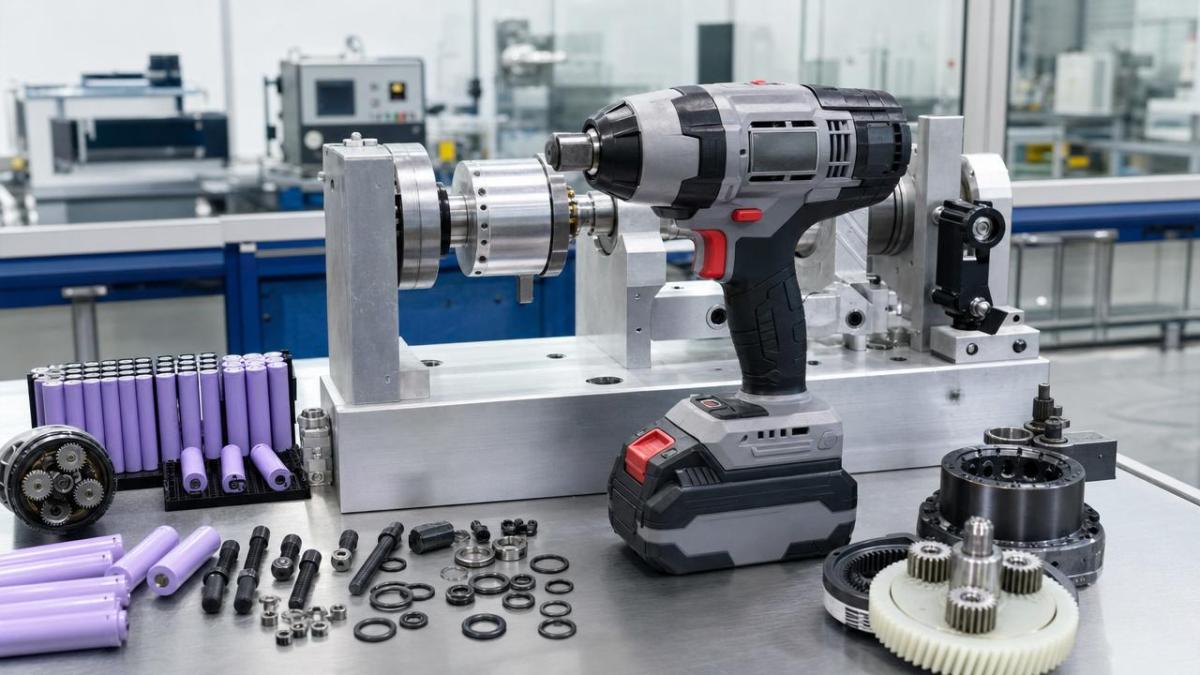
The core search intent behind industrial brushless tools is practical comparison, not basic education. Evaluators want to know which platform survives real work.
Most teams are not asking whether brushless motors are efficient. They are asking whether efficiency remains visible during drilling, fastening, grinding, or assembly shifts.
The main concern is tradeoff clarity. Higher torque may reduce runtime, sealed housings may raise temperature, and lighter tools may sacrifice gearbox durability.
A useful evaluation should connect specifications to duty cycles, maintenance practices, battery logistics, operator comfort, and measurable productivity in demanding industrial environments.
Why Peak Torque Is an Incomplete Buying Metric
Peak torque is easy to advertise because it produces a single impressive number. Unfortunately, it rarely describes performance across repeated industrial tasks.
Fastening structural bolts, boring metal, or driving anchors requires torque stability over time. A short burst matters less than controlled output under load.
Technical evaluators should distinguish peak torque, sustained torque, breakaway torque, and electronically limited torque. Each figure answers a different operational question.
For assembly operations, repeatability often matters more than maximum force. Over-torqueing can damage threads, deform fasteners, or create quality problems downstream.
In heavy maintenance, breakaway torque may be critical. Removing corroded bolts demands short, aggressive impacts that do not necessarily reflect continuous workload capacity.
The best industrial brushless tools publish torque ranges, test conditions, fastening modes, and compatible battery packs. Vague maximum ratings deserve additional verification.
Runtime Must Be Measured Under the Actual Load Profile
Runtime claims can be misleading when measured at no load or light duty. Industrial evaluators need runtime data under realistic resistance and cycle frequency.
A tool used for intermittent fastening behaves differently from one used for continuous drilling. Heat accumulation, current draw, and voltage sag change significantly.
Battery amp-hour ratings are only part of the equation. Cell chemistry, discharge capability, pack cooling, and battery management systems determine usable energy.
High-rate lithium packs can deliver impressive current, but repeated heavy draws raise temperature. Once protection limits activate, performance may drop suddenly.
Evaluators should request runtime tests using the same fastener size, material, accessory, and operator cadence expected in the field or production line.
A practical metric is completed tasks per battery, not minutes of idle operation. This connects tool performance directly to shift planning.
For fleets, battery rotation strategy matters. A slightly less powerful tool with predictable runtime may outperform a stronger model that disrupts workflow.
Thermal Management Separates Industrial Platforms from Prosumer Tools
Brushless motors generate less waste heat than brushed motors, but they are not immune to thermal stress. Electronics and batteries remain vulnerable.
Industrial-grade platforms usually combine motor temperature sensing, current control, battery pack monitoring, and airflow design to keep performance within safe limits.
When tools operate in metal shops, tunnels, shipyards, or construction sites, ambient heat and dust can quickly reduce thermal headroom.
Evaluators should examine derating behavior. A good tool reduces output predictably, while a weak design may shut down abruptly during critical work.
Sealed housings protect against dust and moisture, yet they may trap heat. This creates a design compromise that must match site conditions.
If work involves long drilling cycles or continuous grinding, cooling design may matter more than nominal torque. Sustained output becomes the decisive metric.
Electronic Controls Improve Precision, but Add Evaluation Complexity
Modern industrial brushless tools depend on electronic speed controllers, sensors, firmware, and protection logic. These components shape the user experience dramatically.
Electronic clutches, torque presets, soft start, anti-kickback, and overload protection can improve safety and quality when they are properly calibrated.
However, electronic features can also hide limitations. A tool may feel smooth because the controller restricts current before reaching mechanical capability.
Technical teams should test whether control settings remain consistent after battery changes, firmware updates, temperature shifts, and repeated heavy-duty cycles.
For regulated assembly, data logging and torque traceability may be more valuable than raw power. Documentation reduces inspection risk and rework.
For field service, simplicity may be preferable. Operators need reliable modes that are understandable with gloves, dust, rain, and low visibility.
Maintenance Tradeoffs: Fewer Brushes Does Not Mean Maintenance-Free
Brushless tools remove carbon brush replacement, sparking, and commutator wear. That is a major advantage for uptime and confined-space safety.
Still, gearboxes, bearings, seals, switches, chucks, anvils, and impact mechanisms remain wear items. Mechanical stress has not disappeared.
The maintenance advantage depends on how the manufacturer protects drivetrain components against shock loads, contamination, lubricant breakdown, and operator misuse.
Sealed gearboxes reduce contamination but may complicate repair. Modular components can lower downtime if parts are stocked and service procedures are clear.
Evaluators should ask for service intervals, exploded diagrams, replacement part availability, and estimated repair times. These details affect total cost directly.
A cheaper tool with limited parts support may become disposable. In industrial fleets, replacement delays can cost more than the tool itself.
Maintenance teams should also inspect battery contacts, charger health, housings, and accessory interfaces. Many performance problems originate outside the motor.
Battery Ecosystem Decisions Influence Long-Term Fleet Cost
The tool body is only one part of the investment. Batteries, chargers, storage cabinets, and charging schedules shape fleet economics.
Industrial sites often benefit from standardized voltage platforms. Fewer battery types simplify inventory, operator training, and emergency replacement during shifts.
Yet standardization can create lock-in. A proprietary platform may be justified only when performance, safety, data features, or service support are superior.
Evaluators should compare battery cycle life, cold-weather behavior, charge time, charger intelligence, and pack diagnostics. These factors determine hidden operating costs.
Fast charging is attractive, but aggressive charging can increase heat and shorten pack life. The best strategy balances availability with longevity.
For multi-shift operations, battery count per tool should be modeled. Underestimating packs leads to idle operators and emergency purchasing.
Ergonomics Affects Productivity More Than Many Specifications
Industrial brushless tools often advertise compact motors and lighter bodies. Reduced weight helps, but ergonomics involves more than mass alone.
Balance, grip shape, trigger control, vibration, noise, and reaction torque influence fatigue. Fatigued operators work slower and make more mistakes.
For overhead fastening, a lighter tool may improve productivity even if torque is lower. For bench assembly, precision may matter more.
Anti-vibration systems and controlled start profiles can reduce cumulative strain. This is especially important where tools are used hundreds of times daily.
Technical evaluators should conduct operator trials. A specification sheet cannot reveal wrist loading, grip security, or mode-switch usability during real tasks.
Safety teams should also review kickback behavior, thermal surface temperature, and glove compatibility. These details influence incident rates and acceptance.
How to Build a Meaningful Test Protocol
A reliable evaluation begins with defining the duty cycle. List materials, fasteners, hole sizes, accessories, ambient conditions, and expected daily volume.
Next, define success metrics. Useful measures include completed tasks per charge, sustained torque, shutdown frequency, temperature rise, and operator fatigue feedback.
Test multiple batteries, not only the newest pack. Older batteries reveal whether the platform remains productive as the fleet ages.
Run tools long enough to expose heat behavior. Short demonstrations often favor powerful tools that cannot sustain output through a full shift.
Record maintenance events during trials. Loose chucks, worn bits, broken clips, and damaged contacts may reveal design weaknesses before large purchases.
Include maintenance personnel in the trial. They can assess repairability, access to wear parts, and compatibility with existing service workflows.
Finally, calculate cost per completed task, not only purchase price. This brings runtime, labor, downtime, consumables, and repair burden together.
When Higher Torque Is Worth the Runtime Penalty
Higher torque is valuable when tasks are constrained by force rather than battery capacity. Structural fastening and heavy disassembly often fit this pattern.
If operators frequently stall tools, step down work, or use manual assistance, insufficient torque is already costing time and increasing risk.
In those cases, a stronger industrial brushless tool may reduce cycle time, improve consistency, and prevent overheating caused by prolonged struggling.
However, if most work is medium-duty and repetitive, excessive torque may waste energy, add weight, and increase fastener damage risk.
The practical question is not whether more torque is better. The question is whether extra torque removes a real operational bottleneck.
When Runtime and Serviceability Should Take Priority
Runtime deserves priority in remote sites, utility work, large facilities, and outdoor maintenance where charging access is limited or unpredictable.
Serviceability becomes critical when tools support continuous operations. Manufacturing lines, mining maintenance, and infrastructure crews cannot tolerate long repair delays.
A platform with moderate torque, excellent thermal stability, and quick part replacement may deliver better uptime than a more aggressive tool.
Procurement teams should resist choosing only the highest specification. Industrial value usually comes from predictable performance across thousands of cycles.
If downtime cost is high, service network quality and spare battery availability may outweigh small differences in motor output.
Final Evaluation Framework for Industrial Brushless Tools
Technical evaluators should treat industrial brushless tools as integrated systems. Motor, battery, electronics, drivetrain, accessories, and service support all interact.
Start by matching the tool to the dominant workload. Then verify sustained torque, runtime under load, thermal behavior, and repair requirements.
Give less weight to isolated marketing numbers. Peak torque, maximum RPM, and idealized runtime are useful only when test conditions are transparent.
The best platform is not always the strongest or lightest. It is the one that delivers repeatable work with acceptable maintenance effort.
For industrial teams, the winning choice improves completed tasks per shift, reduces unplanned downtime, protects operators, and remains serviceable over years.
In summary, industrial brushless tools should be evaluated through operational evidence. Real duty-cycle testing turns competing specifications into defensible decisions.