
Search News
Industry Portal
Hot Articles
What installers should look for in industrial brushless tools
Time
Click Count
Installers rarely get the luxury of stopping in the middle of a job because a tool feels awkward or starts fading under load. A drill that stalls in thick metal, a driver that heats up after a few dozen fasteners, or a battery that dies before the shift is done can turn a simple installation into a chain of delays. The frustrating part is that these problems often show up only after the tool is already in use, when the real cost is lost time, extra fatigue, and more rework.
If you are comparing industrial brushless tools for installers, the safest approach is not to chase the highest torque number or the longest spec sheet. It is to judge whether the tool fits the kind of fastening, drilling, anchoring, and overhead work you actually do every day. The best choice is usually the one that stays consistent under load, feels manageable in hand, and does not create avoidable maintenance issues.
Start with the job, not the catalog
Many buying mistakes begin with a tool that looks strong on paper but is wrong for the real task. Installers often move between sheet metal, framing, anchors, conduit brackets, cabinets, panels, and overhead assemblies. Each of those jobs places different demands on speed, balance, and torque control. A brushless motor helps because it usually gives steadier output and less wear than brushed designs, but that alone does not make a tool suitable.
A better first question is: what kind of work will this tool do most often? If the answer is repetitive fastening, weight and trigger control matter more than raw power. If the job includes drilling into dense material, a stronger motor, better clutch behavior, and stable speed under pressure become more important. For installers who carry tools all day, even a slight mismatch in balance can become noticeable by the afternoon.
Look closely at torque behavior, not just torque size
Torque is one of the first numbers people compare, but the number by itself can mislead. What matters is how the tool delivers that torque. Some tools feel strong at startup but lose control when the bit bites into resistance. Others are smoother and easier to guide, which is often more useful on finished surfaces or when working near edges.
For industrial brushless tools for installers, pay attention to clutch settings, speed ranges, and whether the tool has a mode for more controlled fastening. If you often work with delicate materials, you need predictable output more than aggressive force. If you frequently drive long fasteners, the tool should keep its rhythm without forcing you to over-squeeze the trigger or fight kickback.
Runtime matters more than a battery headline
Battery capacity is easy to overvalue. A larger pack can help, but it also adds weight and can change the balance of the tool. The more useful question is whether the tool can complete a normal work block without feeling like it is losing strength halfway through.
Brushless systems are often chosen because they waste less energy as heat and can stretch runtime in practical use. Even so, installers should think about the entire setup: battery compatibility, charging pace, and whether the tool stays comfortable with the pack size you will actually carry. If the battery is so heavy that the tool becomes tiring overhead, the extra runtime may not pay off in real use.
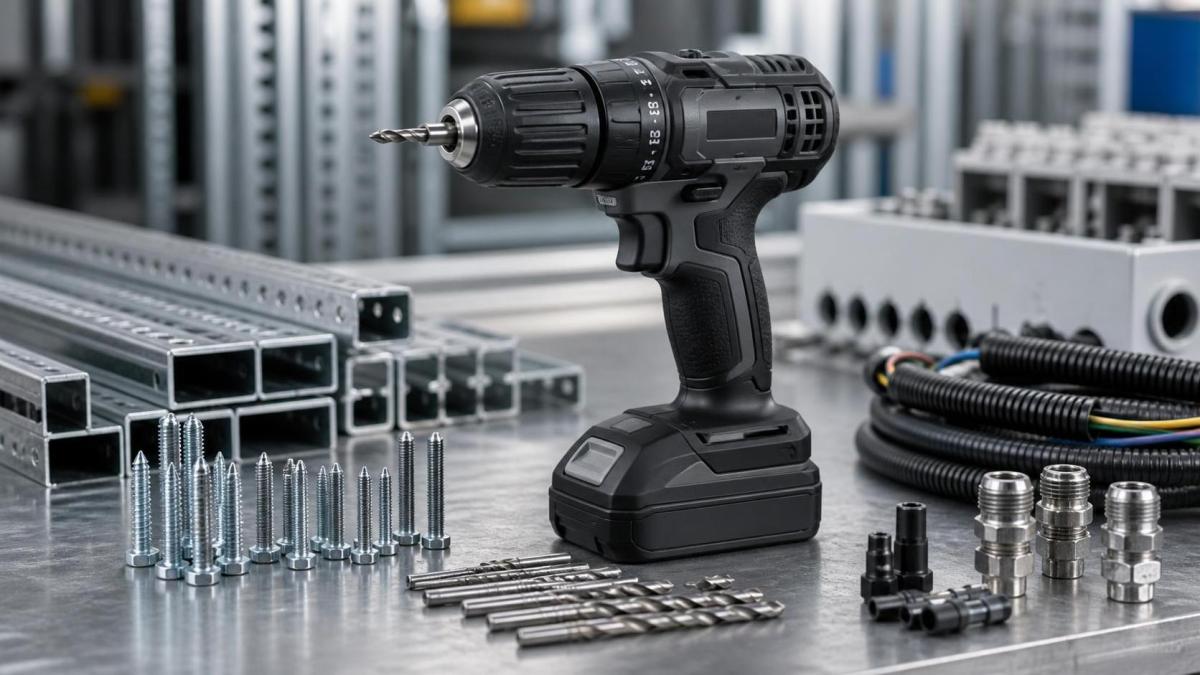
Comfort is not a soft factor
On a long installation day, comfort becomes a performance issue. A tool that twists hard at startup, vibrates more than expected, or has a grip that forces your wrist into an awkward angle can slow you down even if the specs look strong. That is especially true for installers working on ladders, in tight enclosures, or above shoulder height.
Try to judge weight distribution, handle shape, trigger response, and how easy it is to switch modes with gloves on. A well-designed brushless tool should feel controllable, not just powerful. If you need to pause often because the tool feels fatiguing, productivity drops long before the battery does.
Durability is mostly about the weak points
People often focus on the motor and forget the parts that fail first in daily work: chuck wear, switch quality, housing seams, belt clips, battery latches, and heat management. Installers work in dust, vibration, and occasional drops, so a tool needs more than a strong motor to survive routine use.
When comparing options, look for signs that the tool is built for repeated handling rather than occasional shop use. Sealed housings, solid accessory locking, and battery connections that do not wobble are practical clues. If the tool will spend time on site rather than in a controlled workspace, simple structural toughness is worth more than extra features you may never use.
Match the tool to the install sequence
Some jobs are easier when one tool does almost everything; others go faster when you split tasks. For example, a compact driver may be ideal for positioning and light fastening, while a more powerful drill-driver handles anchoring and heavier assembly. If you force one tool to cover every stage, you may end up compromising either precision or speed.
It helps to map the actual sequence: pre-drill, fasten, adjust, finish, inspect. Then ask which step causes the most delays. If the delay comes from repeated fastening, prioritize trigger feel and runtime. If it comes from drilling through tougher materials, prioritize motor consistency and bit control. That kind of review is more useful than comparing brand names alone.
Common warning signs during selection
- The tool feels nose-heavy before you even start working.
- The clutch adjustment is too coarse for mixed materials.
- The battery option adds too much bulk for overhead use.
- The speed range feels narrow for both delicate and demanding tasks.
- The grip or switch layout looks hard to manage with gloves.
When a brushless design is the better fit
A brushless tool is usually worth considering when the work is repetitive, the schedule is tight, and maintenance interruptions are costly. For installers, that often means daily fastening, frequent starts and stops, and long periods of use where heat and wear matter. The motor design helps, but the real benefit shows up only if the rest of the tool is designed well too.
That is why a good decision is rarely about choosing the most powerful model. It is about finding a tool that stays steady, feels manageable, and matches the pace of the work. If your tasks are varied, look for adjustable control. If your tasks are heavy-duty, look for thermal stability and a body that can handle regular site conditions. In both cases, the tool should reduce effort rather than adding another thing to manage.
A simple way to decide before buying
Before you commit, compare three things side by side: the main task, the physical feel, and the maintenance burden. The main task tells you whether you need precision or force. The physical feel tells you whether you can use it comfortably for a full shift. The maintenance burden tells you whether the tool will stay dependable after repeated use.
If a model looks strong but feels awkward, skip it. If it feels good but cannot keep pace with the job, skip it. The right industrial brushless tools for installers are the ones that solve the work you actually face, not just the work shown in a spec list. That mindset saves time on the first day and even more time later, when the tool is still performing the way you expected.
Recommended News