
Search News
Industry Portal
Hot Articles
How to Choose Heavy Duty Brushless Impact Drivers for Torque, Runtime, and Jobsite Wear
Time
Click Count
How to Choose Heavy Duty Brushless Impact Drivers for Torque, Runtime, and Jobsite Wear
Selecting heavy duty brushless impact drivers requires more than comparing peak torque on a spec sheet.
The better choice comes from matching output, runtime, heat control, and structural durability to the real fastening cycle.
That matters even more in steel erection, equipment assembly, MRO, concrete formwork, and infrastructure maintenance.
In these settings, heavy duty brushless impact drivers are judged by repeatable work, not by one impressive number.
The tool must stay productive under load, survive drops, manage battery draw, and keep fastening quality stable across long shifts.
This guide breaks down the technical factors that shape real-world selection and helps narrow the right platform with fewer assumptions.
Start With the Real Torque Requirement
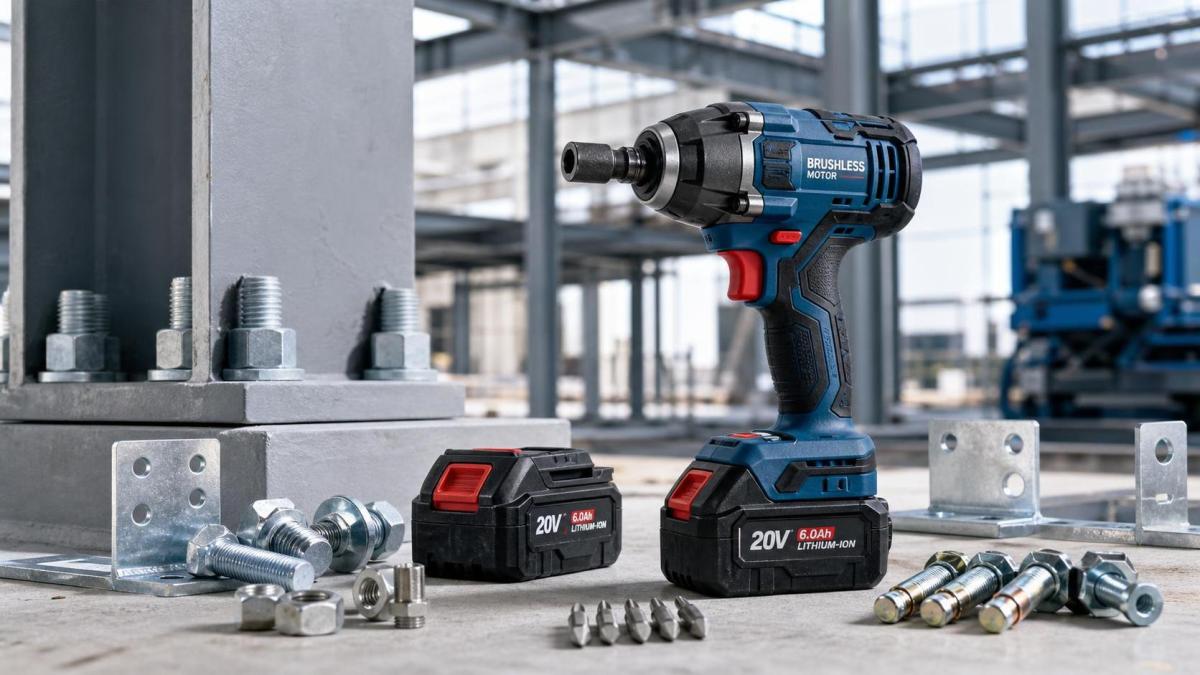
Torque is still the first filter, but published numbers can be misleading without context.
Many heavy duty brushless impact drivers advertise fastening torque, breakaway torque, and impact rate in the same product sheet.
Those values describe different moments of performance, so they should not be treated as interchangeable.
For selection work, start with the joint itself.
Look at fastener diameter, substrate hardness, thread condition, corrosion exposure, and the target clamp load.
A driver used for structural screws into dense timber behaves differently from one breaking loose rusted anchors.
The recent shift is clear.
Buyers are moving away from choosing the highest claimed torque and toward choosing usable torque across the duty cycle.
In practical terms, evaluate these points first:
- Maximum fastening torque for the largest planned fastener.
- Breakaway torque for seized or aged hardware.
- Torque consistency after repeated fastening cycles.
- Low-speed control for avoiding overdriving and thread damage.
If the application includes torque-critical assemblies, an impact driver alone may not be enough.
In that case, use the impact driver for run-down speed and finish with a calibrated torque tool.
Brushless Motor Design Affects More Than Efficiency
Not all brushless systems perform the same under heavy demand.
The motor, controller, and firmware work together, and their integration decides how the tool reacts under changing load.
High-quality heavy duty brushless impact drivers usually hold speed better when resistance rises suddenly.
That means fewer stalls, smoother starts, and less wasted battery energy.
A stronger signal in current product development is electronic control precision.
Manufacturers are improving current sensing, thermal feedback, and output mapping across multiple speed modes.
This also means the best tool is often the one with the smartest control package, not just the largest motor.
Check whether the tool offers:
- Multiple drive modes for wood, metal, and self-tapping screws.
- Assist modes that reduce cam-out or sudden run-on.
- Thermal protection that limits damage without killing productivity.
- Soft-start control for delicate finishing or shorter fasteners.
These details directly affect fastening quality, operator fatigue, and rework rate.
Battery Platform and Runtime Should Be Evaluated as a System
Runtime claims are often too general to support a serious purchase decision.
With heavy duty brushless impact drivers, runtime depends on battery chemistry, amp-hour rating, pack cooling, and current delivery.
Voltage alone does not tell the full story.
A compact pack may keep weight down, but it can also raise heat and voltage sag during repetitive high-load fastening.
In field use, the useful question is simple: how long will the tool hold productive output before slowing down?
To answer that, compare platforms using a repeatable task, not a generic runtime chart.
For example, count the number of large lag screws, concrete anchors, or structural fasteners installed per charge.
Then watch battery temperature, recharge time, and performance drop near the end of the cycle.
A useful evaluation matrix looks like this:
This is where platform decisions become strategic.
If the same battery family also supports grinders, rotary hammers, and lighting, total fleet value improves quickly.
Impact Mechanism, Heat, and Wear Shape Long-Term Performance
The hammer and anvil mechanism often separates consumer-grade tools from serious industrial options.
Heavy duty brushless impact drivers may share a similar exterior, yet wear patterns inside can differ sharply.
Repeated impact creates heat, vibration, and metal fatigue.
If internal metallurgy or lubrication is weak, output drops long before the tool actually fails.
That creates hidden costs through slower fastening, extra battery swaps, and rising maintenance frequency.
When reviewing candidates, ask for evidence on sustained-load behavior.
A short demo is not enough.
Look for duty-cycle testing, thermal shutdown thresholds, bearing durability, and service interval recommendations.
Key signs of stronger long-term design include:
- Reinforced gear housing and impact chamber construction.
- Effective venting without exposing internals to dust.
- Stable performance after extended fastening runs.
- Manufacturer support for spare parts and service access.
In real procurement cycles, this is often where the lower-cost option loses its advantage.
Jobsite Wear Is About Housing Protection, Not Just Drop Claims
Durability on paper can sound similar across brands.
The difference appears when heavy duty brushless impact drivers meet dust, rain, oil, vibration, and accidental impact every day.
The housing has to protect electronics, battery contacts, trigger assemblies, and the collet under constant abuse.
A robust outer shell matters, but sealing and internal layout matter just as much.
This also affects uptime.
A tool that resists contamination will spend less time sidelined for trigger faults, contact corrosion, or chuck issues.
During evaluation, pay close attention to:
- Overmold coverage at impact zones.
- Battery rail strength and insertion stability.
- Nose design and one-hand bit retention.
- Resistance to dust intrusion around controls and vents.
- Working balance with larger battery packs and gloves.
Ergonomics should not be treated as a secondary issue.
Poor balance increases wrist strain and weakens control during overhead or awkward fastening.
Use an Application-Based Evaluation Method
The most reliable way to choose heavy duty brushless impact drivers is to test them against actual work packages.
This avoids overvaluing brand familiarity or isolated lab numbers.
A practical evaluation flow can be kept simple.
- Define the top three fastening tasks by volume, torque demand, and failure risk.
- Test competing tools with the same fasteners, bits, batteries, and operators.
- Measure cycle time, battery consumption, heat rise, and fastening consistency.
- Record operator feedback on control, fatigue, and access in tight spaces.
- Compare total ownership cost, including chargers, spare packs, and service support.
This process gives a better answer than buying the highest-rated tool in the category.
It also helps identify whether one platform can cover most tasks or if two tool tiers are needed.
For organizations managing broader smart hardware fleets, this system view is especially valuable.
At SHSS, the same logic applies across industrial tools, fastening systems, site lighting, security hardware, and PPE selection.
The right product is the one that protects uptime, safety, and operating margin at the same time.
Final Decision Criteria for Heavy Duty Brushless Impact Drivers
When the comparison gets close, return to the fundamentals.
The best heavy duty brushless impact drivers deliver enough torque, stable runtime, controlled heat, and proven resistance to jobsite wear.
They also fit the battery ecosystem, service model, and fastening risk profile of the operation.
That is usually a better purchasing outcome than chasing the biggest spec headline.
A solid decision framework should answer four questions.
- Can the tool handle the heaviest real fastener with margin?
- Will runtime and charging logistics support a full shift?
- Does the tool stay reliable under heat, dust, impact, and repetitive use?
- Will the platform reduce total downtime across the wider tool fleet?
If those answers are clear, the selection becomes much easier.
Use field-based scoring, keep the criteria measurable, and let actual fastening performance settle the final choice.
Recommended News