
Search News
Industry Portal
Hot Articles
Dalong Development Zone Steam Grid Expansion to Boost Industrial Thermal Capacity by 35%
Time
Click Count
The expansion of the Zhongwei steam pipeline network in the northern industrial park of Dalong Development Zone, Guizhou Province, is scheduled for commissioning by end-June 2026. The exact event date was not specified in the original information. This infrastructure upgrade directly supports rising thermal demand from advanced functional materials manufacturers and carries implications for supply chain reliability across lithium battery materials, high-end alloys, and associated PPE, tools, and fasteners.
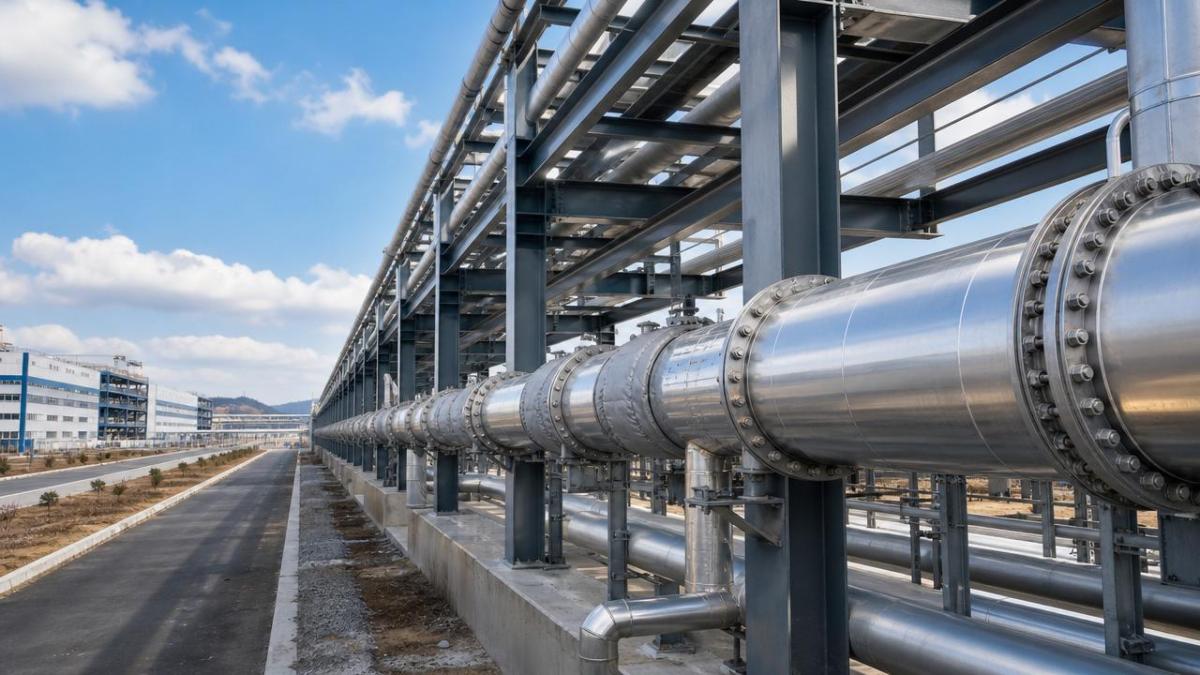
Project Completion and Technical Upgrade Confirmed
The Zhongwei circular thermal utility pipeline expansion special line in the northern industrial park of Dalong Development Zone will enter operation by June 2026. The main steam pipeline has been upgraded to DN350 specification, increasing the overall industrial thermal supply capacity by 35%. This project serves as critical thermal infrastructure for enterprises producing lithium-ion battery materials and high-value-added alloy components.
Supply Chain Impact Across Key Business Roles
Direct Trading Enterprises
Trading firms supplying steam-dependent components—including pressure-rated piping accessories, thermal insulation kits, and safety valves—may face revised delivery windows and tighter compliance verification timelines as new operational parameters take effect. They must align product certifications with updated service conditions (e.g., sustained 250 °C steam exposure).
Raw Material Procurement Entities
Procurement teams sourcing heat-resistant alloys (e.g., Inconel 625, ASTM A182 F22), high-purity graphite gaskets, or corrosion-resistant fasteners will need to verify material traceability and mill test reports against anticipated operating pressures and thermal cycling profiles post-commissioning.
Manufacturing Companies
Producers of lithium cathode precursors or specialty alloys relying on stable steam supply for calcination, annealing, or drying processes must assess thermal load continuity risks during the transition phase. Any unplanned interruption could delay batch validation and affect regulatory documentation for downstream customers.
Supply Chain Service Providers
Logistics and technical support providers handling just-in-time deliveries of PPE (e.g., EN ISO 11612-compliant garments), calibrated thermal sensors, or ASME B16.5 flange kits should review SLAs for thermal environment–specific storage and transit protocols, especially where equipment sensitivity to humidity or temperature drift is documented.
Strategic Priorities for Enterprise Preparedness
Verify Compliance Against Updated Thermal Operating Conditions
Confirm that existing product certifications (e.g., PED 2014/68/EU, GB/T 12777) cover the expanded grid’s projected continuous operating parameters—particularly pressure stability at 1.6 MPa and saturated steam temperatures up to 200 °C.
Align Technical Tender Submissions with DN350 Interface Requirements
Review all pending or upcoming bids for steam-connected equipment to ensure dimensional compatibility (flange standards, pipe schedule, welding procedure specifications) and material suitability for extended service life under higher thermal cycling frequency.
Adjust Procurement and Delivery Schedules Around Commissioning Milestones
Factor in potential pre-commissioning testing periods (e.g., hydrostatic tests, thermal stress trials) between May and June 2026 when planning receipt of critical spares, calibration tools, or replacement gasket sets to avoid production downtime.
Strengthen Supplier Documentation for Traceability and Validation
Mandate updated material test reports, NDE records (e.g., RT/UT per ASME Section V), and heat treatment certificates from suppliers of steam-line components—especially for items requiring long-term creep resistance or chloride stress corrosion cracking (SCC) mitigation.
Industry Observation: Beyond Infrastructure — A Signal for Systemic Readiness
Analysis shows this grid upgrade is more than a localized capacity increase—it reflects an emerging pattern where thermal utility infrastructure modernization precedes and enables stricter process control requirements in advanced materials manufacturing. From an industry perspective, such projects increasingly act as de facto triggers for upstream compliance recalibration: certification bodies may tighten scrutiny of thermal fatigue data; procurement departments are beginning to require third-party validation of component performance under simulated grid-load transients; and OEMs are embedding thermal resilience criteria into supplier scorecards. What deserves closer attention is how quickly supporting standards (e.g., ISO 5167 for flow measurement under variable steam quality, or EN 13445-3 Annex C for cyclic loading assessment) are referenced in tender documents following such upgrades.
Conclusion: Infrastructure as Enabler, Not Just Utility
This expansion underscores that thermal infrastructure is evolving from a passive utility into an active enabler of advanced manufacturing capability—and a benchmark for supply chain maturity. Its impact extends beyond kilowatt-hours delivered: it reshapes technical expectations, recalibrates risk thresholds, and elevates the importance of interoperable documentation across engineering, procurement, and quality functions. A measured, evidence-based response—not reactive compliance—is the most appropriate path forward.
Source Attribution and Monitoring Guidance
This article was generated exclusively from the provided title, event timing note (‘not specified’), and summary text. Specific official source links were not provided in the input and should be verified continuously. Stakeholders are advised to monitor forthcoming updates on tender specifications issued by Dalong Development Zone authorities, implementation guidance from provincial market regulation bureaus regarding pressure equipment conformity, and any revisions to local industrial energy supply agreements that may define new service-level commitments or penalty clauses tied to thermal stability metrics.
Recommended News