
Search News
Industry Portal
Hot Articles
Dongfeng AI+ Skills Competition Results Announced: Voyah Team Takes Top Two Spots
Time
Click Count
The conclusion of Dongfeng Motor’s 2026 Youth ‘AI+ Competition’ on May 19, 2026, marks a significant milestone in the industrial application of artificial intelligence within China’s automotive and intelligent hardware supply chain—particularly in areas subject to evolving global technical compliance expectations, cross-border API integration standards, and localized deployment requirements for AI-enabled industrial tools.
Competition Outcomes and Technical Scope
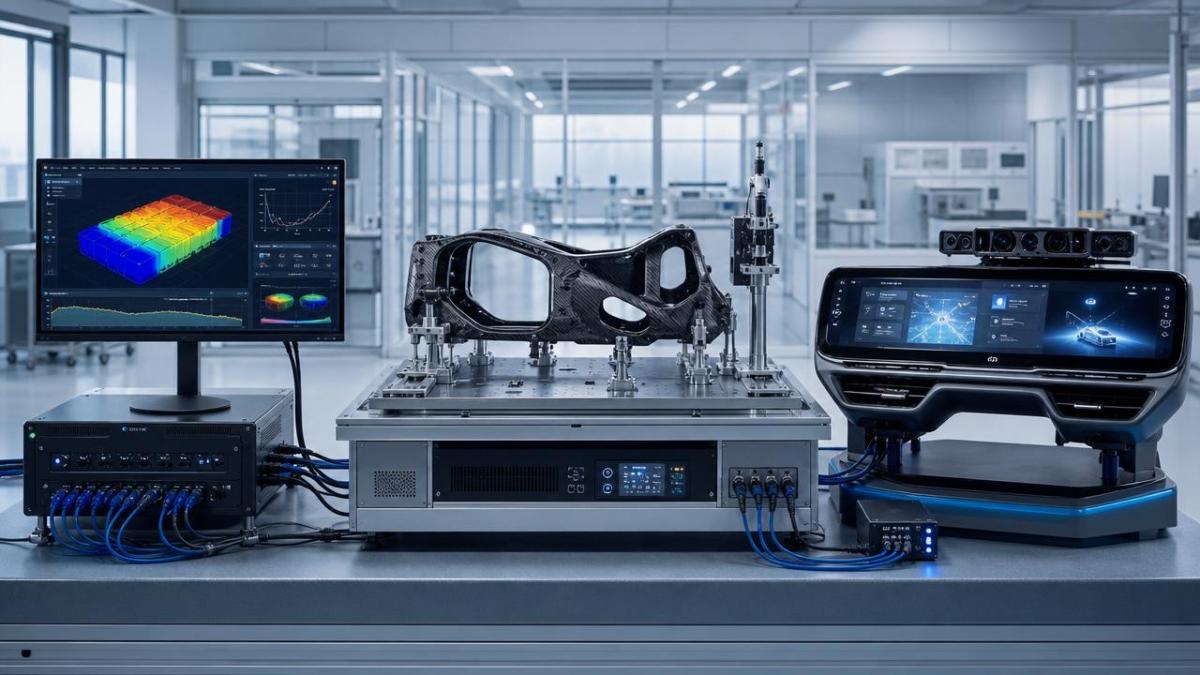
The 2026 Dongfeng Youth ‘AI+ Competition’ concluded on May 19, 2026. Deng Chan and Zhang Wenlei from Voyah Automobile secured first and second place, respectively, in the Application Track. The competition emphasized practical AI implementation in three core industrial domains: intelligent cockpit systems, battery thermal management, and structural lightweighting simulation. Algorithm models and associated toolchains developed during the event have been made available to overseas partners via open API interfaces and support on-premises deployment.
Implications Across Supply Chain Roles
Direct export-oriented manufacturers
These enterprises may face new technical alignment requirements when integrating AI-enhanced functionalities into products such as brushless DC tools, smart fastening systems, and respiratory protective equipment. The availability of standardized APIs and local deployment capability reduces integration lead time—but also raises expectations for real-time performance validation and interoperability documentation under foreign regulatory frameworks.
Raw material and component procurement firms
Procurement strategies must now account for AI-readiness of subcomponents—e.g., sensors with edge inference capability or thermally adaptive materials validated against AI-simulated service conditions. Suppliers may need to provide additional technical specifications related to data interface compatibility and firmware update protocols.
Contract manufacturing and assembly providers
Manufacturers involved in final assembly or system integration are increasingly expected to demonstrate AI model validation traceability, including calibration logs, thermal stress test reports aligned with simulation outputs, and cybersecurity attestations for connected subsystems.
Supply chain logistics and technical service providers
Service providers supporting global deployment—including localization engineers, API integration consultants, and after-sales diagnostics specialists—will see growing demand for expertise in both domain-specific engineering (e.g., battery thermal behavior) and AI infrastructure (e.g., model version control, inference latency benchmarking).
Key Operational Priorities for Enterprises
API integration readiness and compliance verification
Companies planning to adopt or embed these AI toolchains must conduct early-stage technical due diligence—not only on functional scope but also on certification pathways (e.g., ISO/IEC 27001 for API security, ISO 26262 ASIL relevance for safety-critical simulations) and regional data residency constraints.
Hardware-software co-validation for AI-augmented devices
For manufacturers of brushless DC tools, smart fasteners, or respiratory protection gear, joint testing of physical hardware against AI-generated thermal, load, or airflow predictions becomes essential. This includes maintaining synchronized test reports, simulation boundary condition records, and uncertainty quantification documentation.
Localization and deployment protocol alignment
Overseas partners deploying these models on-premises must verify compatibility with existing IT governance policies—including network segmentation rules, audit log retention periods, and incident response workflows—especially where AI outputs influence operational decisions or safety assessments.
Industry Perspective: Beyond the Competition
Analysis shows that this initiative reflects a broader shift: AI is no longer treated solely as an R&D accelerator but is becoming embedded in production-grade engineering workflows with direct implications for international technical tendering, conformity assessment, and post-market surveillance. Observably, the emphasis on open APIs and local deployment signals a strategic pivot toward interoperable, auditable, and jurisdictionally adaptable AI—moving away from black-box cloud services toward verifiable, standards-aligned toolchains. What deserves closer attention is how quickly certification bodies and national regulators adapt their evaluation criteria for AI-augmented industrial hardware, particularly where simulation-based validation replaces physical testing.
Strategic Significance and Forward Outlook
This competition outcome underscores a maturing phase in China’s industrial AI ecosystem—one where algorithmic innovation is intentionally coupled with deployable infrastructure, technical transparency, and export-oriented design. Its significance lies not in isolated technical achievement, but in establishing a replicable pattern for aligning AI development with global engineering practice, regulatory anticipation, and supply chain readiness. Continued observation will be needed on how widely these APIs are adopted, how certification schemes evolve to cover AI-assisted design claims, and whether similar frameworks emerge in adjacent sectors such as construction machinery or medical device manufacturing.
Source Attribution and Verification Notes
This article was generated exclusively from the provided information: title, event date (May 19, 2026), and summary description of the Dongfeng Youth ‘AI+ Competition’. No external sources, policy documents, or official links were referenced. Specific official source links were not provided in the input and should be verified continuously. Stakeholders are advised to monitor upcoming updates on API documentation releases, international partner deployment case studies, certification guidance notes from standardization bodies, and procurement notices referencing AI-integrated engineering validation requirements.
Recommended News